You pay $5 to $50 for a click, but the user leaves in 3-5 seconds. Why? Because the "scent" was lost the moment they landed. Here is how to fix the disconnect, lower your CPA, and actually capture the value you are paying for.
TL;DR: The Cheat Code
Ad to landing page message match is the practice of aligning your ad creative (upstream) with your landing page hero section (downstream) to create a seamless user experience. When the promise, visuals, and tone are identical, trust spikes and bounce rates plummet.
Key Bullets:
Benchmark: A healthy B2B landing page bounce rate sits between 40-60%. If you are consistently above 70%, you likely have a match problem, not a product problem.
Rule: Never "trick the click." If the ad promises a template, the landing page must serve that template immediately, not a generic demo request.
Warning: Do not get cute with puns. Clarity beats cleverness every time.
Core Definitions
Message Match: The visual and textual continuity between a traffic source (ad, email) and the destination page.
Scent Trail: The psychological confidence a user feels when they recognize the same design elements and keywords from the ad on the landing page. This concept, popularized by Bryan Eisenberg, suggests users hunt for information like animals following a scent.
Bounce Rate: The percentage of visitors who navigate away from the site after viewing only one page.
CPA (Cost Per Acquisition): The total cost to acquire a paying customer or lead. Poor message match inflates this by wasting paid clicks on users who feel "lost" instantly.
The Asset (Copy This)
Instruction: Use this checklist to audit every campaign before launch. If you fail any of these 5 points, your conversion rate will suffer.
The 5-Point Message Match Checklist
Match Point | The Requirement | The "Red Flag" Test |
|---|---|---|
1. Headline | The H1 on the page must contain the primary keyword or phrase from the ad headline. It does not need to be verbatim, but the promise must be identical. See our guide on the Landing Page Hero Builder for structure. | Ad: "Get 50% Off SaaS." |
2. Sub-headline | The supporting text (H2) must validate the "hook" used in the ad copy. If the ad mentioned a specific pain point (e.g., "Stop manual data entry"), the H2 should resolve it. | Ad: "Automate your taxes." |
3. Visuals | The hero image or video on the landing page must match the creative style, color palette, or specific assets used in the ad. | Ad: Dark mode, neon green abstract art. |
4. CTA (Call to Action) | The button text on the landing page must align with the user's intent from the ad. | Ad: "Download Checklist." |
5. Tone | The voice of the copy must remain consistent. You cannot switch from "Cynical Founder" in the ad to "Corporate Enterprise" on the page. | Ad: "Stop wasting money on bad leads." |
Benchmarks
Founders often panic when they see bounce rates above 20%. Relax. In B2B, the numbers are different.
Bounce Rate: Data suggests a good bounce rate for B2B sites is 25-65%, while dedicated landing pages often see 60-90%. Your goal is to be in the lower end of that bracket (40-60%) for paid traffic.
CPC Impact: Message match isn't just about user experience; it's about wallet protection. High relevance scores (Quality Score) can lower your CPC by up to 50%, while poor scores can increase costs by 400%.
Sample Math: The Cost of Disconnect
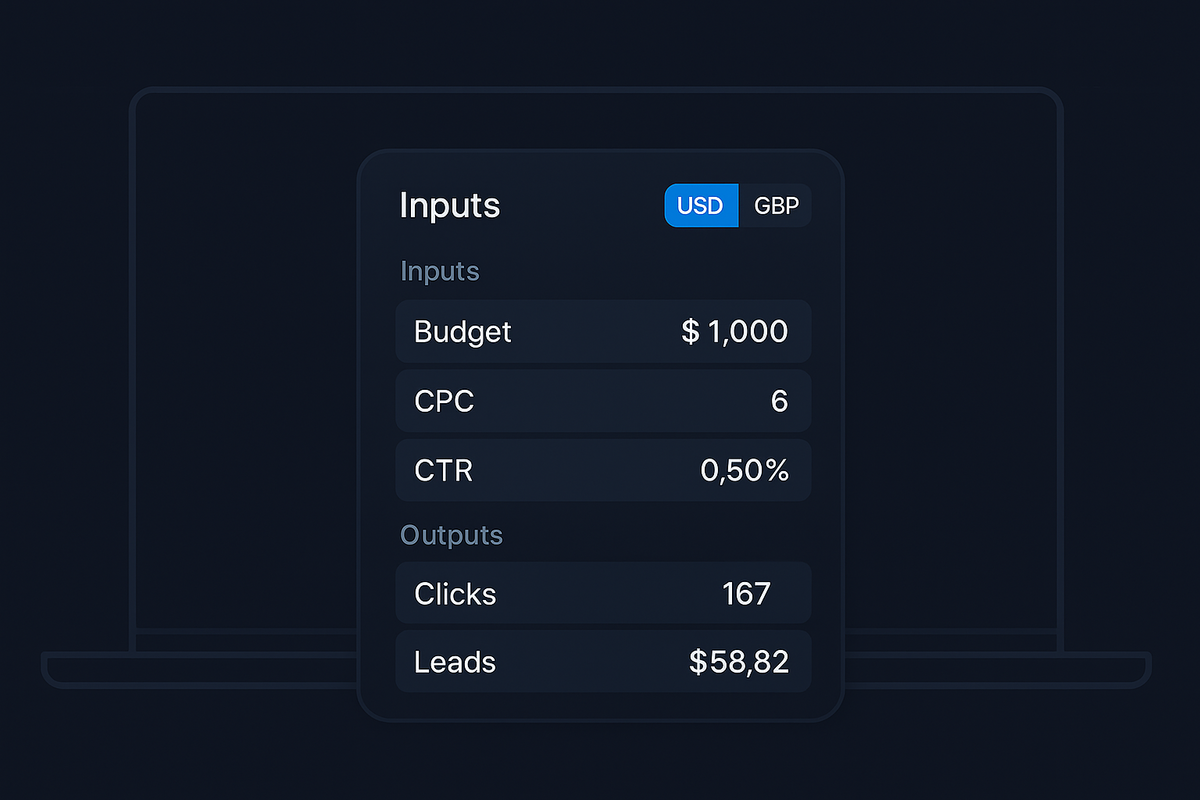
If you spend $5,000 on ads with a $10 CPC, you get 500 visitors.
Scenario A (Poor Match): 90% bounce rate = 50 engaged leads. Cost per engaged lead: $100.
Scenario B (Good Match): 50% bounce rate = 250 engaged leads. Cost per engaged lead: $20.
The Result: Improving message match didn't just "look better" — it made your ad spend 5x more efficient.
Homepage vs. Dedicated Landing Page
The most common mistake early-stage founders make is sending paid traffic to their homepage. This is a message match nightmare.
Feature | Homepage | Dedicated Landing Page |
|---|---|---|
Goal | Explain everything to everyone. | Convert one specific persona on one specific offer. |
Navigation | Full menu (Pricing, About, Blog). | No menu (or very limited) to prevent leaks. |
Message Match | Impossible. You cannot match every ad headline. | Perfect. The H1 matches the exact ad clicked. |
Verdict | Use for organic search / direct traffic. | Use for LinkedIn Ads and Google Ads. |
Risks
Even with good intentions, you can mess this up. Watch out for these traps:
The "Over-Specific" Trap: Creating 500 landing pages for 500 slightly different keywords. This creates technical debt. Group your ads by intent, not just keyword, and use Dynamic Text Replacement (DTR) sparingly.
The "Forgot to Update" Trap: You change your ad creative to a new "Summer Offer," but the landing page still mentions the "Spring Deal." This instant disconnect destroys trust faster than a slow loading speed.
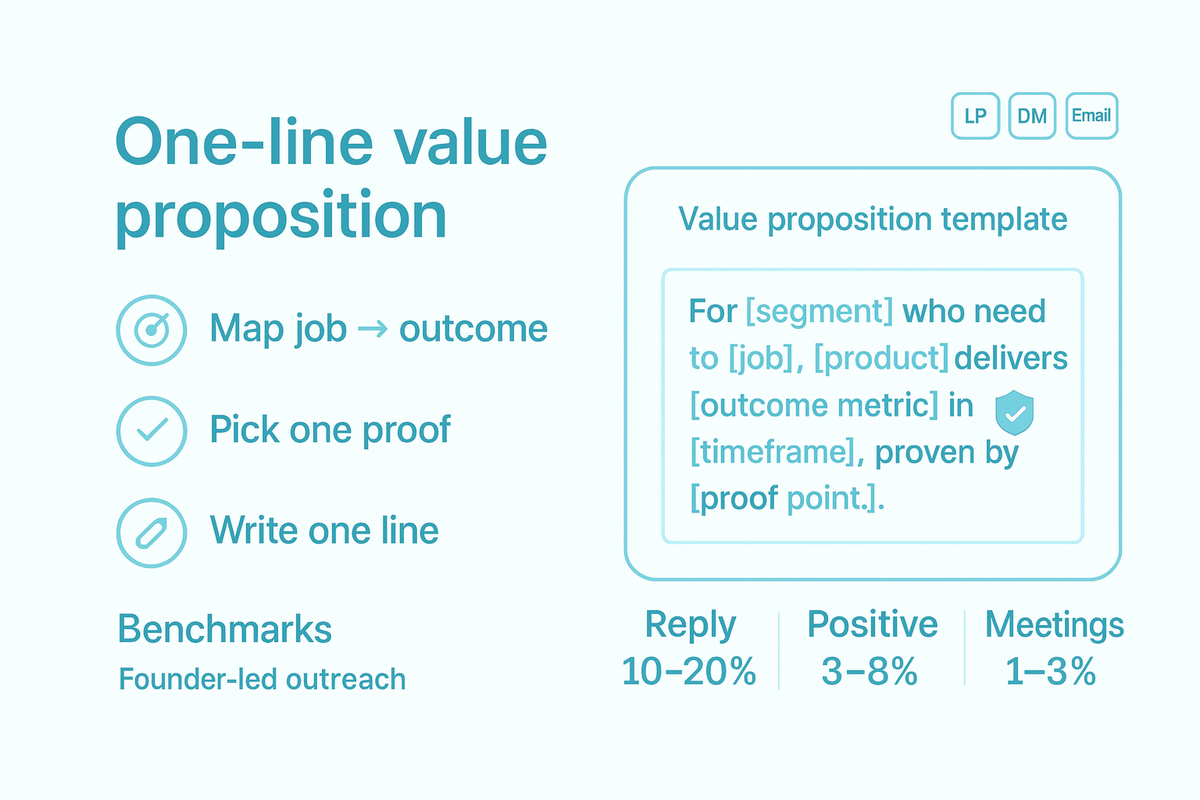
The "Bait and Switch": Promising a free tool in the ad (high CTR) but gating it behind a sales call on the landing page. This destroys your brand reputation. Ensure your value proposition is honest.
Will message match actually get you to $10k MRR?
Mastering ad to landing page message match is a necessary step to stop bleeding cash, but it is not the silver bullet for finding product-market fit. You can have perfect execution here — the headlines align, the colors match, and the "scent trail" is flawless — but if your core offer is weak, you will simply convert more people into a "no."
Message match buys you attention, not retention. To actually hit that $10k MRR milestone in the next 90 days, you need the trifecta: a matched message to keep them on the page, a killer value proposition to get them to sign up, and a product that actually solves the problem. Without the other two, you are just optimizing the paint job on a sinking ship. Fix the leak, then fix the engine.
FAQ
Q: Does the headline have to be exactly the same?
A: No, but it must be "conceptually identical." If the ad says "CRM for Startups," the landing page H1 can be "The #1 CRM for Startups." It cannot be "Sales Software for Enterprise."
Q: Should I create a unique landing page for every ad variation?
A: Ideally, yes. In practice, start with one landing page per concept or persona. If you run ads for "CEOs" and "CTOs," they absolutely need different landing pages because their pain points differ.
Q: Does message match affect my ad costs?
A: Yes. Platforms like Google and LinkedIn use "Quality Score" or "Relevance Score." Higher message match improves these scores, which directly lowers your CPC (Cost Per Click).