Guide: Option Pool SaaS Examples & Size Benchmarks (Pre-Seed vs Series A)
last updated: Apr 28, 2026
Investors want you to create a massive option pool before they invest so the dilution comes 100% from your pocket, not theirs. This guide gives you the market-standard benchmarks you need to stop the "option pool shuffle" and only allocate what you actually need to hire top talent.
TL;DR
An Option Pool is equity (usually 10-20%) set aside for future employees, typically taken out of the founder's stake during negotiations. Here is the summary for tired founders:
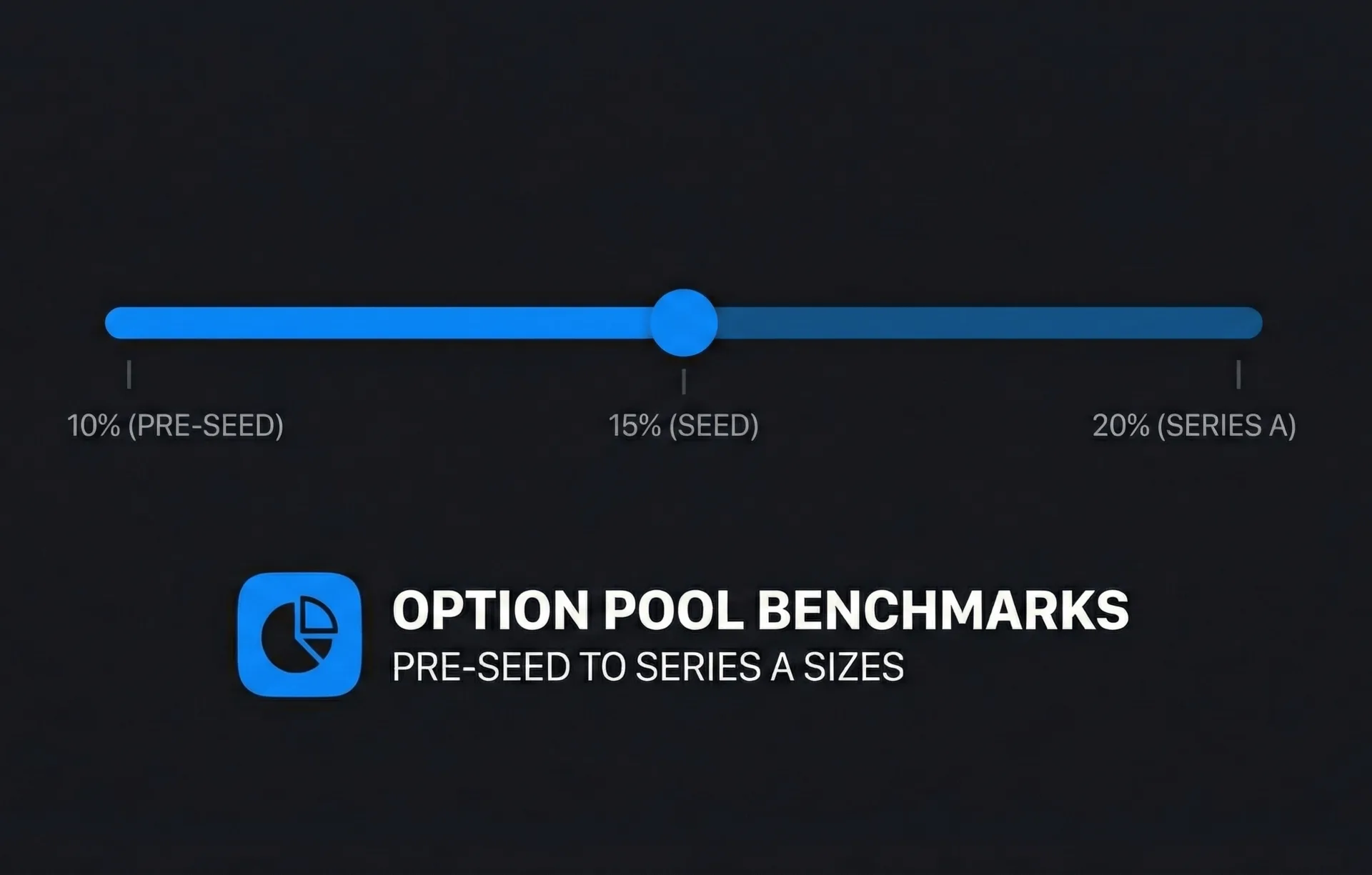
- Benchmark: Pre-Seed (10%), Seed (10-15%), Series A (15-20% cumulative).
- Rule: The "18-Month Rule": Only allocate equity for the specific hires you plan to make before your next round.
- Warning: Investors often demand a 20% pool at Pre-Seed. This is a trap. It increases their effective ownership while lowering your pre-money valuation.
Glossary
- Option Pool (ESOP): Shares reserved for future employees. It sits on the cap table like a silent co-founder who doesn't do any work yet.
- The Option Pool Shuffle: A negotiation tactic where investors force the option pool to be created pre-money. This means the dilution comes entirely from the founders, not the new investors.
- Fully Diluted: Your ownership percentage calculated as if every single option in the pool was issued and exercised today.
- Refresh: Expanding the pool at a later round (e.g., Series A) to accommodate new executives. This dilution is usually shared by all existing shareholders.
Benchmarks
Use these saas option pool size benchmarks to push back on VC demands. If a VC asks for 20% at Pre-Seed, show them the "Standard" column below.
Table 1: Option pool sizes by stage
Table 1: Option pool sizes by stage
Note: Series A pools are usually "topped up." If you had 10% at Seed and used 5%, you might need to add another 10-15% to reach the target. You can model this scenario using our option pool pre seed calculator.
How to allocate employee equity
Allocating the pool is step one; distributing it is step two. Use this option pool b2b framework to determine individual grants.
Table 2: Employee equity ranges (vested 4 years)
Table 2: Employee equity ranges (vested 4 years)
Pre-money vs post-money
The difference between these two terms can cost you millions. In a Pre-Money Pool, the shares are carved out of your (the founder's) ownership before the new cash enters. This is standard for Pre-Seed and Seed. In a Post-Money Pool, the pool is created after the investment, meaning the new investor also gets diluted by the pool creation. This is rarer at early stages but worth asking for.
For a deeper dive into these mechanics, refer to the Holloway Guide to Equity Compensation.
For a deeper dive into these mechanics, refer to the Holloway Guide to Equity Compensation.
Risks
The cost of over-allocating
Here is why you must fight for a smaller pool based on actual hiring plans.
Scenario: You raise a $2M Seed round at an $8M Pre-Money valuation ($10M Post).
Here is why you must fight for a smaller pool based on actual hiring plans.
Scenario: You raise a $2M Seed round at an $8M Pre-Money valuation ($10M Post).
- Case A (10% Pool): You allocate $1M worth of shares to the pool. Founder dilution is standard.
- Case B (20% Pool): The investor demands a 20% pool ($2M value) pre-money.
Conclusion
Mastering startup equity distribution data is necessary to protect your cap table, but it is not the whole picture. Don't obsess over 0.05% differences while your revenue is zero. Get the structure right using these option pool for founders examples, minimize dilution, and focus on selling—your probability of hitting $10k MRR depends on your offer, not your legal docs. Fix your foundation before you launch.
FAQ
- You:What happens to unissued options in the pool?Guide:If you exit (sell the company), unissued options typically vanish or are cancelled, effectively increasing the share price for all shareholders. However, during funding rounds, investors treat the entire pool (issued and unissued) as "fully diluted" to lower your price per share.
- You:Should I use a pre-money or post-money pool?Guide:Always try to negotiate a Post-Money pool (or a smaller Pre-Money pool). A Pre-Money pool comes 100% out of your pocket. A Post-Money pool dilutes the new investor as well. Note: Pre-Seed and Seed investors almost exclusively demand Pre-Money pools.
- You:How often should I "refresh" employee grants?Guide:Standard practice is to offer "retention grants" (refreshes) every 2-3 years or upon promotion. Do not front-load 10 years of equity. Stick to a standard 4-year vesting schedule with a 1-year cliff.
Find where your first 100 customers are in 2 mins. — or browse all the free founder guides.
No-BS guides