TL;DR
A design partner is not an unpaid beta tester; they are an early customer in a paid pilot working with you to co-create a solution.
Free feedback shows what people will discuss. Payment shows what they will prioritize.
Frame the relationship as fractional custom development: they get a dedicated engineering team for a fraction of the cost, and you get proof of demand.
Avoid "feedback theater." Do not ask what they think of a feature; study their past behavior and actual workflows.
Keep the agreement simple. It is a learning deal, not a high-stakes enterprise contract.
A B2B founder has a half-built product. Because charging feels premature and awkward, they call early users "design partners," offering the tool for free in exchange for a logo and a few smart feature requests.
The result? They get polite feedback, but they learn absolutely nothing about real demand or willingness to pay.
A B2B design partner is not a nicer name for an unpaid beta user. It is a paid pilot where a founder and a customer work toward one specific outcome. It solves an awkward business moment — asking someone to pay before the thing is fully built — by making the relationship clearer rather than more aggressive.
Here is how to set expectations, establish a feedback cadence, and structure a design partnership that proves your product has value.
Design Partner vs Beta User vs Pilot
Founders often confuse these three relationships. Here is how they actually differ:
Concept | Financial Commitment | Primary Goal | Product Stage |
|---|---|---|---|
Beta User | Usually free | Find bugs and gather general feedback | Mostly finished |
Pilot | Paid | Test ROI before a full roll-out | Functional MVP |
Design Partner | Paid (or heavily invested) | Co-create a solution to a specific, painful workflow | Early / In-development |
Understanding what is a beta client vs pilot is critical here. A beta user plays with a nearly finished tool. A design partner co-develops it with you from the ground up.
What a Design Partner Actually Is
Founders often mistake procedural diligence — worrying about corporate design, team setups, and perfect legal rights — for actual business traction. But what you really need is a stage-appropriate pilot.
A design partner is an early customer who commits time, access, and budget to shape a product they desperately need. They are not there to give opinions. They are someone with a painful workflow, enough access to show it to you, and enough commitment to help fix it.
Think of it as outsourced engineering. You are providing them with custom development to solve a problem they lack the internal resources to tackle. In exchange for this fractional custom development, you get an early utility signal, real usage data, and concrete proof of demand.
Mutual Expectations
To make the arrangement work, both sides need to know exactly what they are signing up for:
Founder Provides | Partner Provides | Both Agree On |
|---|---|---|
Dedicated engineering effort | Access to real workflows and past data | The specific problem being solved |
Rapid iteration on feedback | Brutal honesty over polite praise | What failure looks like |
A heavily discounted, value-anchored price | A dedicated point of contact and budget | The feedback cadence and timeline |
Execution: Feedback Cadence and Escaping Theater
Founders love directly addressing customers with questions like, "What do you think of this dashboard?" or "How do you like it?"
This is feedback theater. It forces polite lies instead of actionable insights. Do not study their perception of you, and do not study hypotheticals. Instead, study their past performance and behavior. Ask, "Show me how you handled this reporting step last week," and try to understand why they behaved in a certain manner. This approach mirrors the classic Jobs to be Done framework: you are looking for the underlying workflow, not superficial feature preferences.
To extract this signal, you need a structured feedback cadence. A design partnership requires an operating rhythm — usually a bi-weekly sync or a shared Slack channel — dedicated to reviewing actual workarounds and friction points.
Silence is not validation. Do not assume that if a partner isn't complaining, everything is fine. You have to do the hard work of extracting objections during these syncs.
When a customer does complain about a missing feature, celebrate it. In most cases, customers simply don't care enough to complain. A missing-feature complaint is a rare, positive signal that they actually care about the product and want it to work for them.
Pricing and Agreements (Without Legal Overkill)
Do not manufacture legal consequences around a failed pilot. Founders often overcomplicate design partnerships by treating them like high-stakes enterprise commitments.
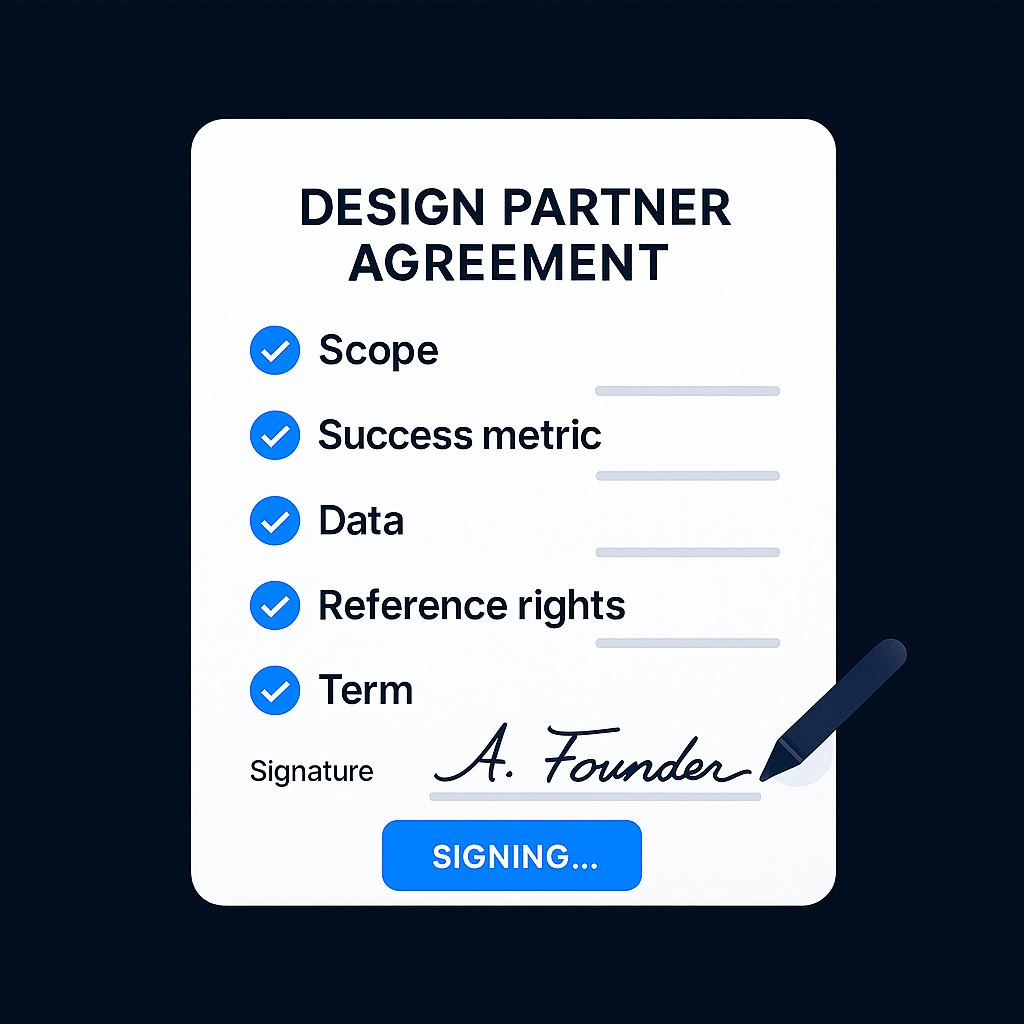
Treat the design partner agreement like a learning deal. Define the goal, the access, the payment, and what happens if it does not work. Both sides are trying to achieve the same goal; if the pilot fails, there should be no legal ramifications unless you intentionally create them. Keep your early sales motion simple and focused on learning, as recommended by early sales guides in the Y Combinator Startup Library.
When it comes to pricing, do not default to a generic "early adopter discount." Anchor your pilot price in reality by looking at:
Retention pattern: Is this a daily use tool or an annual event?
Perceived competition: Who are they comparing you to? Is it another app, or a human employee? Framing the right category is the difference between a $10 and $100 price point.
Value-first: Focus on the monetary value the service brings and work backward from there.
For more insights on structuring early product offerings, First Round Review offers excellent case studies on how top founders navigate these early pricing and positioning decisions.
How to Test for Real Commitment
Payment separates real demand from polite interest. If a customer pays you — even a reduced fee — they are going to care much more, which means they are going to give you actionable feedback.
Free feedback can tell you what people are willing to discuss. Payment tells you what they are willing to prioritize. When you are assessing fit, look for willingness to pay as your primary evidence. You can use specific design partner qualification questions to ensure they have the authority, budget, and actual pain required to be a good partner.
Checklist: Before You Call Them a Design Partner
Before finalizing a design partner relationship, run through this practical checklist to ensure it is a paid pilot and not a free favor:
Shared Goal: Both sides are explicitly trying to achieve the same concrete outcome.
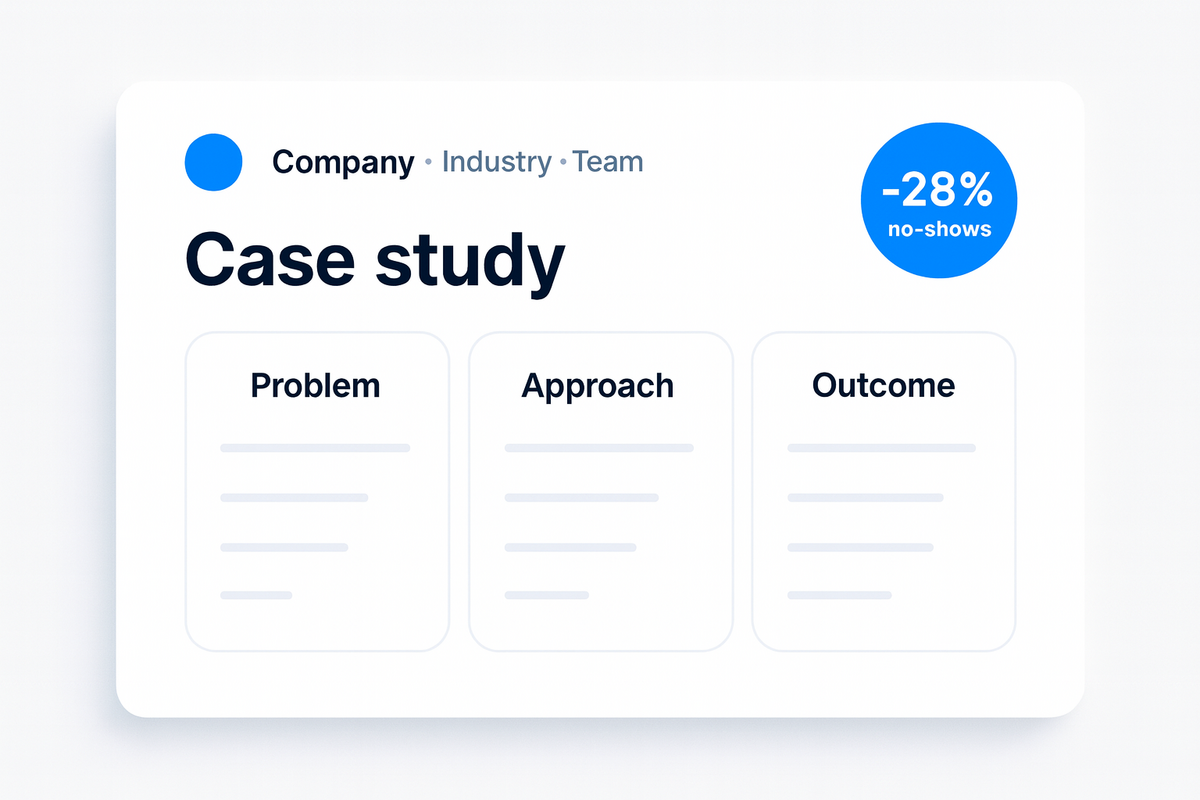
Scoped Outcome: The pilot outcome serves as actual proof of demand (e.g., provides a strong early utility signal, creates a case study, or leads to an LOI).
Access Commitment: The partner agrees to let you study their past performance, actual workflows, and workarounds, rather than just giving opinions.
Value-Anchored Pricing: The payment or discount logic is anchored in the monetary value of solving the problem, usage frequency, and perceived alternatives.
Failure Boundaries: The arrangement is framed as a low-risk pilot with no manufactured legal consequences if it fails.
FAQ
Is a design partner the same as a beta customer?
No. A beta customer tests a mostly finished product to find bugs and provide general feedback. A design partner co-creates a solution with you for an unsolved, painful workflow, usually before the product is fully functional.
Should a design partner pay?
Yes. Charging a design partner is the ultimate demand test. Frame it as custom development or outsourced engineering for a fraction of what it would cost them internally. A real design partner should pay because they have a painful problem and are getting dedicated build effort to solve it.
Can we charge a design partner before the product exists?
Yes. It is not just acceptable; it is necessary. Selling the pilot before writing code proves that the problem is actually worth solving.
What should we do if the design partner is quiet and not giving feedback?
You have to actively extract objections. Silence does not mean they have no objections; it usually means they are busy or losing interest. Stop asking for general thoughts and use your regular feedback cadence to dig into how they are actually completing their daily workflows.
How do we handle missing-feature complaints?
Treat them as a positive signal. Apathetic customers do not complain; they just churn. If a partner is pushing for a feature, it means they have real intent to use the product.