TL;DR
Early-stage deals are often lost because founders answer the first vague objection too quickly, turning discovery into a defensive pitch. By adapting a structured objection handling process (like LAER), founders can surface the real hesitation — usually related to trust, timing, or implementation — and secure a concrete next step instead of losing the buyer to an open-ended "I need to think."
Sales objection handling definition: Sales objection handling is the skill of exploring and resolving a buyer's concerns during a sales conversation. For startup founders, it means pausing to draw out the hidden root cause of a hesitation rather than immediately arguing with the prospect's first stated reason.
You are on a sales call. You have just laid out how your product solves a problem, and the buyer pauses. "This looks great," they say, "but we need to think about it."
You panic slightly. You explain the ROI again. You add two more features to the pitch. You mention a customer story before it really applies. Eventually, the call ends with a polite, "I will follow up next week."
The buyer disappears forever.
You did not lose the deal because your answers were bad. You lost because you answered before you knew the actual question. The first objection a buyer gives is usually their safest objection, not their real one. When founders treat objection handling as a rebuttal library — a chance to prove the buyer wrong — they lose.
Often driven by sales call reluctance or the fear of a dead end, founders press buyers aggressively on vague statements. But failing to listen to the market is one of the top reasons startups fail. Nobody wants to pay to be told they are wrong.
To close early deals with an immature product, you have to slow the call down long enough to find the real risk. Then, turn that clarity into a concrete next step.
Why the First Objection is Usually Incomplete
Early-stage B2B products trigger specific fears. Will this take too long to implement? Is the team going to hate it? Are you going to be in business next year?
Prospects rarely say, "I do not trust you yet." They say, "The timing is tricky." If you immediately argue why the timing is perfect, you address a symptom while ignoring the disease.
Before you even start a discovery call, map out the common objections for immature products. This gives you a hypothesis to test when buyers get vague:
Trust: "You guys are very early stage."
Proof: "Do you have case studies in our exact industry?"
Implementation: "We don't have the engineering bandwidth right now."
Timing: "Check back in Q3."
Category confusion: "How is this different from [Incumbent]?"
Budget: "We don't have budget for new tools."
In early sales, your job is not to make thinking impossible. Following Steve Blank's customer development principles, your job is to find out what they need to think about.
Practical Framework: A Founder-Friendly Objection Handling Process
LAER is a standard sales model (Listen, Acknowledge, Explore, Respond). Founders sometimes overcomplicate it, treating it as a rigid script. Instead, use it as an operational checklist to keep yourself from talking too fast.
Step | Your Job | Example Question | Mistake to Avoid |
|---|---|---|---|
Listen | Let them finish their thought without interrupting. | (Silence) | Jumping in to defend the product immediately. |
Acknowledge | Validate their hesitation so they do not feel attacked. | "Makes total sense. It is a new way of working." | Saying "Actually, it is very easy..." which proves them wrong. |
Explore | Use prepared hypotheses to surface the real blocker. | "Usually when teams say that at this stage, it is because they are unsure about implementation time or internal buy-in. Is one of those the real concern?" | Asking a blunt "Why?" which makes them defensive. |
Respond | Address the surfaced fear and drive to a commitment. | "Let us review the onboarding doc on Thursday to see if it fits your schedule." | Ending the call on a vague promise to follow up. |
The "I Need to Think" Rule
When you hear "I need to think" or a similarly foggy stall, do not end the call on a promise to circle back.
Once you explore and find the real concern — whether it is category confusion or missing proof — you must operationalize the "Respond" step.
Do not end the call on fog. Leave the meeting with a calendar invite, a clear no, or a concrete buying step. If they genuinely need to think about implementation, schedule a 15-minute call for Thursday to review the exact implementation steps. If you let them leave without a calendar step, the momentum dies. Securing a firm next step helps maintain deal momentum and prevents ghosting.
Bridging from Objection to Trust
Once you handle the objection verbally, you have to cement that trust structurally. If the prospect’s real objection is about implementation risk, your verbal agreement needs to transition into a professional pilot scope.
Handling objections is the conversational bridge; pilot customer success criteria are the written bridge. When you align your follow-up documentation directly with the fears you surfaced during the call, you show the buyer that you actually listened. You turn a handled objection into a solid agreement, ideally formalized with a clear design partner template.
Post-Call Follow-Up: Social Proof Over Authority
When following up, avoid leading your email sequences with objection handlers. An objection handler supports a sequence; it should not lead it.
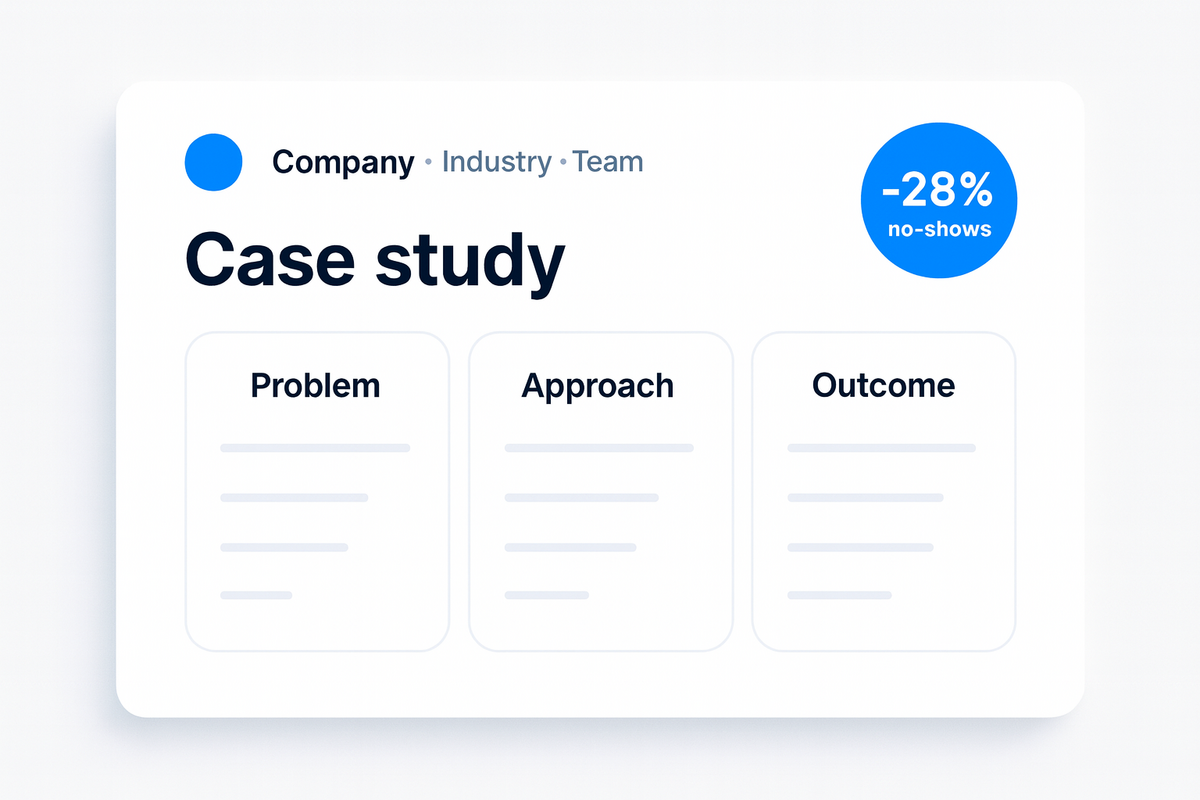
If a buyer still has doubts about your product's efficacy, pair your objection handler with social proof. Let a case study or a customer quote do the heavy lifting in your follow-up. When the answer comes from evidence rather than your own authority, the prospect feels reassured instead of corrected.
FAQ
What is a simple objection handling process for founders?
A practical approach is the LAER framework (Listen, Acknowledge, Explore, Respond). The key for founders is to use the exploration phase to find the hidden objection, then respond by securing a concrete next step on the calendar.
If the buyer's objection is factually wrong, should I correct them and push harder?
No. Treat the incorrect objection as a signal of a deeper misunderstanding or fear. Listen and acknowledge first. Explore to understand why they have that impression. Respond by pairing your explanation with social proof in a follow-up, so evidence corrects them, not your ego.
What do founders overcomplicate about objection handling?
Founders often treat objection handling as a debate to win. They build massive "rebuttal libraries" and try to correct the buyer's flawed logic on the spot. If you win the argument but make the buyer feel stupid, you lose the deal.
How do I prepare for objections when the product is immature?
Write down the most likely hidden blockers—trust, missing proof, category confusion—before the call. Use these as hypotheses during the Explore phase so you know exactly what you are looking for when the prospect gets vague.