TL;DR: A startup pilot program is not a free demo. It is a time-boxed, paid design partnership used to prove demand. Structure the pilot backward from a clear conversion decision. Do not wait until day 90 to figure out the success criteria.
Founders often get stuck between two bad options when trying to land their first customers. They push for a full enterprise contract too early and scare the buyer away. Or they run a vague, free pilot that yields polite feedback but proves nothing about real demand.
A startup pilot program is a paid, time-boxed test that proves whether your product solves a problem well enough that people will buy it. Running a startup pilot sits in the middle of these two bad options. The terms are lenient enough to get started quickly, but the engagement is paid.
Asking for money early feels uncomfortable. But a free pilot hides the most important validation signal you need. Friendly usage is not proof. Willingness to pay is proof.
Frame the Pilot as a Design Partnership
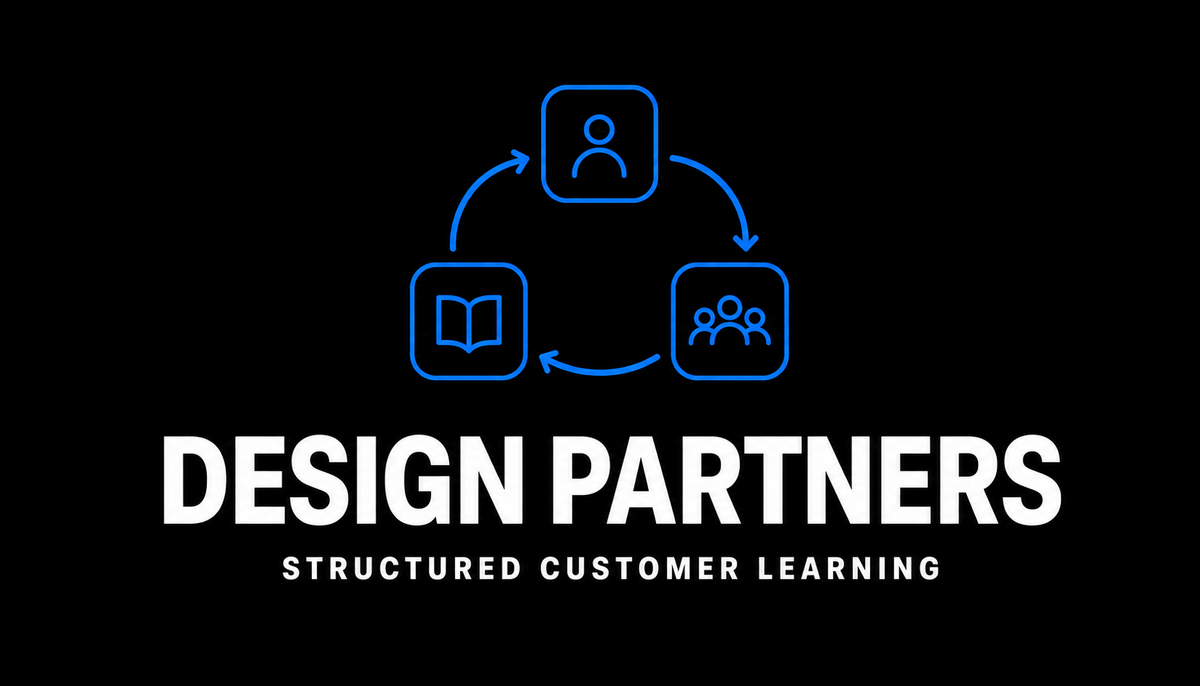
When you ask for payment early, buyers expect a finished product. You can change this expectation by changing the frame. Treat the pilot as a design partnership or a co-development process. You provide custom engineering or dedicated service for a fraction of what an internal build would cost.
Do not structure the first 90 days around feature delivery. Structure them backward from the paid decision. A pilot that proves nothing is worse than a smaller test with a clear pass or fail signal.
Test Demand Before Building Automation
Founders tend to overcomplicate the technical requirements for a B2B pilot program structure. You do not need a fully automated platform to test demand.
Consider a recent example of an AI-personalized workout app. The founder had no traction and wanted to rebuild the product. Instead, they ran a pilot with 15 real B2C buyers. The product was just a human delivering personalization manually through WhatsApp for 14 days.
The conversion check came after the pilot ended. Of the 15 testers, 40% agreed to buy a 60 GBP subscription. That willingness to pay justified the cost of building actual automation. Sell the manual version first. See who still wants it when money is involved.
The Bad Pilot vs. Good Pilot Framework
Element | Bad Pilot | Good Pilot | Success Signal |
|---|---|---|---|
Commitment | Free feedback trial | Paid demand signal | Willingness to pay |
Duration | Open-ended | Time-boxed test (e.g., 90 days) | Hits the deadline |
Validation | Feature opinions | Usage and value evidence | High engagement |
Ending | Surprise sales pitch | Expected conversion meeting | Clear yes or no |
Startup Pilot Program Checklist
Before you start the clock, make sure you have these pieces in place:
Kickoff criteria: A clear business problem, baseline metrics, and a defined commercial next step.
Milestone criteria: Weekly usage targets and documented value creation.
Conversion criteria: Exactly what the executive sponsor needs to see to approve the final contract.
The 90-Day Operational Path
A standard 90-day timeline creates urgency. It forces both sides to stay engaged. A reliable sequence looks like this:
Days 0-7: Kickoff. Define the business problem, the users, and the baseline metrics. Set the reporting cadence and the commercial next step. Output: Kickoff doc. For logistics of the first week, refer to our guide on onboarding new customers to a B2B pilot. If you are unsure how to align expectations, read our pilot kickoff questions.
Days 8-30: Activation. Secure access to systems. Train the users. Ensure the product is actually being used in a real workflow. Output: Activation threshold met.
Days 31-60: Value Proof. Track the milestone data. Focus on real usage, blockers, and value creation. Output: Usage metric and value proof.
Days 61-80: Decision Prep. Resolve any remaining objections. Ensure the executive sponsor sees the baseline metrics improve. Output: Sponsor recap.
Days 81-90: Conversion. Hold the final conversion conversation. Output: Conversion decision.
The Final Conversion Conversation
The final meeting should feel like a recap, not a surprise sales pitch. Recap the agreed goals. Show the evidence of value created. Discuss any remaining gaps.
If the pilot succeeds, propose the paid plan. A well-run pilot provides the foundation for future sales collateral. Use the data gathered during the 90 days to populate a B2B case study template. Feature the baseline, the result, a customer quote, and the resolved objections.
FAQ
What should be included in a startup pilot program?
A pilot should include clear baseline metrics, a defined timeline, weekly usage tracking, and a scheduled conversion conversation. It should be paid, even if the price is deeply discounted.
How long should a B2B pilot last?
Aim for 90 days. This provides enough time to activate users, prove value, and prepare the executive sponsor for a conversion decision, without letting the momentum die.
What metrics should a pilot track?
Track activation (are they logging in?), usage (are they completing core workflows?), and the primary business outcome agreed upon during kickoff. For advice on tracking these effectively, see Lenny's Newsletter.
What happens after a pilot ends?
You hold a conversion conversation based on the data. If you hit the milestones, you propose the full contract. Whether they buy or not, document the results. For more on moving from early pilots to scalable sales, check Y Combinator's guide to seed fundraising and Steve Blank's resources on customer development.