TL;DR
Founder-led sales is not about turning into a polished salesperson or aggressively convincing prospects to buy. It is the highest-fidelity customer discovery mechanism available to your startup. The most common founder mistake is pitching too early and accepting a polite "we need to think about it" to end the call. A real sales process relies on listening for pain, positioning against what the buyer actually says, and following a strict call-exit rule: never hang up without a locked next step, a pilot commitment, a decision date, or a clear "no."
What is founder-led sales?
Founder-led sales is the initial go-to-market phase where founders directly sell their product to early adopters. Rather than delegating to hired reps or relying on automated funnels, founders use these conversations to intimately learn buyer psychology, refine positioning, and lock in the first 10 to 20 pilot customers to prove traction.
A technical founder gets a promising prospect on the line and spends 35 minutes explaining their new product. The buyer nods, asks decent questions, and then says the dreaded words: "This looks really interesting. We need to think about it."
Relieved that the call stayed polite, the founder says, "Great, I'll follow up next week," hangs up, and logs it in their CRM as a good call.
It was not a good call.
Nobody named the decision owner, success metric, next meeting, pilot step, or budget. The founder got politeness, not progress. This happens because founders often mistake early sales for a pitch performance rather than a customer discovery interview. They pitch instead of listening, fail to build a mental model of the buyer, and walk away with fake momentum.
As Steve Blank emphasizes in his customer development methodology, founding sales requires the founders themselves to deeply embed in the process. You cannot outsource this learning phase. Founder-led sales is about the discipline to turn conversations into proof. You need to understand the buyer's world, position your product in their exact words, and stop leaving serious calls with vague endings.
Founder-Led Sales Process
Before diving into the mechanics, here is the high-level process to follow for every deal:
Qualify prospect: Determine if they actually have the pain you solve.
Run discovery: Ask questions and listen to their current workarounds.
Reflect pain: Position your solution using their exact vocabulary.
Handle objection: Uncover the real hesitation behind polite exits.
Lock next step: Get a concrete commitment on the calendar.
Manage pilot: Set explicit success metrics and timelines.
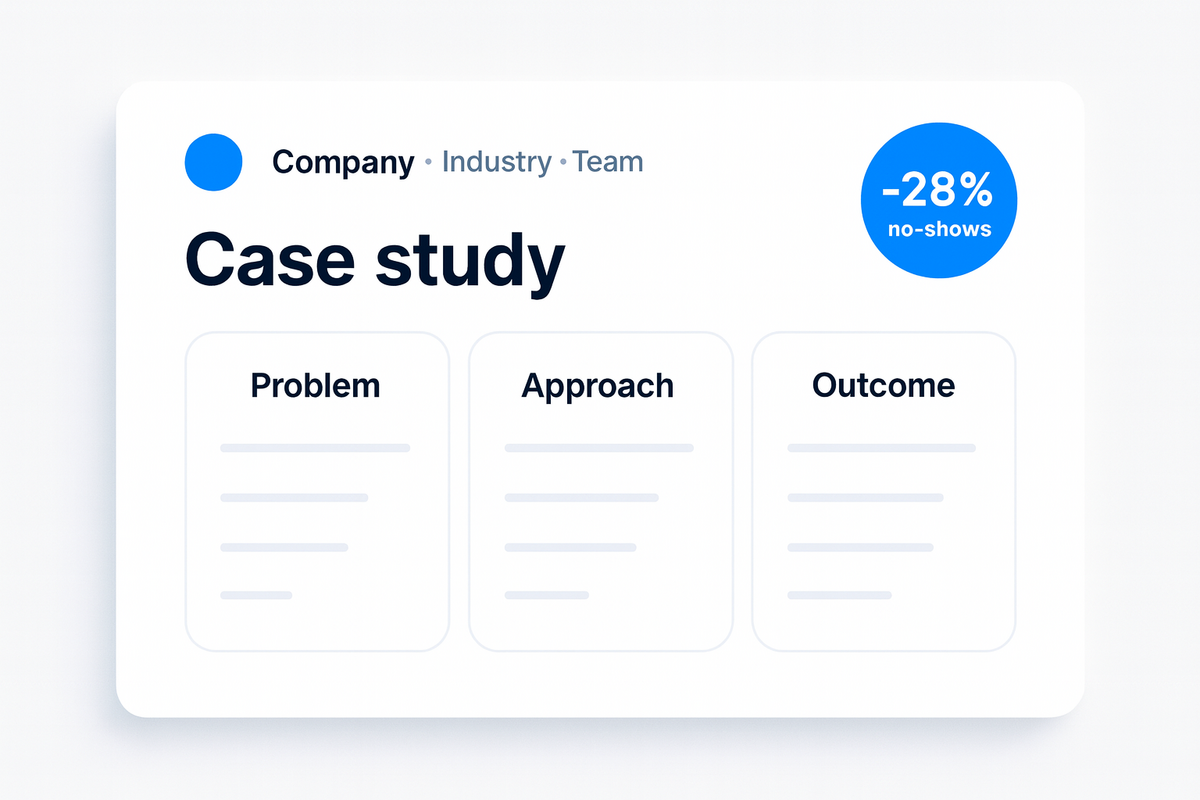
Document proof: Convert the win into a reusable case study.
Prospect Qualification: Who Belongs on a Call
Not everyone who will take a meeting is a qualified prospect. You need to actively filter out bad fits so you don't waste time doing corrective consulting. A qualified prospect for a founder-led sales call must actively experience the problem you solve and be actively paying (in time or money) to solve it poorly right now. CB Insights research shows that building a product without a real market need is a leading cause of startup failure. If they do not recognize the pain, they are not qualified.
The Discovery Phase: Finding the Signal
Before you pitch, you have to discover the pain. Start by asking about their current approach. Prospects do not want to pay to be told their current process is broken or stupid. They pay when you understand why the current process exists and exactly where it hurts.
Selling is a founder mindset shift, not a script. You are not there to lecture the buyer or tell them they are wrong. Instead, go into discovery with explicit hypotheses so you know what signal you are looking for in your notes.
Your notes are not an analytical research report. They are cues for your next conversation, your next positioning choice, and your next commitment. Learn the buyer's worldview and help them within it.
If you are struggling to get calls, do the unscalable channel work where buyers already are. Build a focused Crunchbase lead list and show up where your target audience hangs out.
Positioning: Use Their Words
Once you have identified their specific pain and current workaround, reflect it back to them. A successful discovery call produces enough understanding to tailor the product's value to the buyer's own words.
If the prospect says, "Our manual data entry is a massive bottleneck," do not respond with, "Our platform is an AI-driven automation suite." Respond with, "You mentioned manual data entry is your biggest bottleneck. If we could automate exactly that step, what would you need to see to move forward?"
Using their vocabulary builds trust. It proves you were listening and that your product is a direct answer to their problem, not a generic solution searching for a use case.
The Call-Exit Rule
The single most practical change you can make is implementing a strict call-exit rule. A polite call is not a qualified opportunity.
When a prospect says they need to think about it, you are at a critical juncture. You need a reliable sales objection handling framework to navigate this moment. Never accept the polite exit without a concrete commitment.
Discovery-to-Close Checklist
Before you end a promising call, you must lock in at least one of these concrete next steps:
A scheduled technical review or follow-up meeting (with a calendar invite sent while still on the call).
A meeting with the actual decision owner (if you aren't talking to them already).
A defined pilot action (e.g., "Send us the sample dataset by Thursday").
A hard decision date (e.g., "You'll review with the team Tuesday, so we will reconvene Wednesday at 10 AM for a final yes or no").
Payment or signature.
A clear "No." (A fast "no" is better than a slow "maybe").
If you hang up with "we'll think about it" and no scheduled follow-up, you have lost the deal.
Managing Pilots and Building Proof
Your first 10 to 20 customers are not just logos for your website. They are proof that the pain is real, the product sticks, and the buyer can explain the value back to you. Treat early wins as design partners.
Expectations for early pilots must be explicit. Do not run vague, open-ended free trials. Every pilot needs structured definitions.
Pilot Element | What to Define | Example |
|---|---|---|
Scope | Exactly what is being tested. | Testing the data ingestion module on 1,000 records. |
Success Metric | Quantitative result that proves value. | Reducing processing time by 40%. |
Timeline | Strict start and end dates. | 14-day evaluation starting Monday. |
Feedback Cadence | When and how you review progress. | 15-minute syncs every Tuesday and Friday. |
Conversion Path | Agreement on what triggers a contract. | If processing time drops 40%, you sign the $1k/mo tier. |
Don't expect to close 10 customers and validate your startup in three months. Validation takes time, and the pace depends heavily on your market, trust, and product readiness. Y Combinator also emphasizes that founders cannot simply outsource this learning phase; they must do it themselves to understand the real buying triggers.
Aim for 10 to 20 solid pilots, prove retention, and turn those wins into your first powerful case studies.
FAQ
What is founder-led sales?
It is the initial phase where the founders themselves perform all sales activities — from prospecting to closing — to deeply understand buyer pain and refine product positioning before hiring dedicated sales reps.
What is the difference between founder-led sales and customer discovery?
Customer discovery focuses purely on uncovering problems and validating that a need exists. Founder-led sales builds on that by actively asking for money or commitment to solve the problem, testing if the pain is acute enough to drive a purchase.
How do I do founder-led sales without turning the call into me lecturing the buyer that they are wrong?
Treat sales as a mindset shift, not a script. Go into discovery with explicit hypotheses so you know what signal you are looking for, but avoid corrective consulting language. Prospects do not want to pay to be told they are wrong. Use calls to learn and qualify rather than prove you are right.
Should I charge for early pilots?
Ideally, yes. Even a heavily discounted paid pilot proves there is real budget and pain. If you must do a free pilot, ensure there is a signed agreement that strictly defines the success criteria and triggers a paid contract once those criteria are met.
How many customers should a founder close before hiring sales?
You should aim to close your first 10 to 20 customers yourself to build a documented and repeatable playbook. Handing off sales before you have proven the motion yourself is a recipe for burning cash and burning leads.