What is an idea validation service?
An idea validation service is an agency that tests your startup concept before you build it. Founders use them to recruit target users, run surveys, and conduct discovery interviews. They excel at gathering raw data. However, they have a hard limit. They can deliver a research report, but they cannot give you founder conviction.
TL;DR: Should you hire an idea validation service? Hire one only for logistics, recruiting, and testing channels you do not know. Do not hire one to interpret feedback, extract buyer objections, or decide if your startup has traction. You can outsource data collection, but you cannot outsource learning. A service can execute interviews faster than you can. However, founders must personally own the core strategic decisions. Buying a polished validation report is not the same as finding product-market fit.
Good Fit vs. Bad Fit
Use a service (Good Fit) if:
You need to recruit a highly specific audience quickly.
You want to test a marketing channel (like Reddit or cold email) where you lack expertise.
You need help scheduling and recording discovery calls.
Do it yourself (Bad Fit) if:
You need to understand why people refuse to buy.
You are trying to find the exact wording customers use to describe their pain.
You are deciding what features to include in your minimum viable product (MVP).
A founder pays an agency to validate a new product concept. The agency delivers a clean 50-page PDF showing that 80% of surveyed users rated their pain an 8 out of 10. The founder builds the product and launches to total silence.
The problem was not that the agency lied. The problem was that the founder outsourced the part where the real learning happens. They missed hearing the hesitation, the budget resistance, the cheap workarounds, and the deal-breaking edge cases.
The question is not whether someone can validate your idea for you. It is which parts of the process you can delegate without losing your own judgment.
Procedural Diligence vs. Real Traction
Founders often mistake procedural diligence for actual progress. Hiring a research firm feels like a safe, professional step. But a long report is not traction. A painful objection from a real buyer is.
When you hand off the entire discovery process, you risk falling for the polite lie. Survey answers are often polite lies. Someone clicking "Yes" on a survey is very different from a buyer admitting they have no budget to change their workflow. You need evidence from real customers, not just agency summaries. Understanding why this market research is important means recognizing that validation requires direct contact with the market's friction. As The Mom Test explains, avoiding false positives requires talking to users directly to uncover the truth.
Decision Framework: What to Outsource vs. What to Own
You can use services to scale data collection. You should not use them as a substitute for founder-owned learning.
The Task | Who Owns It | Why |
|---|---|---|
Participant Recruiting | Outsource | Agencies have speed and sample access. Let them handle the logistics and scheduling. |
Channel Execution | Outsource | If you do not know a distribution channel, hire an expert. Testing a new channel on your own often just proves you do not know how to use it. However, the founder still owns the conversion learning. |
ICP & Pain Hypothesis | Founder | Only you can decide if a specific segment's pain happens frequently enough to build a business around. |
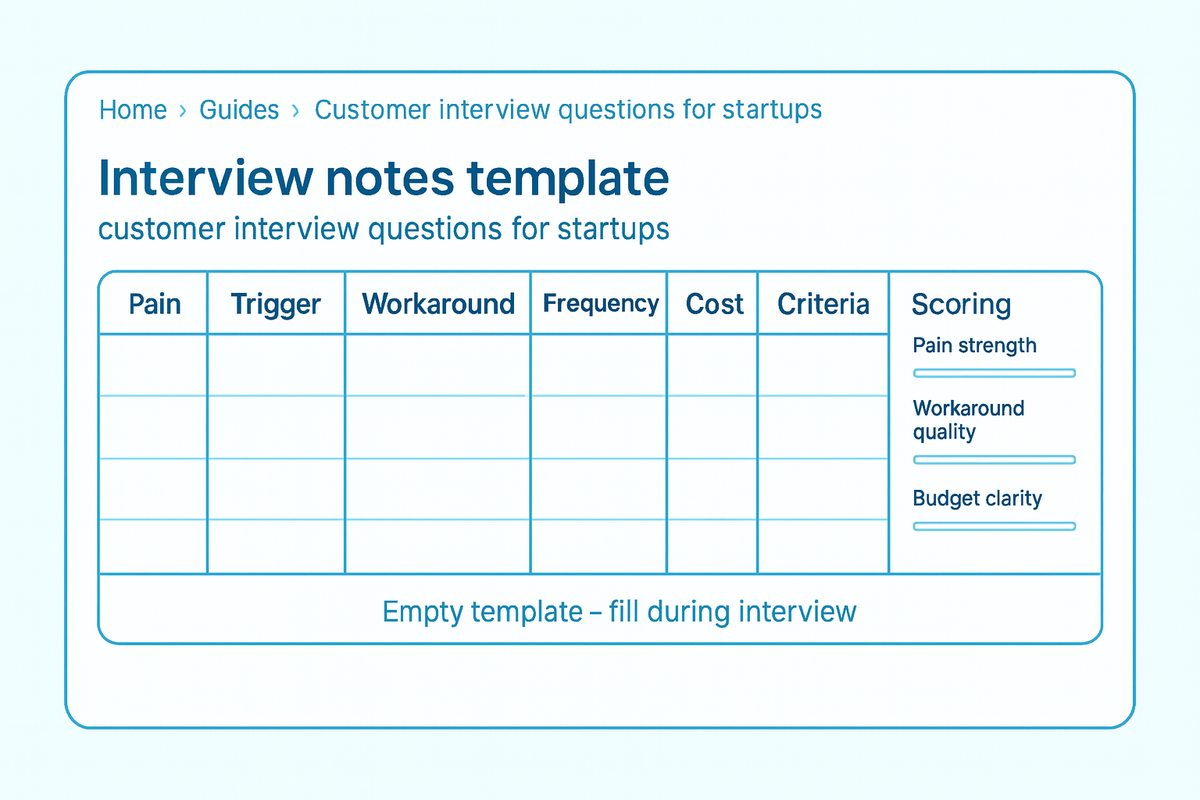
Objection Extraction | Founder | Objections do not flow naturally to researchers. You have to actively dig for hesitation and budget resistance. |
Invalidation Metrics | Founder | You decide what specific signal proves the idea should be killed or changed. |
MVP Decisions | Founder | You translate the messy human feedback into actual product scope. |
When an Agency Actually Helps
Services are highly effective for narrow execution. If you have a strong hypothesis but lack organic social skills, do not waste a year learning Reddit distribution from scratch. Hire an expert to execute the channel test. You still monitor the conversions and handle the qualitative feedback.
Outsourcing is a rational choice when speed and sample access matter. You just need to weigh the cost of market validation against the time it takes to run discovery yourself. If an agency saves you three months of recruiting, the price is often worth it.
You can use a service to recruit 15 perfect leads and schedule the calls. But you must get on those calls to hear the emotional texture. If you cannot join live, you must review the call recordings, tag the objections, and compare the frequency and pain yourself. Conducting proper user interviews is critical for assessing viability, as it requires understanding the customer's context, which secondhand summaries rarely capture.
A Report Should End in a Decision
A good validation process does not end in a feeling of reassurance. It ends in a concrete decision: proceed, narrow the audience, change the offer, test another channel, or kill the idea entirely. Market research should drive strategic action, a principle central to customer development.
If you are hiring a service just because you are scared to hear "no" from the market, do not hire them. You cannot outsource conviction.
FAQ
Can an agency validate my startup idea for me?
No. An agency can gather data, run surveys, and recruit interview subjects. But they cannot validate the idea. You cannot answer the hard questions — like whether cold acquisition and retention actually work — with a secondhand summary of friendly survey answers.
Are surveys enough to validate an idea?
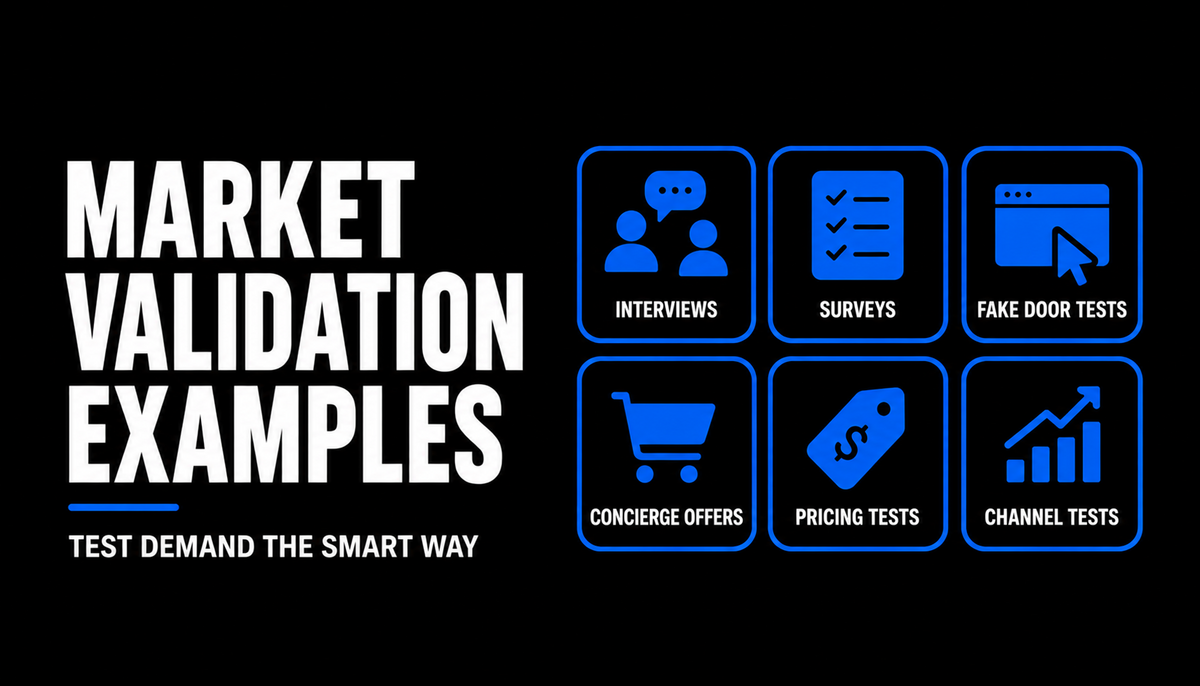
No. Surveys capture hypotheticals and polite enthusiasm. To validate, you must study past behavior, current workarounds, and actual willingness to pay.
How much does an idea validation service cost?
Costs vary widely based on the scope of research, the audience, and the agency's expertise. When deciding to hire one, compare their fees against your own time and the typical costs of doing it yourself.
What should I look for in a good validation service?
A good service asks for your hypotheses. They help define what would invalidate them. They share the raw evidence like call recordings and expose hard objections. A bad service relies on generic surveys, delivers only a PDF, and avoids negative signals.