TL;DR: "MVP synonym" is usually the wrong way to frame the question. Terms like MLP (Minimum Lovable Product) and MMP (Minimum Marketable Product) are not just rebranding; they are labels for different tests.
MVP tests for painful demand and willingness to pay.
MLP tests for retention, delight, and organic recommendation.
MMP tests for launch and sales readiness.
Choose the term that constrains your scope to the exact signal you need, not the term that makes your roadmap feel more solid.
Founders often treat "Minimum Viable Product" as permission to build a slightly smaller version of their grand vision. When they hear alternative terms like MLP or MMP, they use them as a justification to keep polishing before launching.
A minimum viable product synonym is usually not an exact synonym. Instead of meaning "a different name for the same thing," alternatives to MVP — like Minimum Lovable Product (MLP), Minimum Marketable Product (MMP), concierge MVP, prototype, pilot, beta, or minimum feature set — describe entirely different stages of validation and scope.
Consider a hypothetical example: a founder building an AI-personalized workout app that launched with zero traction. The obvious instinct was to rebuild the automation and add features. Instead, they stopped building software entirely. In this hypothetical scenario, they sold a 14-day pilot to 15 real buyers and delivered the "AI" personalization manually over WhatsApp. When the pilot ended, 40% of the testers wanted to buy a £60 subscription. Only when they proved real willingness to pay did it make sense to develop the automation.
This is why we need to separate these concepts. The name you give your first release should force a decision about what you are testing — not justify adding a dark mode because AI made it fast to build.
Alternatives to MVP: What Else Can You Call It?
If you are looking for what else to call your early release, here are the most common alternatives to MVP and what they actually mean:
MLP (Minimum Lovable Product): Focuses on user delight and retention over bare functionality.
MMP (Minimum Marketable Product): The smallest feature set you can actively sell and market.
Minimum Feature Set: Stripping a product down to only the core features needed to solve the problem. (Coined by Steve Blank).
Concierge MVP: Delivering the value manually before building the software.
Prototype or Pilot: A test run with a small group of users, often unpolished.
Beta: A nearly complete product shared with early adopters to catch bugs.
Why MVP Terminology Breaks Down
An MVP is not just a smaller version of your final product. It is the smallest possible way to test your riskiest assumption.
However, the classic MVP often becomes a dumping ground for half-baked ideas. Founders get caught up in problems with the minimum viable product model when they ship something buggy and confusing, then assume a lack of traction means the market doesn't exist. Indifference is the real failure. If users complain about a missing feature, celebrate — it means they care enough about the core value to want more.
Because building has gotten so fast, especially with AI, founders can build the wrong thing much faster. This has led to new terms designed to raise the bar on what is considered "minimum."
The Scope Test: MVP vs. MLP vs. MMP
These terms are not just a new spin on the definition of an MVP. Each implies a completely different validation bar.
Here is a practical comparison of the three core product concepts.
Term | Core Goal | Validation Signal | When to Use It |
|---|---|---|---|
MVP (Minimum Viable Product) | Prove painful demand | Payments or strong commitment | To test the riskiest assumption before building the full software. |
MLP (Minimum Lovable Product) | Prove retention and delight | Repeated usage, referrals, love | When the baseline solution works, and UX/design is the differentiator. |
MMP (Minimum Marketable Product) | Prove market readiness | Sales conversions, positive reviews | When the product is ready to be sold to a broader audience. |
The Minimum Viable Product (MVP)
Your minimum viable product is about survival and demand. Will someone trade money or serious time for your solution?
A compliment is not demand. Polite reactions to "what do you think?" lead to false positives, a concept detailed in The Mom Test. Focus on past behavior and willingness to pay. A 14-day manual WhatsApp pilot is a perfect MVP because it validates demand with the smallest real delivery mechanism.
The Minimum Lovable Product (MLP)
If an MVP proves people need the solution, an MLP proves they can enjoy it.
"Lovable" does not mean over-engineered brand polish. It means the core experience solves the problem with enough care that users prefer it over their current workaround. Organizations like NNGroup emphasize usability as a critical factor here. You build an MLP when the market already has viable alternatives, and your specific bet is that a better user experience is the primary reason users will switch.
The Minimum Marketable Product (MMP)
An MMP is the first version of the product you are ready to actively sell and market to a wider audience. It might not have every feature, but the features it does have work flawlessly. It can be packaged with clear pricing, sold by a sales team, and supported by a basic help desk. For startups moving into growth and structured fundraising, the MMP proves you have a sellable business, not just a validated idea.
How to Choose the Right MVP Alternative
If you are stuck trying to figure out what to call your next release, use this scope ladder to determine what you actually need to prove.
Assumption: People will pay for personalized fitness guidance.
Concierge Test: Can I deliver the value manually? (Signal: 15 buyers for a WhatsApp pilot)
MVP: Will people pay for a bare-bones software version of that manual delivery? (Signal: 6 subscription intents)
MLP: Now that the core works, what small improvements make users return organically? (Signal: Daily usage and referrals)
MMP: What is the minimum set of features required to launch a marketing campaign? (Signal: Cold traffic converts)
The label is secondary. First, decide what signal you need to prove.
FAQ
What is another name for MVP?
Common alternatives include Minimum Lovable Product (MLP), Minimum Marketable Product (MMP), Minimum Feature Set, concierge MVP, prototype, and pilot. Each represents a different stage of validation rather than a direct synonym.
Is MLP better than MVP?
Not necessarily. An MLP is better if your market is crowded and your main advantage is user experience. An MVP is better when you need to prove that people actually want the core problem solved at all, regardless of polish.
What is the difference between MVP and MMP?
An MVP is built to learn if a market exists. An MMP is built to sell to that market. An MMP has the minimum features needed to support a marketing campaign, clear pricing, and basic customer support.
What else to call an MVP if we are not building software yet?
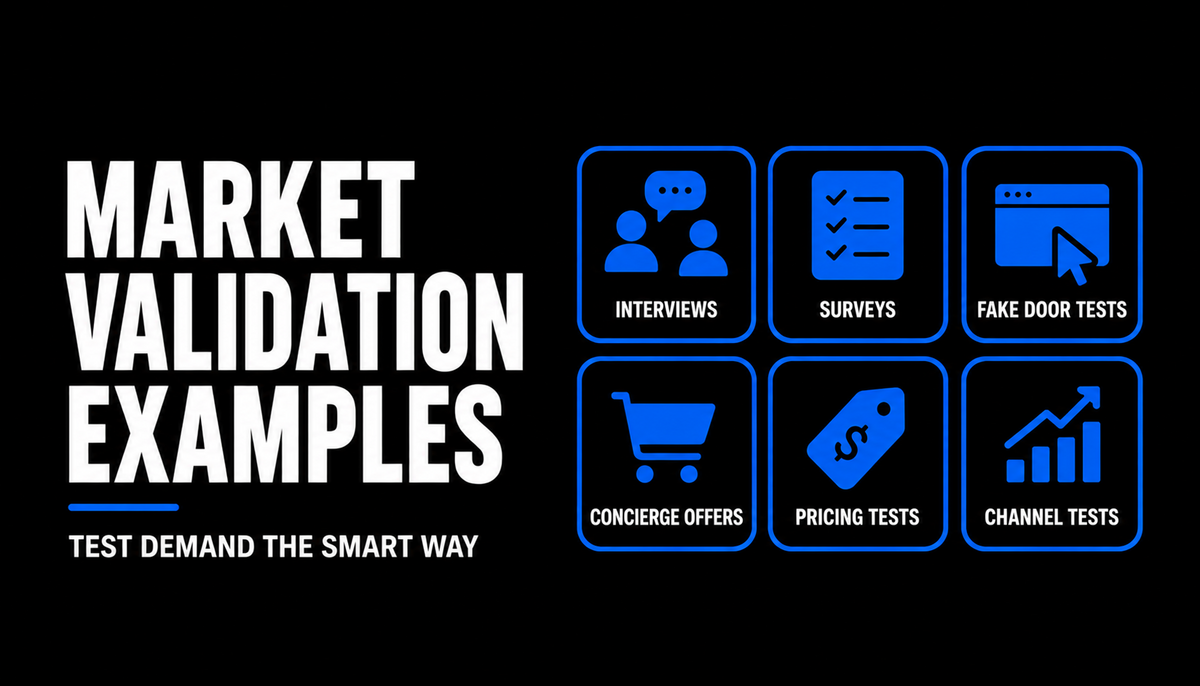
If you are validating without code, terms like "concierge MVP," "pilot," "prototype," or "smoke test" are more accurate descriptions of your experiment.