TL;DR: Founders stall on SaaS commercial models by delaying pricing completely or over-optimizing tiers before anyone has paid. A commercial model is the structure of the deal (what you charge for). A pricing tier is just the number on it. Stop treating model selection as a massive strategy problem. It collapses into three inputs: how often the pain recurs, who the buyer compares you to, and the monetary value created. Once you know those, picking among seat-based, usage-based, flat-rate, or hybrid models is a simple matching exercise.
The Two Pricing Traps
Founders constantly fall into one of two extremes. The first is the founder who refuses to name a price until the concept is "proven." The second is the founder who spends three weeks rebuilding the pricing page hunting for the optimal model, without a single paying customer.
Both avoid the only question that matters: will someone pay?
Money itself does not matter. Willingness to pay money does. Not asking for money is the graver error because no money means no real value produced. Your commercial model can and should change later. Stop treating this as a one-shot decision.
Why Recurring Models Fail
You are not just picking a pricing tier. You are matching a commercial structure to how a customer's pain actually recurs.
Research into startup failure suggests that recurring software only works when there is recurring pain. Real operational pain still fails as a recurring business when it is:
Episodic: The need happens once a year, so nobody renews.
Bundled: The solution is already included for free in a tool the customer owns.
A disguise: The issue is actually a judgment or relationship problem wearing a software costume.
Misaligned: The person feeling the pain is not the person with the budget.
How to Choose a SaaS Commercial Model
Instead of agonizing over the perfect setup, collapse the decision into three inputs.
Retention pattern of the ICP: Is the product used daily or once a year? You cannot run a subscription on a once-a-year purchase. Save yourself the headache.
Perceived competition: Who does the buyer compare you to — an app or a human? Framing the right category is the difference between a low and a high price point. If users compare your product to a cheap consumer app, your price is capped. If you reframe it to compete with an expensive professional service, a higher monthly model becomes an easy decision.
Value-first: Start from the monetary value the service creates and work backward. That is the core of the offer.
Practical Framework: The 4 SaaS Commercial Models
With your three inputs answered, you can match your product to a structural model. The table below outlines four common approaches, what you actually meter, and when they fit best.
Commercial Model | How It Works | Value Metric | Ideal Product Type |
|---|---|---|---|
Seat-Based | Charges a flat recurring rate per user. | Number of active users. | Collaboration tools, daily workflow hubs where value scales with team size. |
Usage-Based | Charges based on consumption. | API calls, gigabytes, transactions. | Infrastructure, data routing, or products with highly variable volume. |
Flat-Rate / Platform Fee | One price for access to the entire platform, often tiered by feature access. | Platform access, feature gating. | Core operating systems, compliance tools, or single-point solutions. |
Hybrid | Combines a baseline platform fee or seat minimum with usage-based overages. | Base platform fee + usage overages. | Complex B2B platforms where baseline access has fixed value, but heavy users cost more to serve. |
For a deeper look at how the flat-rate and platform models map to software delivery, see our guide on B2B SaaS licensing models. According to the Bessemer Nasdaq Emerging Cloud Index, macro trends favor scalable commercial structures over rigid licenses. Paddle's Pricing Strategy Guide also shows that aligning your model with willingness to pay is crucial for growth.
Do Not Ignore Off-ICP Traction
If a segment you did not target starts converting, do not discard it as off-ICP noise. Ask what product or business model changes would make that segment viable. The commercial model follows the demand, not your slide deck.
Setting Up the Design Partner Commitment
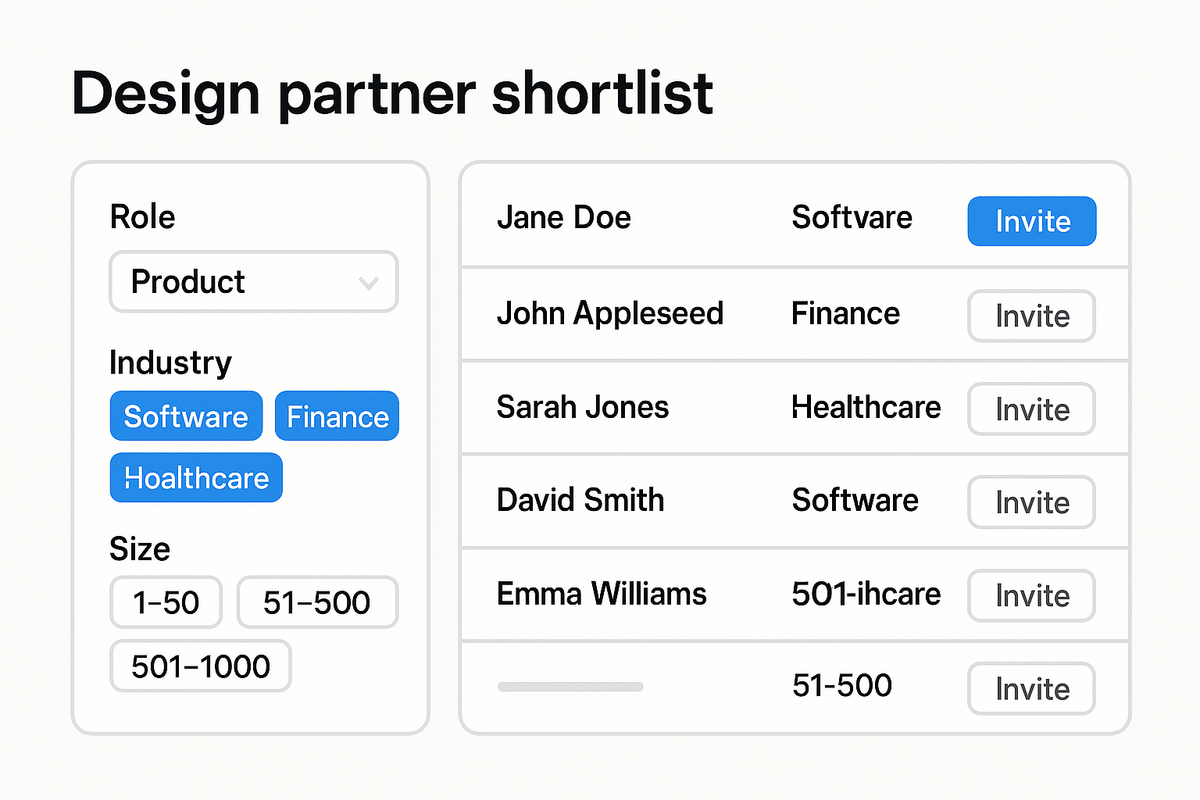
A strong commercial model anchors the pilot phase. It sets the terms for design partner commitments and revenue expansion. When you invite early adopters, your commercial structure sets expectations for what happens after the pilot. You need to agree on what value looks like and how it will be metered, even if you discount the initial price. If you need a framework for these early agreements, use our design partner template.
If you are looking for tier-level numbers and competitor benchmarks rather than structural models, see our SaaS pricing models comparison.
FAQ
How do I choose a SaaS commercial model?
Start with the retention pattern of your ICP. If they use it once a year, do not build a subscription. Then decide what you are optimizing for: acquisition speed or lifetime value (LTV). For example, outcome-based models often grow fast because they are very easy to sell to people, but per-seat models frequently provide better retention and overall LTV. Pick the model that matches your current optimization goal.
What is the difference between a commercial model and a pricing model?
A commercial model defines the structure of the deal — what you charge for, how it scales, and the metric you meter. A pricing model (or pricing tier) is the specific number you attach to that structure.
Can I change my commercial model later?
Yes. Your commercial model can and should change as your product matures. The biggest mistake is delaying your launch because you are afraid of locking in the wrong model. Ask for money now based on the value you provide today, and adjust the structure as you learn how customers actually use the product.
How does the commercial model affect the pilot or design-partner phase?
The commercial model you choose now sets the foundation for your design partner commitments, ensuring both sides understand how the product will be metered when it moves into full production.
When should you use a seat-based or usage-based model?
If your product is a daily workflow tool where value increases as more people join, use a seat-based model. If your product is infrastructure or a tool with highly variable volume, use a usage-based model. Seat-based models provide predictable revenue, while usage-based models align costs with the value delivered.