TL;DR: A stalled deal is usually a failed sale, not a post-demo mystery. When buyers say they need to think, the deal is stuck. Diagnose the real cause by checking for a concrete next step, real urgency, and clear positioning.
B2B sales stall when a buyer likes the product but feels no business pressure to act, leading to missed next steps.
If you are wondering why B2B sales stall, look at how the demo ended. You showed the product. The prospect said it looked great. They asked for time to think. You logged the deal as warm, sent a follow-up, and waited.
That is not momentum. It is an unresolved objection walking out the door.
In a founder-led sales process, "we need to think" means the prospect is not sold yet. The real mistake is letting the call end. Bring the hidden objection into the open. Lock a concrete next step. If you do not pull the objection out on the call, it comes out as silence later.
The polite lie trap
Founders often mistake positive feedback for buying pressure. They ask prospects how they like the product. This invites polite lies.
Liking the demo is not a buying signal. Enthusiastic buyers still ghost founders.
Treat a stalled deal as a discovery failure. Stop asking hypothetical questions about perception. Look at past behavior instead. Ask repeated "why" questions. You have to understand the actual urgency driving the buyer. Prospects do not volunteer their objections. Draw them out manually to overcome sales objections.
Practical framework: Post-demo stall diagnostic
Use this three-step process to find out why your pipeline is stuck, before designing a pilot program to test real intent:
Check the next step. Did the call end with a specific date and action, or a vague promise to sync?
Surface the objection. Ask direct questions about what happens if they do nothing.
Audit the urgency. Verify if they have spent time or money trying to fix this problem before.
Use this table to map symptoms to the real problem.
Symptom | Likely cause | Evidence to check | Next question to ask |
|---|---|---|---|
They liked it but ghosted | No urgency | Did they name a painful current problem? | "What happens if you do nothing this quarter?" |
They need to sync internally | Hidden objection | Did you agree to a dated next step? | "What is the biggest internal roadblock you expect?" |
They asked for pricing, then disappeared | Weak positioning | Did you explain the mechanism or just promise ROI? | "How does your team currently handle this process?" |
They agreed to a follow-up but no-showed | Low buying pressure | Have they spent time or money trying to fix this? | "Why is this a priority right now?" |
They understood the product but did not act | Lacking stakeholder authority | Was the person on the call able to move the deal? | "Who else needs to weigh in before you buy?" |
Fix weak positioning
B2B buyers often tune out massive revenue promises. Big claims trigger their spam filters.
If your deal stalls, check your value framing. You might be selling the outcome too hard. As noted in startup failure reasons compiled by CB Insights, ignoring the customer's real needs or presenting a flawed business model often derails early traction. Buyers need help making sense of the information, not just bigger promises.
Lead with the mechanism. Explain what the product is. Say who it is for. Show why they should care. Use results as proof, not as the whole pitch.
Build a competitor matrix to fix a weak differentiation problem. Do not use generic axes like price and quality. Use two market-specific axes instead. For a social media tool, you might compare one-platform against many-platform. You could map growth-first against full-management.
Find the real urgency
Stalled deals rarely stem from a missing product feature. They happen because the solution did not map to an urgent business priority. According to the SBA market research guide, truly competitive analysis means uncovering exact pain points, not just broad market demand.
Founders sometimes invent complex stories about wrong stakeholder alignment. They do this to avoid facing weak demand. Only diagnose stakeholder issues if you have hard evidence from the deal. Look for clear demand signals before assuming the buyer is ready.
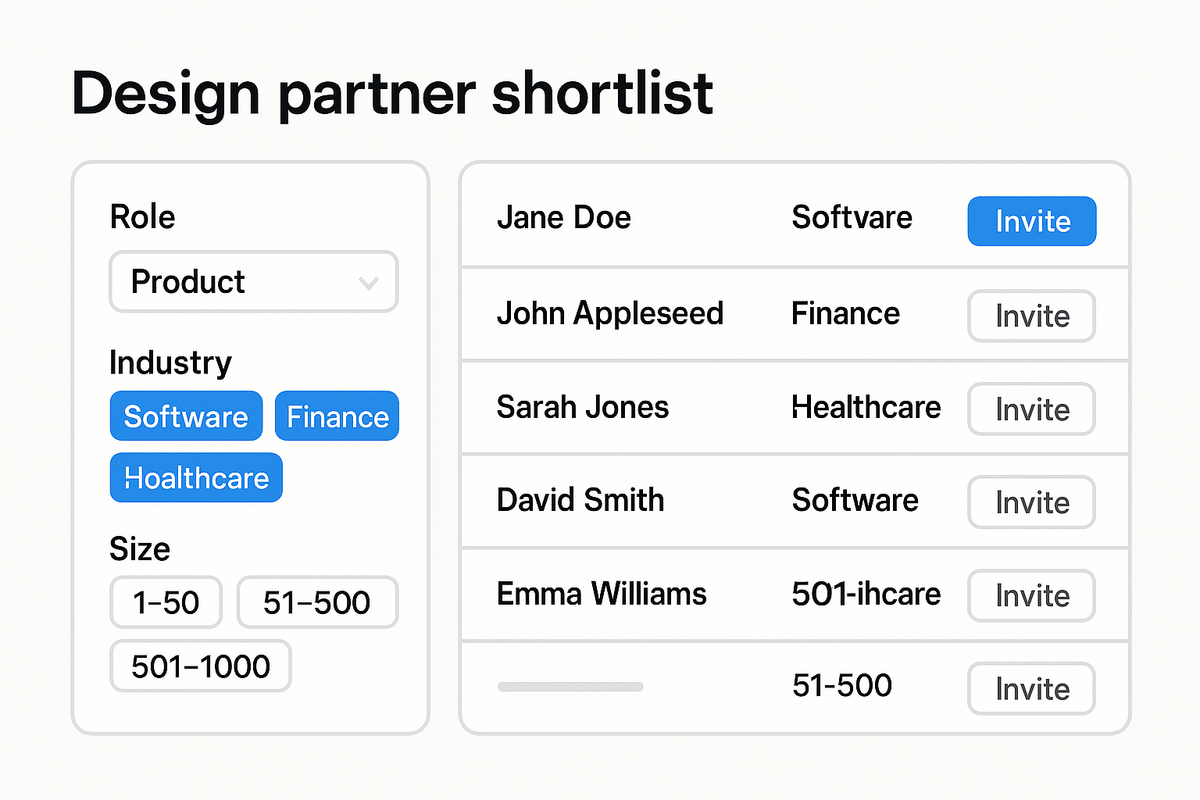
If your deal stalls, you need a way to force a concrete next step and test for actual urgency. Instead of a broad distribution scan, consider proposing a structured design partner pilot. As emphasized in Steve Blank's customer development methodology, getting out of the building to validate specific buyer commitments is crucial. A design partner structure requires the buyer to commit time and resources, quickly separating polite interest from true buying intent.
FAQ
How do I diagnose a stalled sales pipeline?
Check if your calls end with concrete next steps. If prospects consistently ask for time to think, audit your demos to see if you are uncovering real urgency or just collecting polite feedback.
What causes stalled B2B deals after a demo?
Deals stall due to hidden objections, lack of urgency, or weak positioning. The prospect usually leaves the call without feeling enough buying pressure to act.
Is a stalled deal always lost?
No, but it requires intervention. Treat the stall as a signal to restart discovery. Ask why the problem matters now to see if the deal can be saved.
They said they liked the demo. Why did it stall?
Liking a product is not buying pressure. Positive feedback often hides a lack of urgency. Uncover a painful problem they are willing to spend capital to fix.
How do I handle the "we need to think" response?
Treat it as an unspoken objection. Do not hang up. Ask them what specific part they need to think about. Secure a concrete next step before the call ends.
When should I blame stakeholder alignment?
Blame stakeholder alignment only when you have evidence. A healthy next step has a who, a what, a when, and a reason it matters now. If you have those and the deal stops, you might need a different buyer in the room.