TL;DR: Stop asking buyers what they think of your product. That produces polite lies. Instead, ask product interview questions about their past behavior, current workflow, and what they already tried. Find out what they compare you to — another app or a human — and test their willingness to pay before writing any code.
Founders often waste their B2B buyer interviews with two bad questions: "What do you think about it?" and "How do you like it?"
When you ask for opinions, buyers give you polite lies. They want to be helpful, so they tell you the idea sounds good. Then they go back to their actual work, and you build a product nobody pays for.
To avoid this, you need a different approach to B2B customer interview questions. Good customer discovery questions — like a structured script — do not test hypotheticals. They study past performance and behavior. Your goal is to build a clear mental model of the customer. You need to understand why they act the way they do, what they currently compare your product to, and whether their problem creates real willingness to pay.
The Problem with Seeking Opinions
Founders complicate product interviews because they want validation. They look for a positive reaction.
In customer discovery, ask about prior behavior rather than stated desire. People often mislead both the interviewer and themselves. If a buyer says a problem bothers them but has taken no action to fix it, the problem is not painful enough to support a startup. The purpose of early interviews is to understand their context, their team, and how often the job happens.
Rigorous interviews prevent you from building features that buyers call nice to have but will not fund. You want to dig into specific past events rather than broad generalities, a principle central to The Mom Test.
The Best Product Interview Questions
Before diving into the framework, here is a quick checklist of the best product interview questions to ask:
"Walk me through the exact steps you took the last time this problem happened."
"What did you already try to fix this?"
"Who else on the team was involved in fixing it?"
"What are you using right now to handle this workflow?"
"How much time or money did your last attempt to fix this cost?"
Ask Better Questions
Bad question | Better product interview question | What it reveals |
|---|---|---|
"What do you think about this idea?" | "Walk me through the exact steps you took the last time this problem happened." | Actual past behavior instead of hypotheticals. |
"Who are your competitors?" | "What are you using right now to handle this workflow?" | Real alternatives, which might be manual work or a human rather than a direct software competitor. |
"Would you pay $50 for this?" | "How much time or money did your last attempt to fix this cost?" | Existing budget and willingness to pay based on past spending. |
Practical Framework: Reconstructing Past Behavior
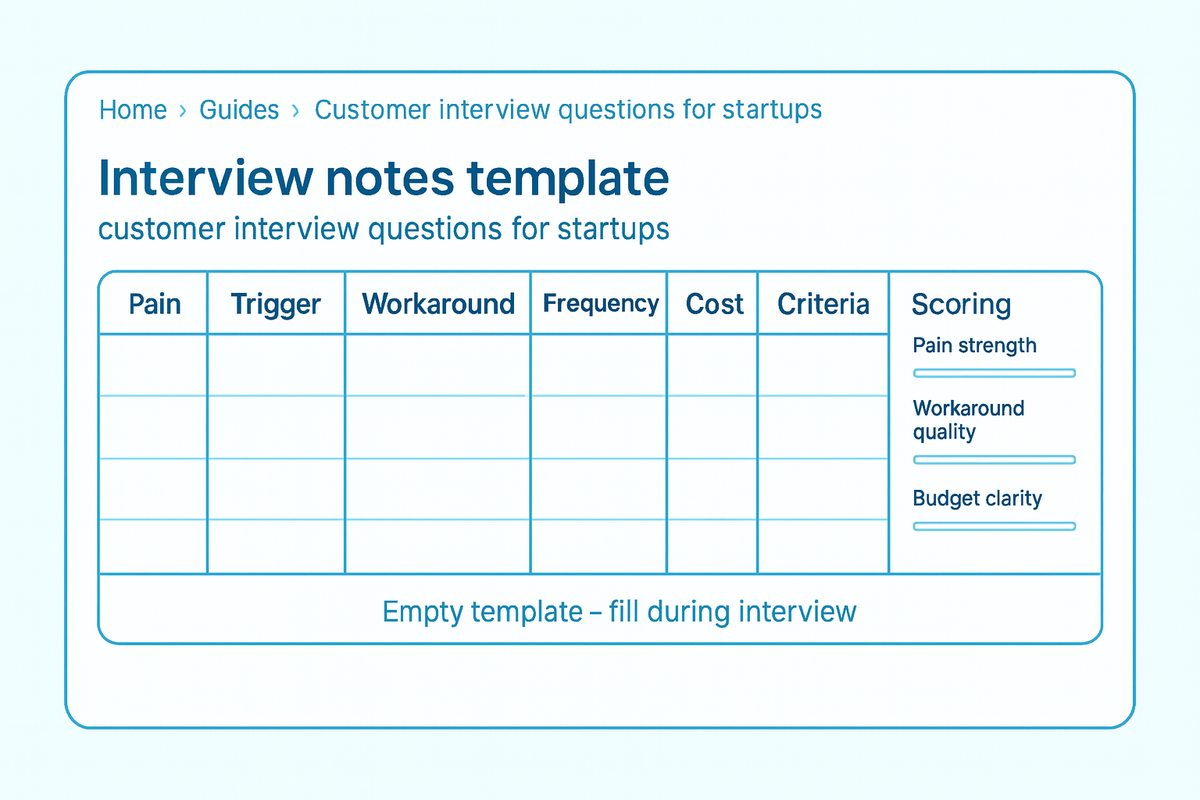
Use this framework to reconstruct the buyer's past behavior instead of asking for opinions. Replace "what do you think?" with questions that map their reality.
1. Workflow and Context
Workflow questions reveal what the buyer actually did last time, not what they imagine they might do later.
"Walk me through the exact steps you took the last time this problem happened."
"Who else on the team was involved in fixing it?"
"How often does this job happen during a normal month?"
2. Current Solutions and Comparisons
Current solution questions expose real alternatives and anchor your pricing category. Founders often misjudge their competition. A buyer might compare your software to another app, but they might also compare it to hiring an intern. Framing the right category is the difference between a $10 and a $100 price point.
"What did you already try to fix this?"
"What are you using right now to handle this workflow?"
"When you look at this problem, do you compare it to a software tool or a manual service?"
3. Willingness to Switch and Pay
Willingness to pay questions uncover whether a problem has actual monetary value attached to it. Money does not matter as an abstract concept. Willingness to pay matters.
"What monetary value is at stake when this problem happens?"
"How much time or money did your last attempt to fix this cost?"
To test willingness to switch, use a concrete commitment check. Steve Blank's Customer Development methodology suggests ensuring you find real pain by looking for budgets that are already allocated to the problem.
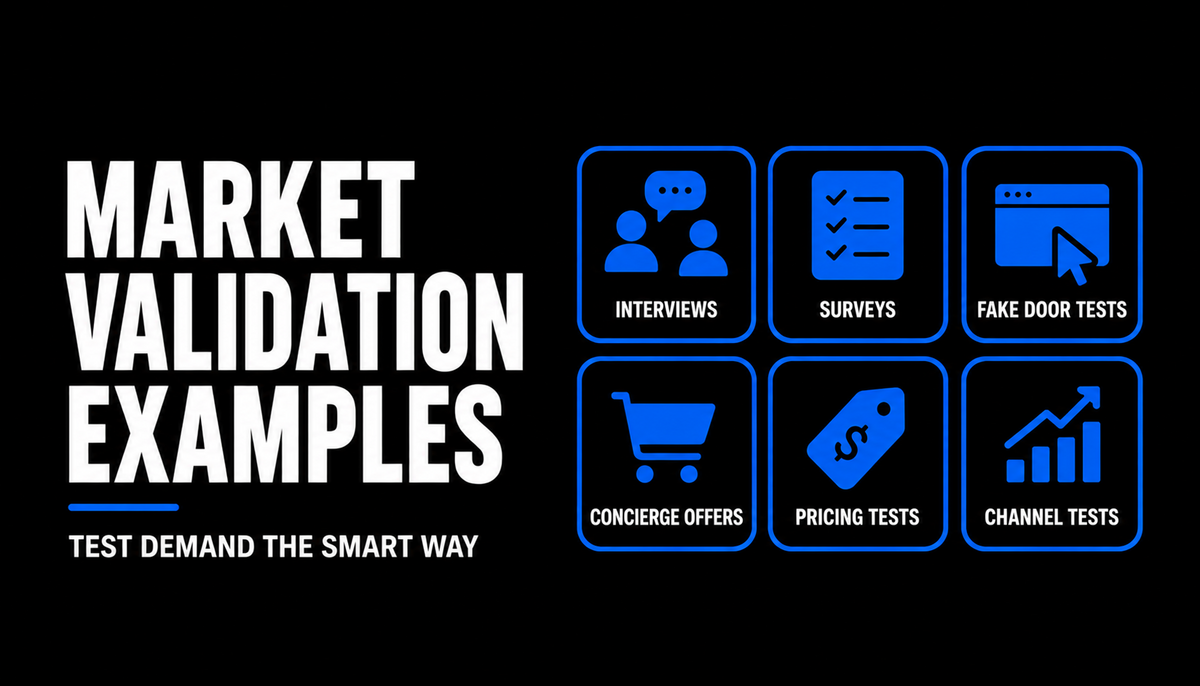
As a mechanism example (though in a B2C context), we ran a concierge pilot for a fitness app struggling with traction. Instead of writing code, we sold a pilot to 15 real buyers where a human sent WhatsApp messages to provide the personalized workout. After 14 days, 40% of the testers wanted to buy a £60 subscription. Only then did we build the automation.
You need product validation testing that proves commitment just like that pilot did.
Finding the Truth
It helps to conduct rigorous interviews. CB Insights points out that building products without market demand is a top reason startups fail, making willingness to pay a major indicator of success.
Pricing can feel overwhelming. It really comes down to the retention pattern (do they use it daily or yearly?), the perceived competition, and the monetary value your service brings. Focus on the value you provide and work from there.
FAQ
Why can’t I just ask buyers what they think or whether they like it?
Because that creates polite lies. When you ask for opinions or reactions, buyers will usually tell you what they think you want to hear. Product interview questions should avoid hypotheticals and approval-seeking. You need to know what they actually did in the past, what they currently compare you to, and what monetary value the problem holds. Your goal is to leave the room with a clear mental model of the buyer, not compliments about the product.
What are good product interview questions for B2B buyers?
Good questions focus on past workflow and actual spending. Ask "What did you already try to fix this?" or "How much time or money did your last attempt to fix this cost?" These questions surface real behavior.
What questions should I avoid in a product interview?
Avoid asking for predictions or validation. Questions like "Would you use this feature?" or "How much would you pay for this?" invite the buyer to invent answers.
How do you test willingness to pay in a product interview?
You test it by looking for past spending on the problem, or by asking for a concrete commitment before you build. Ask what they currently use, and how much time or money their last attempt to solve the problem cost.