TL;DR
Stop comparing features. A real competitor is whoever fights for your Ideal Customer Profile (ICP), budget, and attention. Your biggest threat might not be a similar startup, but a spreadsheet, an intern, or the prospect deciding to do nothing. Map your direct competitors, indirect substitutes, and the status quo to find your positioning wedge.
What is competitor analysis?
Competitor analysis is the process of mapping who your customer chooses instead of you. Rather than simply listing companies with similar features, it involves identifying the direct alternatives, indirect substitutes, and status-quo behaviors competing for your ideal customer's budget and attention, and using that data to sharpen your own positioning.
You stay up late building a 20-column competitor grid. You compare your startup against the biggest industry incumbents, mapping every feature, integration, and pricing tier. Then you get on product discovery calls and realize almost none of the companies on your list are relevant. Why? Because they do not sell to the same customer.
The spreadsheet was not useless, but it answered the wrong first question. The best first question is not "Who looks like us?" It is "What did this customer use last time?"
Similar features do not make two companies competitors. Fighting for the same customer does.
Redefining Competition: Behavior Over Features
Founders often mistake feature similarity for competition. But the market does not buy features; it buys outcomes. If you rely on top-down market analysis instead of asking real prospects what they actually used last time, you end up fighting ghosts.
A competitor can be a SaaS tool, a spreadsheet, an intern, a habit, or doing nothing.
Think about indirect substitutes. Instagram and Netflix do not look alike on a feature grid, but both can compete for the same hour of a user's attention on a Tuesday night. Your product might be a specialized data visualization tool, but if your ICP currently relies on a shared Google Sheet that is "good enough," Google Sheets is your actual competitor.
Practical Framework: How to Analyze Competitors
Before you build a go-to-market plan or finalize your go-to-market strategy, run your list of assumed competitors through an ICP-fight check. Follow this three-step process:
List the alternatives: Write down everything your target customer might use to solve their problem, including software, manual workarounds, and the option to do nothing.
Filter by ICP: Cross out any tools that do not actively fight for your specific buyer segment. The ones that remain are your direct competitors.
Map the buckets: Categorize the remaining options into direct competitors, indirect substitutes, and the status quo.
The ICP-Fight Check
Here is the mini-table to use as your cue system:
Alternative | Target ICP & Budget | Why it wins today | Positioning opening |
|---|---|---|---|
Incumbent CRM | Enterprise / VP Sales | Brand trust, compliance | Speed of setup for small teams |
Excel Tracker | Same / Free | Zero learning curve | Automation of manual data entry |
AI Reporting Tool | Same / Marketing Lead | Better reporting | Zero-setup integration |
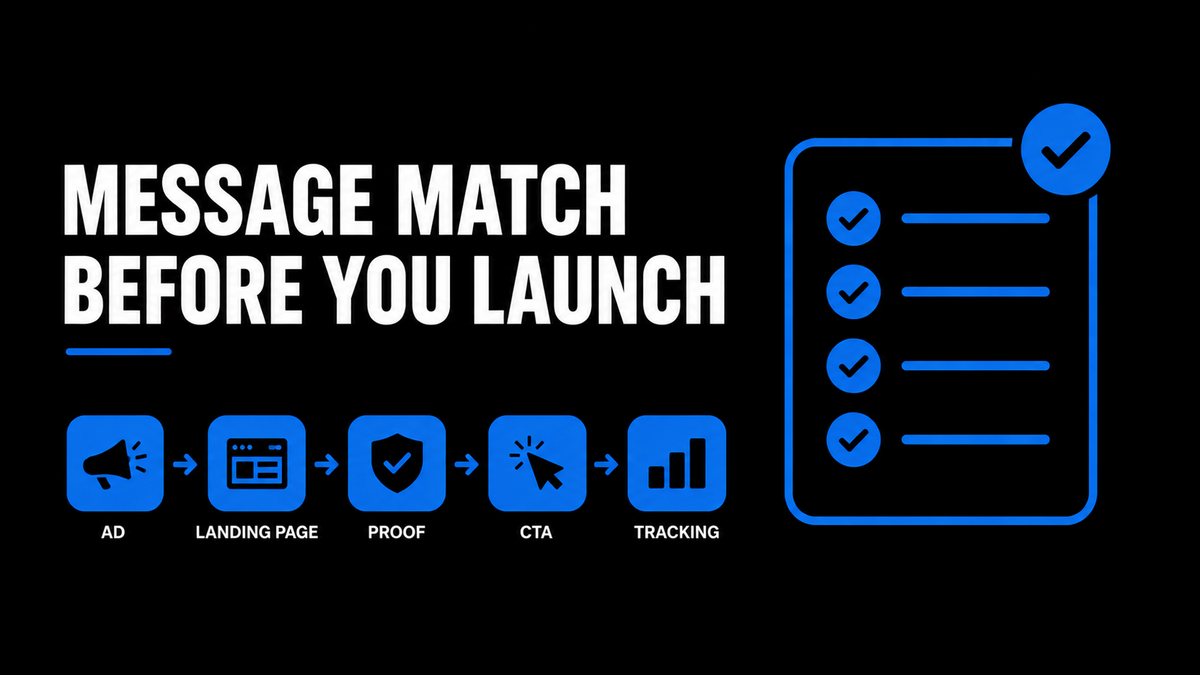
Use this map to sharpen your positioning, adjust your channel priorities, or refine your ad to landing page message match. Whether you are running ads or applying the Google SEO starter guide, the goal is to translate your competitive edge into sharper messaging.
The Three-Bucket Competitor Map
Your final map should break down into three distinct buckets:
Direct competitors: Companies fighting for the exact same ICP and budget to solve the exact same problem.
Indirect substitutes: Different products or services that solve the same problem or compete for the same resource (like the Netflix vs. Instagram fight for attention).
Status quo and inertia: The prospect's current workflow, a manual workaround, or the decision to simply do nothing.
Keep this output practical. These are notes for you — cues to help you make decisions, not a polished analytical report for investors.
If you find that your target market has entrenched competitors that you cannot beat, use that signal. Be willing to pivot if the initial math does not work. You can always learn more about startup pivots or read case studies on finding an edge.
Do not use your competitor analysis to confidently tell a prospect "you are wrong" about their current setup. Founders and prospects generally do not want to pay to be told they are wrong. It instantly triggers their bullshit detector. Offer a better way without attacking the way they work today.
FAQ
How do you do competitor analysis for a startup?
Start from the ICP, not the feature list. Map out what your customer actually used last time, filter out companies that don't target your buyer, and group the remaining alternatives into direct competitors, indirect substitutes, and the status quo.
Why is competitor analysis important?
It prevents you from fighting ghosts. A strong analysis helps you translate your true competitive edge into sharper positioning and messaging that resonates with your actual buyers.
What should a competitor analysis include?
It should include a map of direct competitors fighting for your exact ICP, indirect substitutes competing for the same budget or attention, and the status quo (including manual workarounds or doing nothing).
Who is actually my competitor: the company with similar features, or the alternative fighting for the same customer?
The alternative fighting for the same customer. A competitor is whoever competes for your ICP; similar features alone are not enough.
What is the biggest mistake founders make with competitor analysis?
Stopping at named direct competitors and completely ignoring substitutes or the inertia of the status quo. If you only look at similar software, you will miss that your biggest hurdle is the customer deciding to stick with a manual workflow.
How should I use this analysis in sales calls?
Use it to understand the buyer's context, but do not use it to correct them. Corrective consulting is hard to sell. Position your product as the next logical step from their current workflow rather than a repudiation of it.