TL;DR: You do not have a business until strangers care. A $500 ad test will not prove product-market fit, but it is the fastest way to see if cold traffic understands your offer. Before you spend months writing code, point a small ad budget to a simple landing page. If they click, your message works. If they leave an email, they want the solution. If they ignore it, you just saved a year of engineering time.
Testing a business idea means running a small, cheap experiment to measure demand from cold traffic before you build a product. A reliable method for testing startup ideas forces strangers to either trade an email for your promised solution or ignore it entirely, giving you real data on whether the market cares.
Many founders start with conviction. You build an MVP, polish a pitch deck, and show it to friends. They nod and say it looks great. You might even look at the market and tell investors you have no real competitors.
But warm praise only tells you if your friends are polite. Saying you have no competitors means you do not know the market. If you do not know the market, you are building from your own beliefs instead of real evidence.
You need a cold-traffic reality check. A $500 ad test forces your idea into the real world. It does not validate your entire business. It simply tells you if unknown people can understand your promise well enough to click and give you their email.
The Cold Reality Check
A small ad budget is a tool to actively invalidate bad ideas. If you cannot buy a click for your core promise, writing more code will not fix the problem.
If your ideal customer profile (ICP) includes specific job titles or company types, LinkedIn might be the best place to test, even if clicks cost more. For broader markets, Meta or Google search ads work better. Read more on channel selection in our LinkedIn Ads for Founders Framework.
Before you spend a dollar, write down your hypotheses for your ICP, the pain, and the solution. You must also write down your kill metrics. Do this before the campaign goes live. If you skip this step, every bad result will look like a learning opportunity instead of a clear signal to stop.
Practical Framework: The $500 Experiment Setup
You need a budget split and a clear plan to test your message and audience.
1. The $500 Budget Split
Do not spend everything on one ad. Split your budget to test the message and the audience.
Note: Platform minimums, audience size, and cost per click (CPC) can change this split. LinkedIn, for example, will require higher daily minimums and CPCs than Meta.
Budget | Purpose | What it tests |
|---|---|---|
$250 | Message Test | Which promise or category framing gets the cheapest click? |
$150 | Audience Test | Which segment responds better to the winning message? |
$50 | Retargeting | Do people come back after thinking about the offer? |
$50 | Buffer | Platform minimums and margin of error. |
2. The Experiment Worksheet
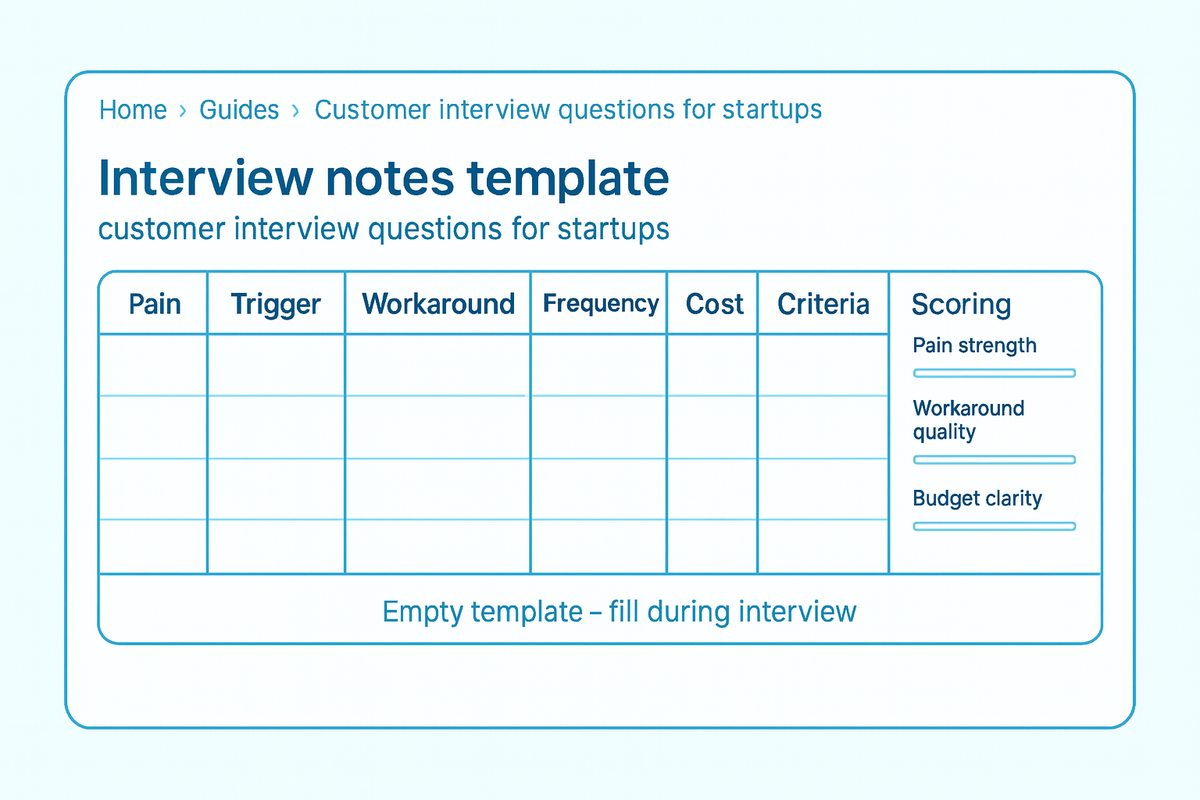
Copy this table before you launch. You must know exactly what you are testing and what failure looks like.
Element | Your Answer |
|---|---|
Hypothesis & Audience | Who are you targeting and what is your core assumption? (Example: SMBs want compliance software for marketing benefits, not just legal reasons.) |
Promise & Angle | What specific value are they buying, and how do you grab their attention? |
Landing page CTA | What is the exact ask? |
Success signal | Target click-through rate and email capture rate. (Note: Compare your own variations against each other instead of chasing generic benchmarks.) |
Kill metric | At what cost per click or zero-conversion threshold do you stop? |
Next action | What happens if it works? |
3. Category Framing
If the same product performs better as "a cheaper consultant" than "a better spreadsheet," you did not just learn a copywriting trick. You learned what category buyers put you in. Category defines your perceived competition, and that dictates your pricing. Frame the test to see how users value the solution.
Analyzing the Signal
Founders often overcomplicate idea tests. They treat the ad or landing page as the whole validation system. Clicks and email captures are weak evidence unless you know which segment clicked, what category they compare you to, and what objections they hold back.
When the money runs out, look at segment-level results, not blended averages. If a specific niche clicked heavily but another ignored it, you have found your starting point. Combine this ad signal with basic market and ICP research. The market you choose often matters more than the product itself.
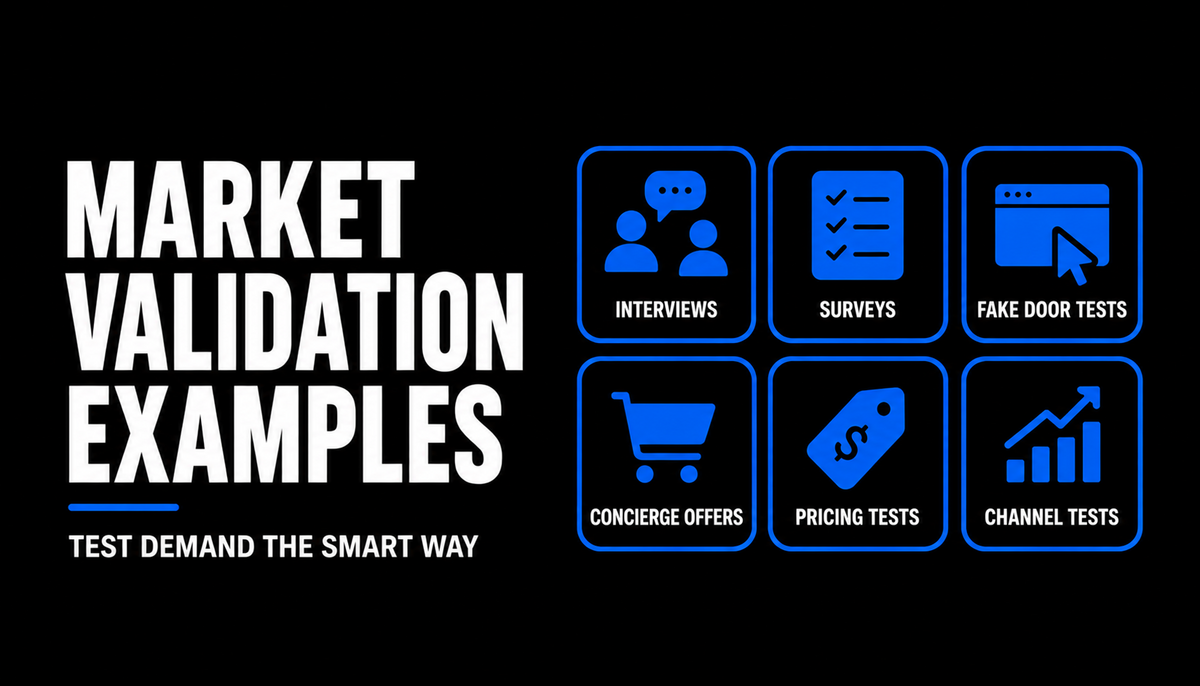
An email signup is not a willingness to pay. It is permission to ask better questions. The ad test is just one tool to measure demand. Pair it with lightweight tools like interviews and concierge tests to understand why people clicked. Review options in our guide to Startup Idea Validation Tools.
The Decision Matrix
Use this matrix to decide what to do next based on your data:
Signal | Result | Action |
|---|---|---|
High clicks, high emails | Strong interest. | Continue. Email them to schedule an interview or ask for a paid preorder. |
High clicks, no emails | They like the promise, but do not trust the page. | Revise the landing page, clarify the offer, or add proof. |
Low clicks, no emails | The market ignored the message. | Kill the angle. Test a completely different problem or audience. |
FAQ
Can you validate a business idea with $500?
No. You cannot prove product-market fit with a $500 ad test. You can only test message and audience interest. It helps you kill bad ideas, but real validation requires customers paying for and using a solution.
Is it okay to ask for an email or payment when I have nothing built yet?
Yes. It is the best way to prove real demand. You are not tricking them. You are testing if they care enough to trade value for a solution. If they do, you can manually solve their problem or refund them while you build.
How do I know when I have reached product-market fit?
You will feel it. It becomes easier to attract new customers. You move with the wind, not against it. But remember, a successful ad test is not product-market fit. It is just the first step in measuring real traction.
What if I get clicks but people do not want to do interviews?
Study their past behavior, not hypotheticals. Ask them how they solved the problem last week. If they do not care enough to talk, the problem might not be painful enough. Sometimes, a lack of interest means they are using a substitute you have not considered. Read more on a new way to look at competitors.
Should I optimize my ad campaigns for cheaper clicks?
No. You are buying data, not users. Cheap clicks from the wrong audience give you false signals. Pay more to ensure your ads reach your exact ideal customer profile.