TL;DR: You do not need to build a product to know if people want it. You need to map the market to find a clear target audience, study their past behavior, and require a real commitment to confirm the pain is real.
What is idea validation?
Idea validation is the process of proving a specific customer group has a severe problem they will pay to solve, before you build the product. It relies on hard evidence — like past spending, manual workarounds, or upfront payment — rather than asking people if they like your idea.
I mentor dozens of founders every month. Many of them ask how to position their pitch deck for a raise before they have any traction. But anyone can build an MVP in two weeks. As CB Insights notes in their report on why startups fail, the best companies start with a real problem, not just a vision. No one will invest in a startup idea without proof of demand.
The same issue shows up when a founder proudly says, "We have no competitors." That is a well-known red flag. If you do not know your competitors, you do not know the market. If you do not know the market, you are building from your own beliefs, not from customer evidence.
Find the Right Segment First
Founders rarely think about market research. They treat it like a corporate exercise. But your chosen market and ideal customer profile (ICP) will impact your business more than the product ever will.
Before you test an idea, map the market to find an audience that gives you a realistic path to growth. Starting broad but narrowing down fast is an essential step when conducting market research and competitive analysis.
Consider a B2B sustainability startup I worked with in Europe. The obvious move was to build compliance software for large corporations facing new EU laws. But market research revealed a different segment: green SMBs and consultants. These smaller companies did not legally have to report their emissions, but they wanted to do it voluntarily for branding and mission reasons. By shifting focus to this segment, the startup found a much simpler, less competitive path to growth.
They could not have found that opportunity without properly understanding the market. To dive deeper into finding the right audience, read this idea validation framework.
Practical Framework: How to Validate a Startup Idea
Once you identify the segment, you need to validate that the problem is severe enough to solve. Do not mistake procedural diligence — setting up your corporate entity, organizing legal rights, or structuring the team — for real progress. What you actually need is stage-appropriate traction.
To get that traction, you need evidence. A strong go-to-market strategy requires an ICP hypothesis, a pain-solution hypothesis, and a distribution hypothesis. You also need clear metrics to decide whether the idea is invalidated or good to proceed.
Use this decision-rule checklist to validate demand before you ship:
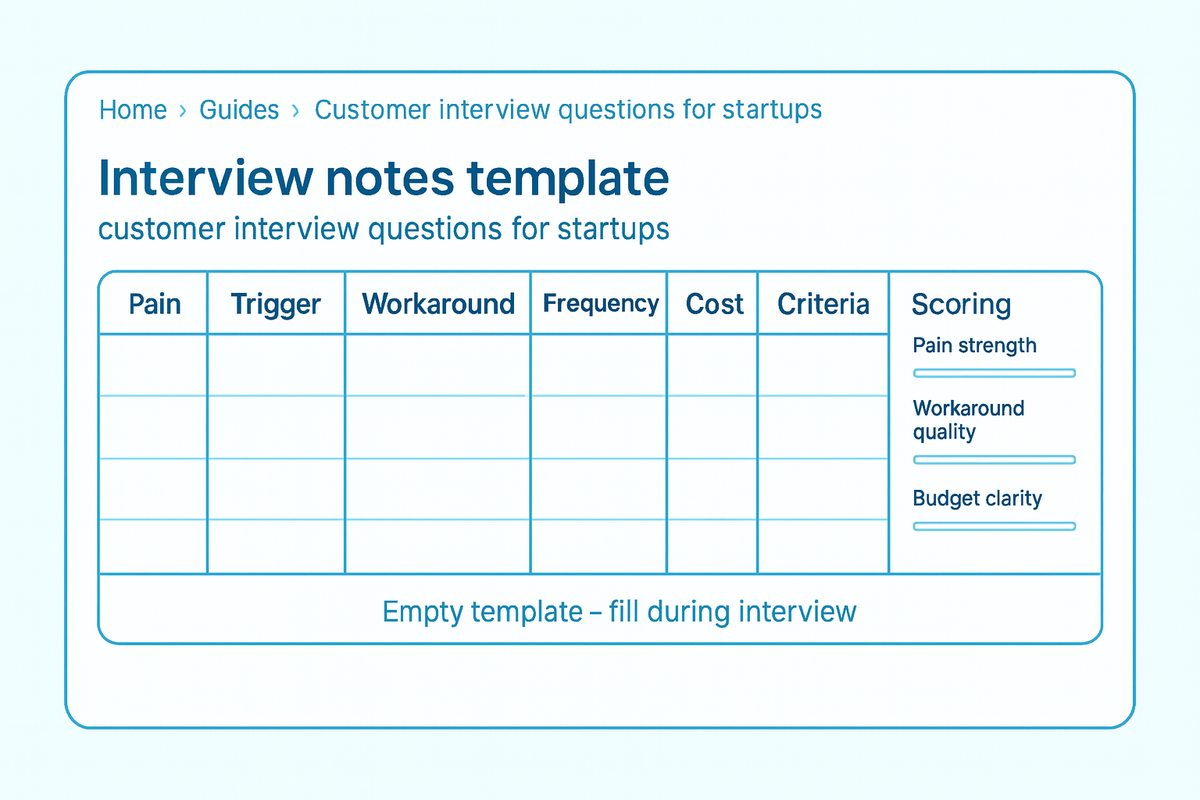
Rule 1: Study Past Behavior, Not Opinions. Never ask a customer, "What do you think of this idea?" Those questions force polite lies. Instead, ask what they actually did to solve the problem in the past six months. If they have not spent time or money trying to fix the issue, the problem is not severe enough.
Rule 2: Look for Manual Workarounds. If people are patching together spreadsheets, Zapier automations, or expensive consultants to do what your software would do, that is a strong signal. It shows the problem hurts enough that they are already spending resources on a bad solution.
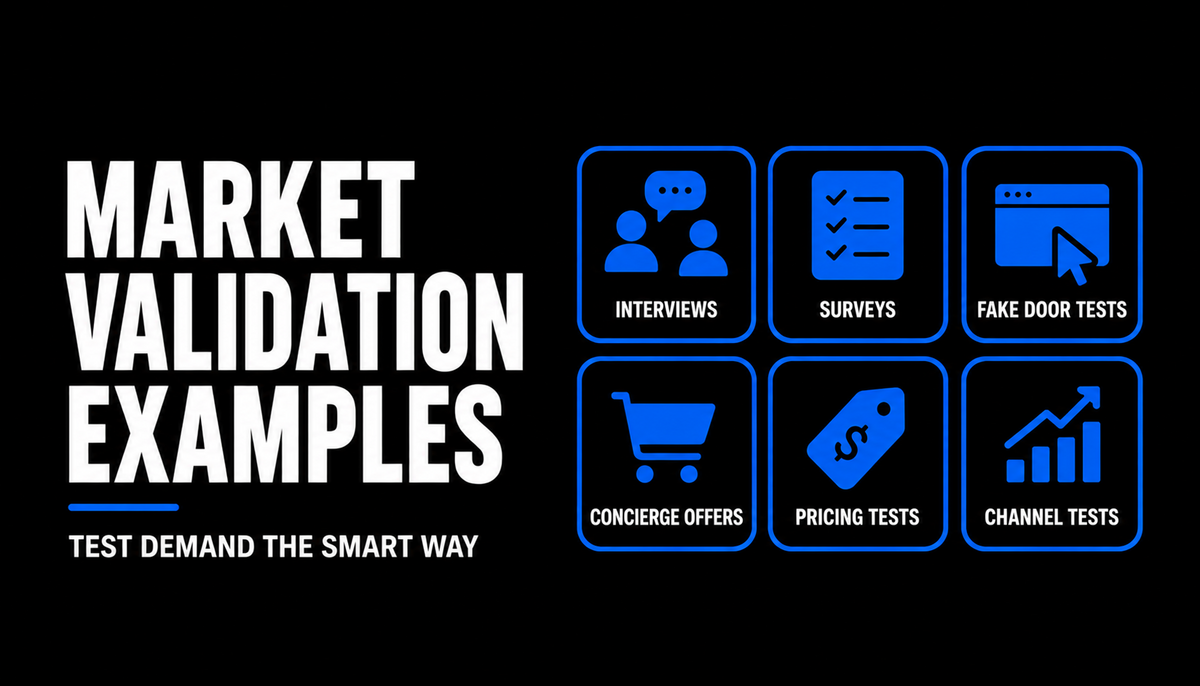
Rule 3: Force a Real Financial Signal. Interest is cheap. Real validation requires behavior that costs the customer something. We once ran a fake-door test where we charged money for a product that did not exist yet. When a customer bought it, we immediately reverted the charge and clearly explained that we had not launched yet, placing them on a waitlist. We never kept the money, but that action proved definitively that people needed the solution. Find out more about setting up these systems in this guide to startup idea validation tools.
Rule 4: Treat Complaints as Positive Signals. When you run these tests, you might hear complaints about a missing feature. Celebrate that. Customers only complain about missing features when they genuinely care about the core product. The complaints prove you have found a real problem. You can learn more about extracting the truth from customers in The Mom Test.
Weak Signals vs. Strong Signals
Not all validation is equal. Use this table to measure the quality of your evidence:
Weak Signal (Do not trust) | Strong Signal (Trust) |
|---|---|
"I would definitely use this." | They describe a manual workaround they use today. |
Positive survey responses | Past spending on similar problems |
Signing up for a free waitlist | Paying for a pilot program |
Asking for more features | Complaining that they cannot use the product yet |
Likes on a social media post | Refunded fake-door payment |
Validate Before You Build the Full Product
You should validate the idea once the core concept is clear, but before you invest months into engineering. The goal is not to stay in research mode forever. It is to hit the decision point: build or do not build.
If the problem is severe and the customer is willing to pay, you can develop the product quickly. If it is not, you can pivot without wasting time. Learn how to approach this early stage properly and validate your business idea before building.
FAQ
What is the difference between idea validation and product validation?
Idea validation proves a specific customer has a severe problem they want solved. Product validation proves your specific solution actually solves that problem for them. You must validate the idea first.
How do I know the idea solves a painful enough problem before I build it?
Do not ask customers if they like your idea. Validate the problem through their past behavior. Ask what they have done recently to solve the issue. Then, force a real signal by asking for payment before the product is ready. You can act as an outsourced engineering team and offer to build a custom solution for a fraction of the cost as a paid design partner. If they refuse to pay, the problem is not painful enough.
What if customers complain about the fake-door test?
If you run a fake-door test that takes a payment, you must immediately refund the money and explain that the product is not ready. The goal is to measure willingness to pay, not to deceive them or keep their money unfairly.
Should I build the product first and then figure out distribution?
No. You must validate exactly whose problem you are solving before you seriously tackle distribution. Distribution depends on understanding channel fit for a specific customer, not just trying growth tactics on a random audience.