TL;DR: Do not quit your job until you have undeniable proof of demand. Building a product is not validation. Talking about a product is not validation. Real validation is forcing a transaction — getting a stranger to commit time or money to solve a specific pain before the product exists. Use low-risk, zero-code tests like cold outreach, landing pages, and painted-door tests to find out if the market actually wants what you are selling.
The Real Mistake Founders Make
You have a great idea. You bought the domain. You drafted a pitch deck and mapped out the product features. You might even be preparing a fundraising story. You think you are ready to build.
You are not.
To validate business idea assumptions, you need evidence from strangers or cold traffic that they will commit time, money, or a concrete next step.
The most common mistake founders make is building from their own beliefs and avoiding the money question. They treat a startup idea as proven without any real traction or willingness-to-pay test. When evaluating startup ideas, having no competitors might feel like a win, but it usually means you do not understand the market.
Before you hand in your resignation, you need to prove acquisition and retention risk with low-risk experiments. You must ask for money or a concrete action, and test your concept against whatever substitutes people already use.
What Counts as Proof of Demand?
Before moving to the testing phase, you need to know what you are looking for. Proof of demand means a prospect has committed to solving the problem with you. Concrete proof types include:
Paid pilot
Preorder
Letter of Intent (LOI)
Booked demo
Reply from your ideal customer profile (ICP) with a clear, specific pain
Pricing-button click
Validate Business Idea: The Zero-Code Checklist
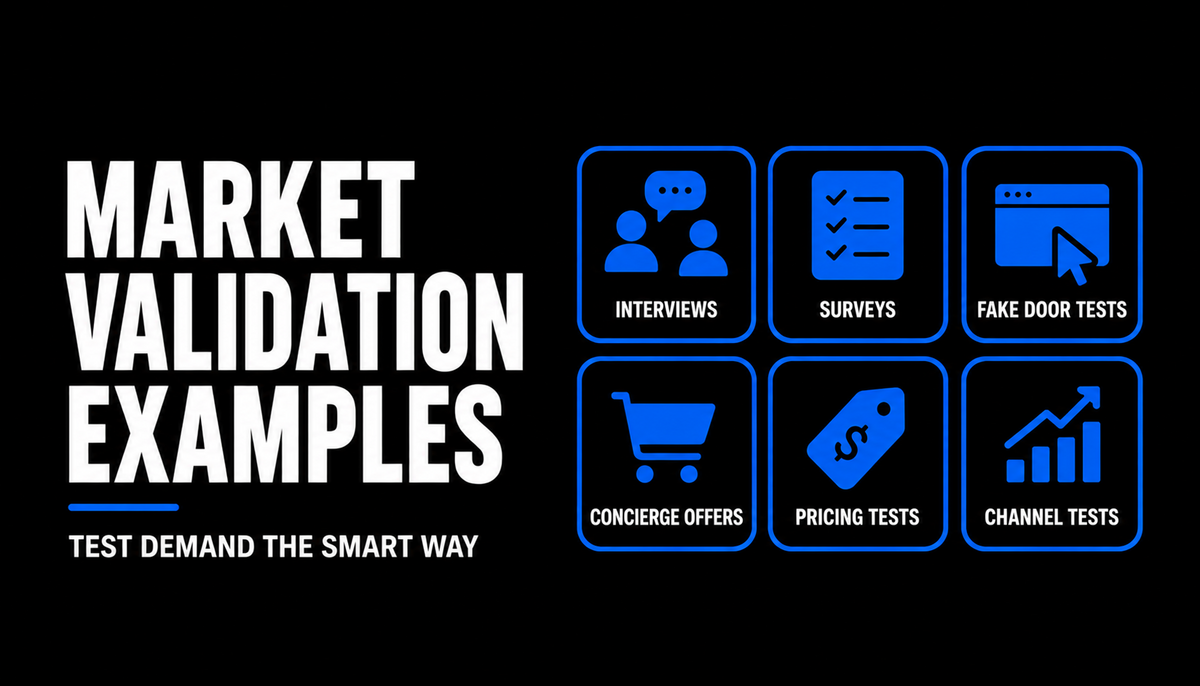
You do not need to write code to validate a startup idea. You need a low-risk testing framework. Here is the Zero-Code Business Idea Validation Checklist to measure demand before making major financial commitments:
Test | What It Proves | What to Measure | Invalidation Signal |
|---|---|---|---|
Cold Outreach | Pain-solution fit and ICP access | Reply rate and meeting booked rate | Zero replies across a large sample (with good messaging) |
Landing Page | Willingness to pay or try | Click-through rate on pricing buttons | High traffic but no button clicks |
Painted-Door | Actual intent to use the feature | Conversion rate from click to waitlist | Immediate drop-off upon realizing it is a beta/waitlist |
1. Cold Outreach for Objections
Cold outreach is not just about finding early users. It is a tool to actively extract objections.
Find a targeted sample of prospects in your ICP (the exact number depends on your niche size). Send them a direct message or email outlining the problem you solve and asking for 10 minutes to show them a solution.
What to measure: Reply rate and meeting booked rate.
Invalidated if: You get silence across a large enough sample. However, one weak test should not invalidate the whole market. Silence might mean poor message quality or the wrong channel. Only invalidate after testing multiple angles.
2. The Transactional Landing Page
Do not build a coming-soon page that just collects email addresses. Build a landing page that looks like a real product and asks for a real commitment.
Explain the value proposition clearly. Add a pricing section. Put a "Buy Now" or "Start Free Trial" button on the page. You can use standard startup idea validation tools to spin this up in an afternoon. This is often the first step in finding product-market fit.
What to measure: Click-through rate on the pricing buttons. A click is a strong signal, but remember it is not undeniable proof of demand by itself.
Invalidated if: People visit the page but never click the buy button.
3. The Painted-Door Test
A painted-door test offers a feature or service that does not exist yet. When a user tries to access it, you politely inform them it is in beta and ask them to join the waitlist or prepay.
This is the core of a good fake door testing framework and a way to test demand in the real world. It measures actual intent rather than stated interest. Note on ethics and compliance: Handle this responsibly. Never charge a credit card without clear upfront disclosures, explicit refund or preorder terms, and a transparent privacy policy. Ensure you comply with all local consumer protection laws to avoid founder compliance risks.
What to measure: Conversion rate from clicking the feature to completing the waitlist form.
Invalidated if: Users drop off immediately when they realize the product is not ready.
Why Validation is Not Building
Founders often overcomplicate validation. They treat it like building an MVP or crafting a polished go-to-market strategy.
Validation is none of those things. Validation is collecting evidence against three hypotheses: your ICP, the pain-solution fit, and your distribution channel.
A zero-code checklist only works if each test has a clear metric for "invalidated for now" versus "good to proceed." Your market and ICP choice matter more than your product. You need to validate the segment dynamics before you ever validate specific features.
If your tests show that acquiring customers is too hard or that nobody wants to pay, stop. Do not build the product. Go back to the market and find a more painful problem. This discipline is essential for ensuring you solve a real problem; for a deeper dive into asking the right questions, consider reading The Mom Test.
FAQ
Can I validate this business idea before I build it or quit my job?
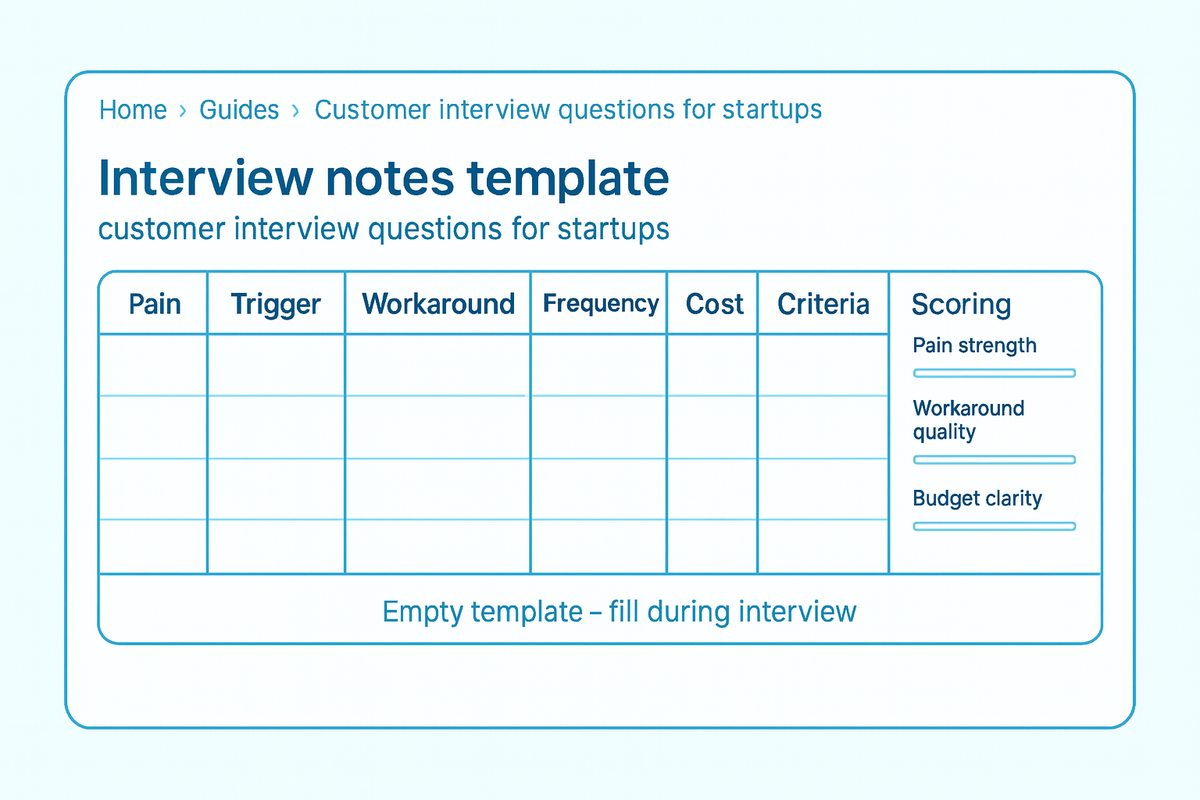
Yes. But validation is not asking people if they like your idea. That produces polite lies. Validate by forcing evidence of past behavior and commitment. Talk to your ICP about what they have already tried, why they paid or hacked around the problem, and whether they will commit money before the product exists.
How many people should I talk to before validating a business idea?
Aim for an initial batch of targeted prospects (for some niches this might be 10, for others 50 or more). This allows you to test messaging without burning your entire market. If you get zero replies, do not immediately invalidate the idea — check your message quality and channel first. You need enough volume to separate a bad pitch from a bad product idea.
Should I build a quick MVP to show them?
No. Plan your MVP only after you identify the most painful pain. AI makes it cheaper and faster to build the wrong thing. Zero-code tests are only useful if they measure behavior and willingness to pay, not compliments or curiosity clicks.
What if I do not have any direct competitors?
Having no competitors is a red flag. It usually means the problem is not painful enough for anyone to try solving it, or you do not know the market. Look for substitutes. If people are not already spending time or money to hack together a solution, they will not buy yours.