TL;DR: Lean startup methodology is a way to test business assumptions through build-measure-learn cycles, originally developed by Eric Ries. It is not an excuse to ship a buggy product. For B2B SaaS, it is a disciplined system to reduce uncertainty and avoid building unwanted features. The goal is to run the smallest possible build-measure-learn loop that proves demand with real evidence — like signed LOIs and revenue — instead of relying on founder belief. Shrink the loop; do not lower the bar.
A founder uses modern tools to build a polished product in two weeks. It has a beautiful interface, easy onboarding, a dark mode, and a detailed pricing page. The team spends days debating subscription tiers and the exact structure of their seed deck.
They move fast. They feel lean.
But no one has paid. No one has signed a letter of intent. No one has even changed their behavior.
This is the core trap of modern development. AI makes building cheaper and faster. But speed without discipline mostly increases the rate at which founders build things people do not need. Treating the lean startup approach as permission to build first and validate later leads to polished minimum viable products with zero users.
Building from belief instead of proof is a mistake. Your vision is not inspiring until it seems real, and vision without traction is just naive storytelling. The lean methodology is not about moving fast to ship junk. It is about running the smallest loop that proves demand.
Lean startup methodology in B2B SaaS
In a B2B context, the methodology means testing the riskiest assumptions — like willingness to pay or exact feature needs — without sacrificing enterprise requirements for security and reliability. You shrink the scope of the test, not the quality of the delivery.
Shrink the Loop, Protect the Trust
As originally outlined in the core lean principles, the build-measure-learn loop is a decision system. In B2B SaaS, the tension is clear: you need to test quickly, but you cannot break trust, data security, or core workflow reliability.
Lean does not mean building a smaller version of your dream product. It means testing the assumption most likely to kill your company. You can narrow the scope of your experiment without sacrificing enterprise quality standards.
Here is how a B2B team uses the loop in practice.
Practical Framework: The Build-Measure-Learn Decision Matrix Example
Do not use the loop as a motivational slogan. Use it to make decisions. Instead of testing a massive corporate software suite, a sustainability SaaS team might test a narrower segment first. Note that the evidence thresholds below are examples, not universal benchmarks.
Decision: Pivot segment.
Assumption: Corporate sustainability teams are the best early buyers.
Smallest Build: A concierge demo and narrow reporting workflow.
Evidence Threshold: 5 booked demos with budget authority.
What We Learned: The sales cycle is too long and competition is entrenched.
Decision: Persevere (Build automation for SMBs).
Assumption: Consultants and green SMBs face the same reporting pain but move faster.
Smallest Build: A manual reporting template offered as a paid pilot.
Evidence Threshold: 3 signed LOIs or paid pilots.
What We Learned: SMBs convert quickly and have zero alternative tools.
Decision: Adjust GTM (Revise the revenue model).
Assumption: Buyers will pay $500/mo for automated reporting.
Smallest Build: A pricing tier test during sales calls.
Evidence Threshold: 2 customers pre-paying for beta access.
What We Learned: Buyers balked at $500 but accepted $200 with usage caps.
Build: Test the Riskiest Assumption
Before you write code, define the riskiest assumption. Are you testing a demand risk, usability risk, or willingness-to-pay risk?
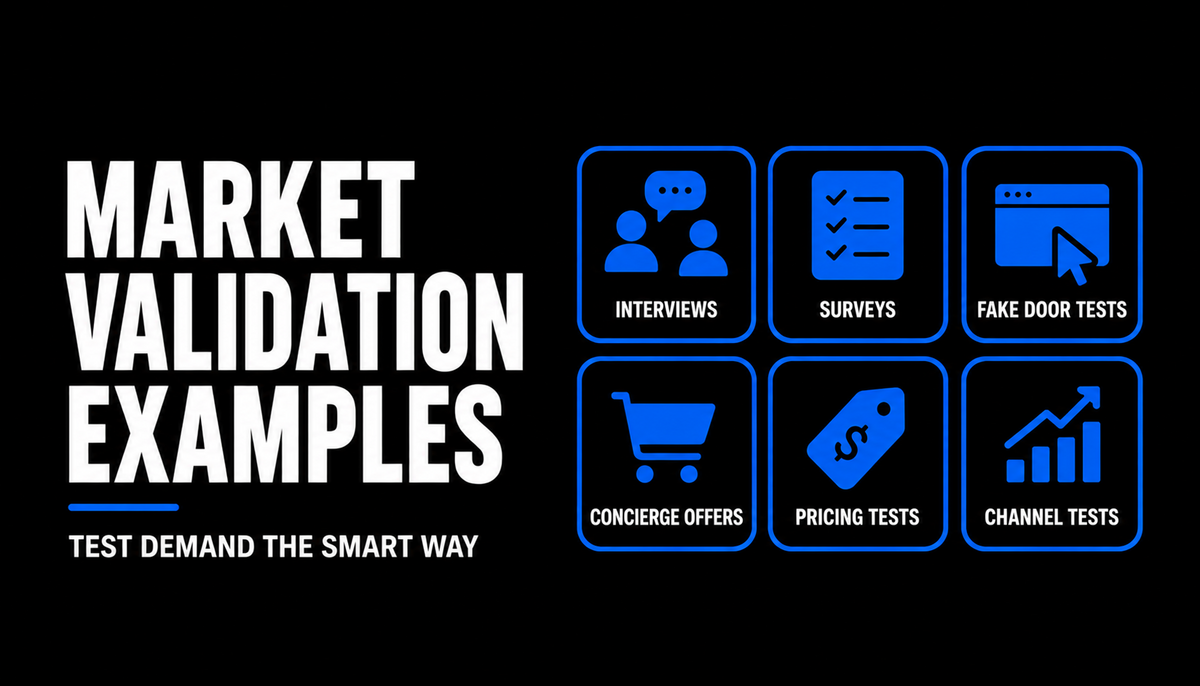
The "build" step does not have to be software. It can be a landing page, a manual workflow, or a prototype. A proper minimum viable product is simply the smallest thing required to test your assumption, an approach that applies heavily to customer development.
If you spend three months optimizing corporate design and legal setup before talking to customers, you are mistaking procedural diligence for real validation. Find a way to get someone to use the core function.
Measure: Track Behavior, Not Perception
Founders love asking hypothetical questions. "What do you think about this?" or "Would you pay for this feature?"
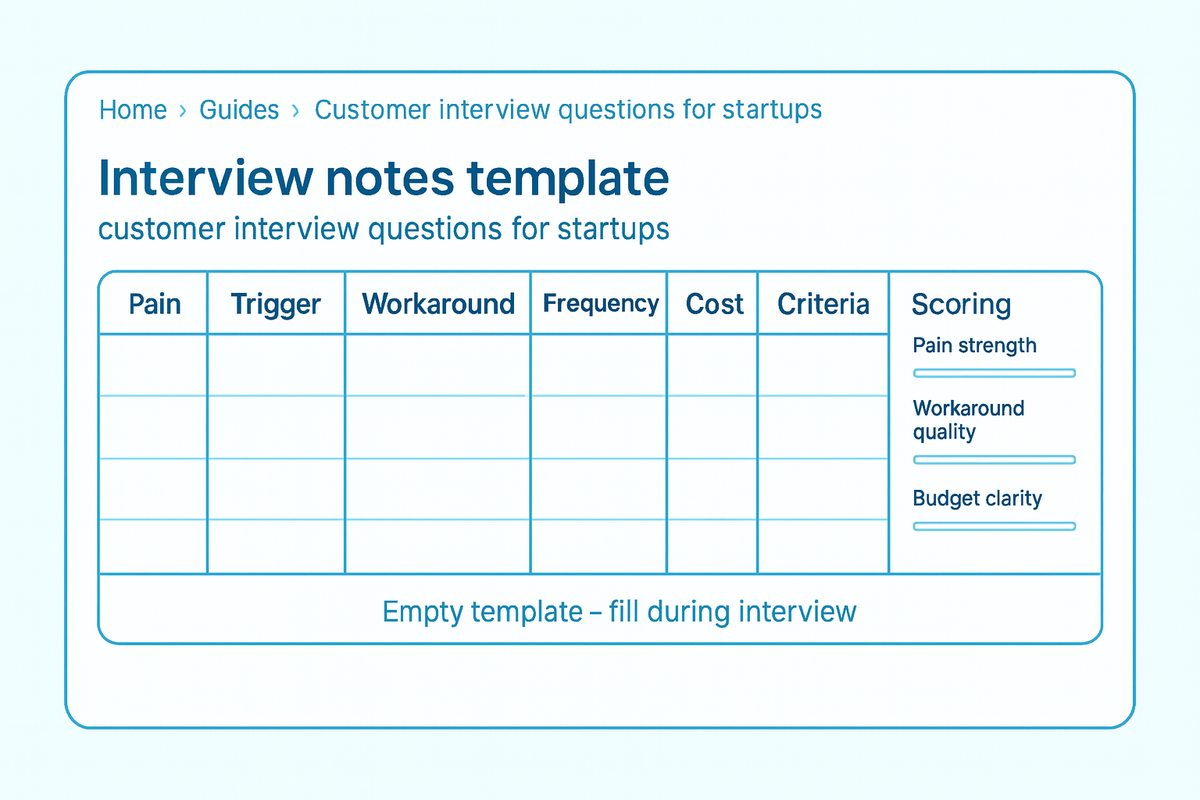
These questions force polite lies. Do not study their perception of you. Study their past performance and behavior. Ask why they churned from their last tool. Watch how they navigate a manual process today.
Real startup validation comes from behavioral metrics. Track willingness to pay, demo requests, signed LOIs, and sales cycle friction. A demo booked by the exact right buyer teaches you more than ten friendly calls with people who would never actually pay.
Learn: Make a Decision
Every loop must end in a decision. If your initial experiment fails, do not just keep building features hoping demand will appear.
You might need to pivot your ideal customer profile, change your go-to-market motion, or narrow the scope of the problem you are solving. This is why customer discovery and validation phases must remain distinct from general product development.
A strong market choice often matters more than product polish. If you choose a heavily regulated, consolidated market without testing it, your product will struggle regardless of how well it is built. Keep a competitor matrix to understand the market dynamics before you lock in a strategy.
Why Lean Startup Improves Capital Efficiency
Because a lack of market need is a top reason startups fail, the lean startup methodology is a tool for capital efficiency. It stops you from wasting engineering time and marketing spend on unproven concepts. By forcing you to gather real evidence from real operators, the build-measure-learn loop keeps your startup grounded in reality rather than founder belief.
FAQ
What are the main lean startup principles?
The core ideas revolve around validated learning and eliminating waste. Every build-measure-learn startup treats their vision as a series of testable hypotheses, building the smallest possible test to see if customers actually want the solution before investing heavy capital.
If AI makes building cheap and fast, why follow lean startup methodology instead of just shipping?
Because speed mostly increases the rate at which founders build things people do not need. When light and dark themes are cheap to add, it is easy to get distracted. Lean methodology imposes discipline. It forces you to build only around the most painful customer pain, measure real retention patterns, and secure stage-appropriate traction instead of asking users if they like the interface.
Does a lean approach mean we should launch buggy B2B software?
No. In B2B SaaS, reliability and security are table stakes. Lean means reducing the scope of what you build, not the quality. Test a narrow workflow manually or build a secure, single-feature tool instead of a broad, unstable platform.
How do we know if we have enough traction to raise money?
Investors look for proof of demand. Anyone can build an idea in a few weeks now. Signed letters of intent, revenue, and active usage are what separate a real business from naive storytelling.