TL;DR: Your validation slide is an evidence test, not a collection of encouraging facts. Replace vision and market size with observed customer behavior. Order your proof by strength: revenue, signed commitments, scheduled activity, then usage. If you have limited traction, prioritize proving validation before fundraising.
A founder spends weeks polishing a 20-slide deck. They perfect the narrative, adjust the chart colors, and calculate a massive total addressable market. But when they pitch, they arrive without proof that customers actually care.
They treat their own belief as validation. Investors often pass because vision without traction is just naive storytelling. To build a strong market validation pitch deck, the evidence must be as solid as the narrative.
In fundraising, proof that something real is happening matters more than slide design. A concise pitch deck outline can win funding if the proof is undeniable. Your traction slide builds trust, which makes the rest of your presentation much stronger.
What should a market validation slide include?
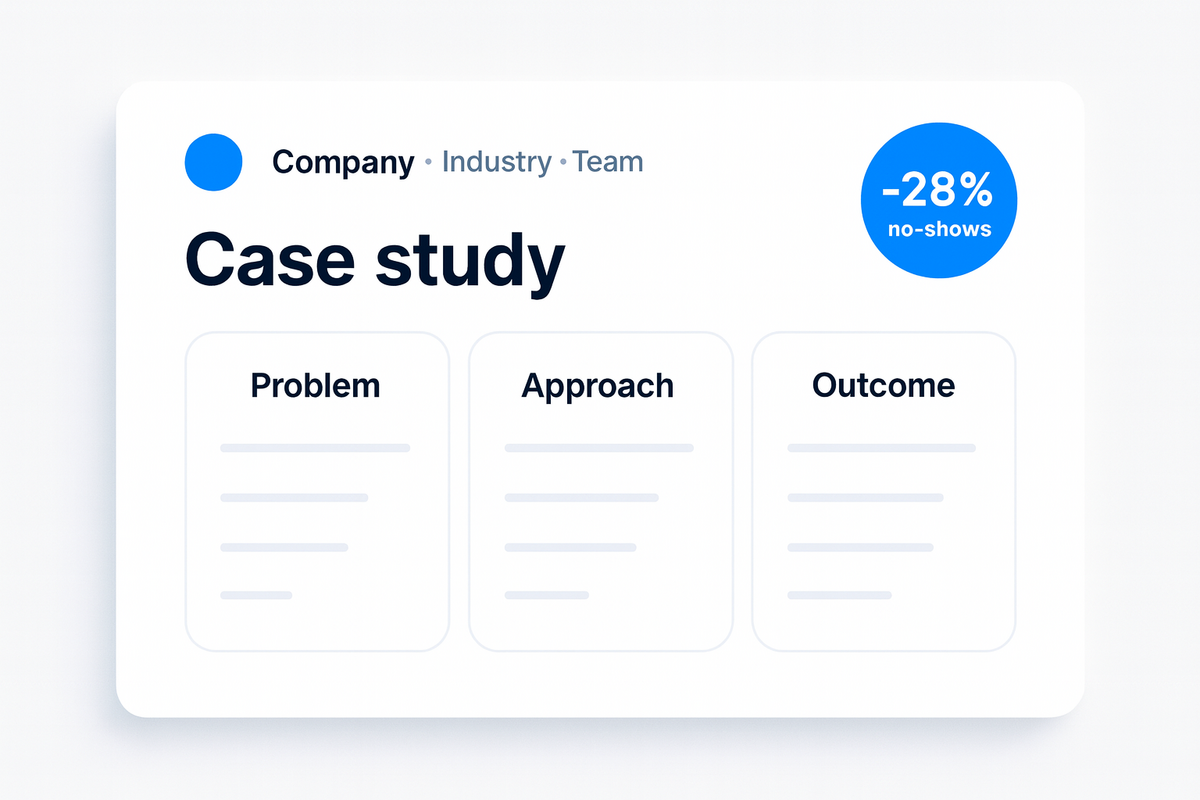
A market validation slide should include a single headline conclusion, one visual trend (such as a growth chart or funnel), and two to three dated proof points demonstrating observed customer behavior. Focus on verifiable metrics — like booked revenue, converted pilots, or signed commitments — rather than market size estimates or survey praise. Include a brief footer noting the timeframe for your metrics.
Do Not Confuse Market Size With Demand
Founders often confuse market attractiveness with customer validation.
A $5 billion market, a strong CAGR, and a thorough SWOT analysis explain why the market is interesting. They do not prove that anyone wants your specific product.
Fifty people saying they would use your idea is research. Three companies paying to test it is evidence. Do not study hypothetical intent. Study what customers actually did and why they did it.
Steve Blank's customer development framework emphasizes that positive survey feedback often coexists with low willingness to pay. Polite praise is not a buying signal.
Practical Framework: The Validation Evidence Ladder
When you build your traction slide, lead with the strongest verifiable demand signal you have. Not all evidence is equal. Use this hierarchy to rank your proof:
Signal | What it proves | What to show | Common weakness |
|---|---|---|---|
Revenue and Willingness to Pay | The strongest signal. Customers gave up cash. | MRR, booked revenue, or paid deposits. | Assuming early discounts represent long-term pricing. |
Signed Commitments | Legal or formal intent to use the product. | Signed LOIs or paid design partner agreements. | Agreements with no clear timeline or cost attached. |
Scheduled Activity | Investment of customer time. | Technical demos or onboarding sessions on the calendar. | Meetings that never convert to actual usage. |
Sustained Usage | Active value being delivered. | Active pilots showing progression from invite to completion. | Focusing on initial signups instead of retention. |
Weak Signals | General interest or polite praise. | Waitlists, survey praise, or interview feedback. | A waitlist without its source or buyer fit is just a large number. |
If you cannot show at least the middle of this ladder, consider whether you are ready to raise money.
The "Proof of Demand" Slide Makeover
Founders overcomplicate the validation slide by adding too much text and too many weak signals.
Slide Wireframe
Use this simple structure to visualize your validation:
Headline: State the conclusion (e.g., "Early Commercial Traction and Conversion").
Left Column (Visual): A simple chart or funnel showing momentum over a specific timeframe (e.g., Month-over-Month usage growth).
Right Column (Proof Points): 2-3 annotated metrics that support the headline.
Footer: A brief source note (e.g., "Metrics as of Q3 2024").
Here is how to convert a weak vision-led slide into a strong traction slide. (Note: The metrics below are illustrative examples, not required benchmarks).
Before: The Vision Trap
Headline: Strong Customer Demand in a Growing Market
Bullet 1: Operating in a $5B market growing at 12% YoY.
Bullet 2: Overwhelming positive feedback from 50+ discovery interviews.
Bullet 3: Customers stated a high willingness to pay once the product launches.
Why it fails: It relies on market size, polite lies, and hypothetical future actions.
After: The Proof-Led Slide
Headline: Early Commercial Traction and Conversion
Bullet 1: 3 paid pilots currently active.
Bullet 2: 5 signed LOIs from mid-market logistics firms.
Bullet 3: Converted 20% of our initial waitlist to daily active users within 14 days.
Why it works: It reports customer behavior, not customer manners.
Managing Pilots and Commitments
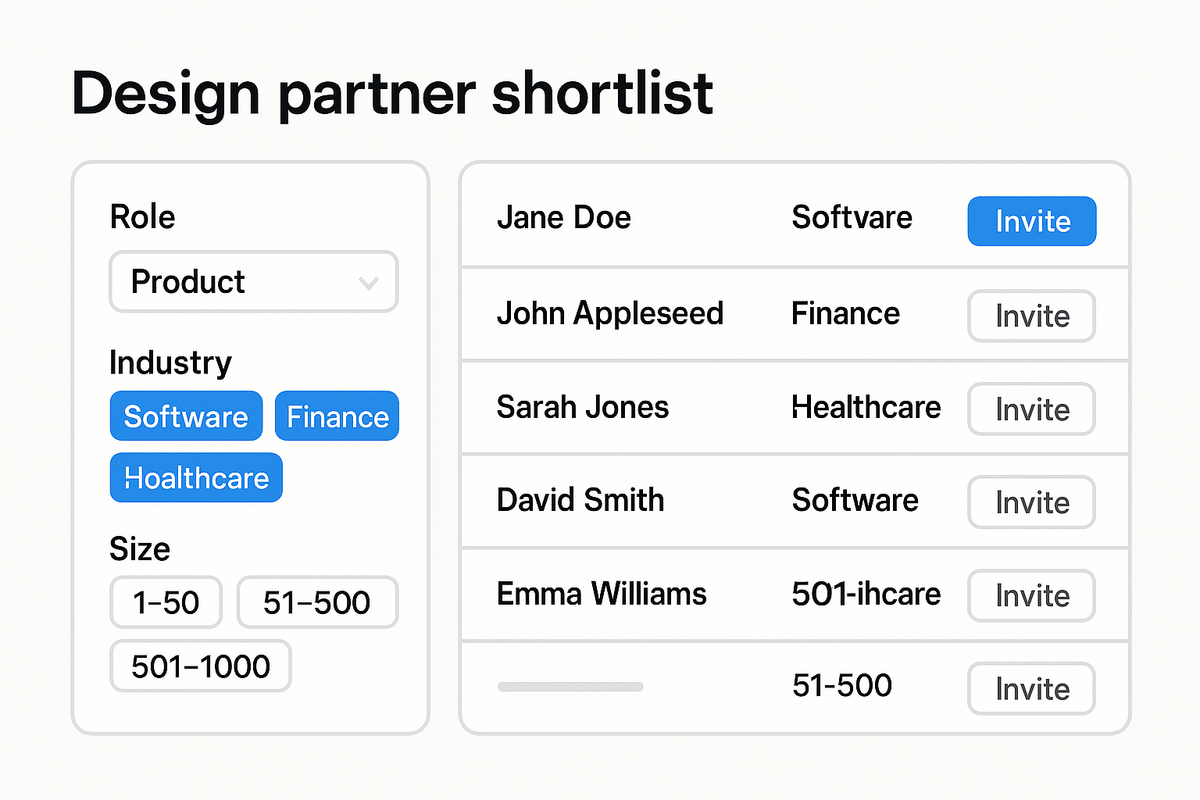
If your primary validation comes from pilots or early design partners, do not just drop logos on a slide. Because a lack of market need is a top reason startups fail, investors want to see the mechanics behind those logos to verify real demand.
Show the movement. Define what the pilot requires from the customer. A strong pilot funnel looks like this (numbers are illustrative examples):
Stage | Definition | Example Volume |
|---|---|---|
Invited | Target accounts reached | 20 accounts |
Started | Agreed to run a test | 8 accounts |
Activated | Completed technical setup | 5 accounts |
Completed | Finished the 30-day trial | 3 accounts |
Converted | Signed annual contracts | 2 accounts |
(Note: If you need help structuring these agreements, use a design partner template to formalize the commitment before you pitch).
Investors evaluating early-stage companies look for this kind of tracking. As Y Combinator's seed fundraising guide notes, concrete metrics and clear presentations help investors quickly grasp your progress.
A Quick Final Test
Before you finalize your deck, look at your validation slide and ask: "Does this show observed behavior or polite interest?"
If the slide relies on what people said, rewrite it. If the slide cannot corroborate current or past traction, delete it. As emphasized in market research fundamentals, you need hard data — while validation metrics vary, customer commitments and invested time are clear demonstrations of progress.
FAQ
Does this slide prove real demand, or just polite customer interest?
You answer this by showing observed behavior and traction, not survey praise or hypothetical intent. Show what customers actually did — paid, signed, or scheduled a demo. If the slide cannot prove past or current traction, skip it.What counts as validation before revenue?
Signed letters of intent (LOIs), paid design partner agreements, active usage in a pilot, and scheduled technical onboarding all show that customers are investing their time or reputation, even if they aren't paying yet.Do waitlists belong on a validation slide?
Waitlists are a weak signal on their own. If you include a waitlist, you must show the conversion rate (how many waitlist signups became active users) or the quality of the list (specific target buyer personas).Does market validation need its own dedicated slide?
Not always. If you have strong revenue growth, your main traction or financials slide often serves as market validation. A dedicated validation slide is most useful at the pre-seed or seed stage when revenue is minimal but customer momentum is building.