A minimum viable product presentation is a slide deck that defines what a v1 product will and will not include. Unlike an MVP pitch to investors, its goal is internal alignment. It prevents scope creep by tying every included feature to a specific customer problem that requires immediate validation.
TL;DR
An MVP presentation is not a pitch to excite stakeholders; it is a tool to stop your team from building features users do not need.
AI makes features fast and cheap to build, which increases the danger of building a bloated v1. If a feature does not test a core hypothesis, leave it out.
Use a concierge pilot to prove willingness to pay before writing automation code.
The deck must force alignment on one ICP problem and clearly separate what gets built now from what gets built later.
Faster Building Makes the Wrong Product Easier to Ship
Founders often treat an MVP presentation as a feature wishlist. They build a slide deck showing dozens of planned features. Because AI makes coding feel fast, adding another dashboard or UI theme seems harmless.
But it is not harmless. AI just makes it faster to build things people do not need.
An MVP presentation should not ask, "what else should we add?" It should ask, "what must be true before we build more?" The deck exists to stop smart people from building the wrong thing.
Take an AI-personalized workout app as an example. The product had no traction. The team wanted to spend weeks rebuilding their automation engine. Instead of a presentation about new infrastructure, they ran a concierge pilot. They sold a 14-day test to 15 real buyers. A human delivered the workouts manually over WhatsApp. The team set a strict rule: they would only write the automation code if 40% of the testers paid for the £60 subscription afterward.
That is a strong MVP scope. You validate demand with real money and past behavior, not survey answers.
Scope Containment Over Vision
An MVP presentation is a defense mechanism. It is a tool to define the minimum viable product and stop the team from adding features just because they are easy to make. This is not an MVP pitch meant to excite investors. It secures internal alignment.
When a co-founder wants to add an analytics dashboard because an AI tool can code it in an hour, the PM should use the presentation to kill the idea. "Easy to build" is not a reason to include a feature in v1.
Included means the feature is required to test buyer commitment. Excluded means later, not never.
The Presentation Outline
You can use this outline as a starting point. It forces stakeholders to tie every included feature to a customer pain. It maps well to an MVP canvas framework.
Slide Sequence
Decision needed: Approve the v1 scope.
ICP and problem: Define the exact customer and their single most painful problem.
Evidence the pain is real: Show proof from past behavior or commitments, not hypothetical surveys.
MVP hypothesis: State the core assumption you are testing.
Included v1 features: List exactly what you will build. Map every item to the hypothesis.
Excluded features: List what you are leaving out and explain why it can wait.
Manual shortcuts: Explain how you will fake scale or automation until demand is proven.
Validation metric and timeline: Name the exact threshold that means "proceed" or "stop" (for example, a specific conversion rate).
Risks and objections: Acknowledge the trade-offs of this tight scope.
Alignment decision: The official green light to start building.
Included vs. Excluded Feature Matrix
Here is how the "Included/Excluded" slide might look for the workout app example:
Feature | Reason | Evidence | v1 / Later |
|---|---|---|---|
Manual WhatsApp onboarding | Needed to deliver the promise to real buyers. | 15 buyers confirmed for pilot. | v1 |
Stripe payment link | Tests willingness to pay immediately. | Need to hit conversion threshold. | v1 |
In-app automation | Can be faked manually until demand is proven. | Scale is not needed for 15 users. | Later |
Dark mode | Does not prove the core pain of workout coaching. | Polish distracts from the hypothesis. | Later |
Native iOS App | Core workflow can be tested on the web first. | App Store approval slows testing. | Later |
This matrix removes personal taste from the decision. It centers every debate on validation. For more on maintaining strict scope, read Steve Blank's framework for customer development.
FAQ
What should be included in a minimum viable product presentation?
Include the target ICP, the specific problem, evidence that the problem is real, your core hypothesis, a strict list of included features, and an explicit list of excluded features. Always end with a validation metric.If AI makes product work fast and cheap, why spend time on a presentation, and why exclude easy v1 features?
Because AI also makes it faster to build things people do not need. The deck defends v1 by tying every included feature to the most painful customer problem. Exclusions must be explicit. Cheap add-ons stay out if they do not attack that pain.How do we handle stakeholders who want a full feature tour?
Anchor the conversation on the validation metric. If a stakeholder wants to add social sharing, ask if it proves the core workflow solves the pain. Building things people don't need is one of the top reasons startups fail, so focus on validation.What if we haven't built the product yet to prove traction?
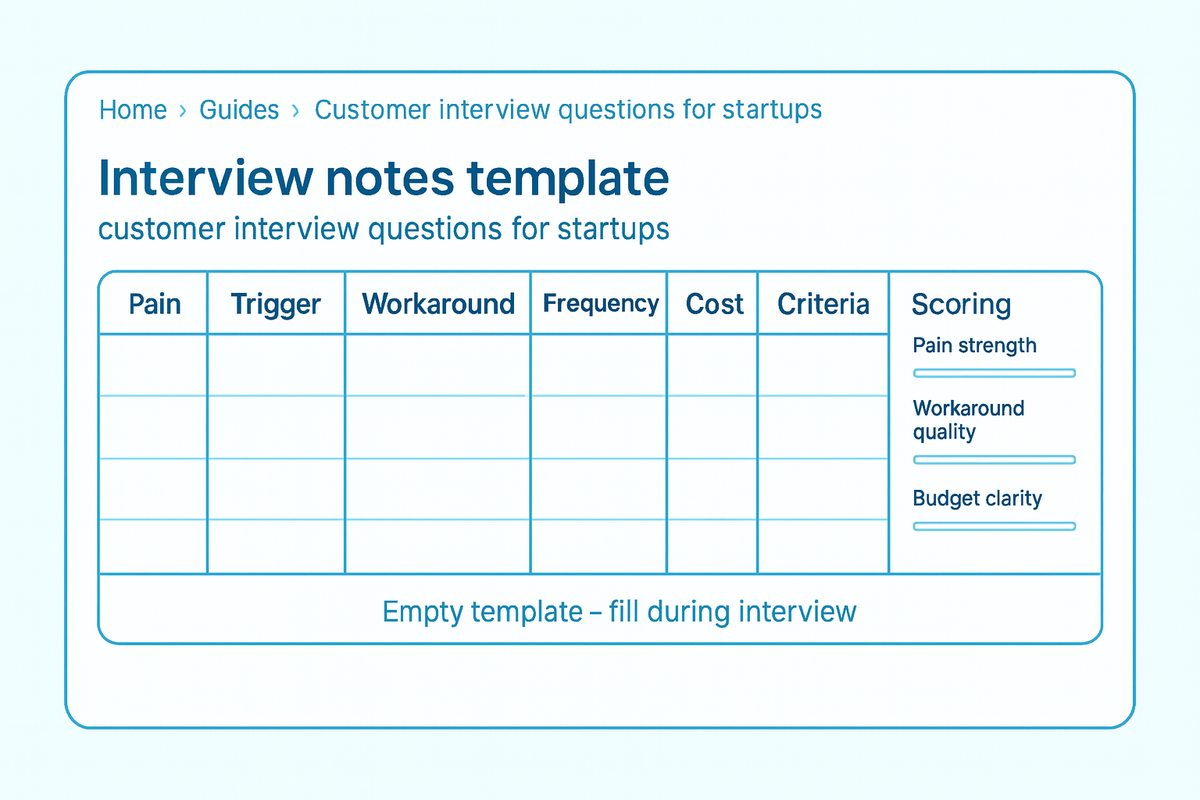
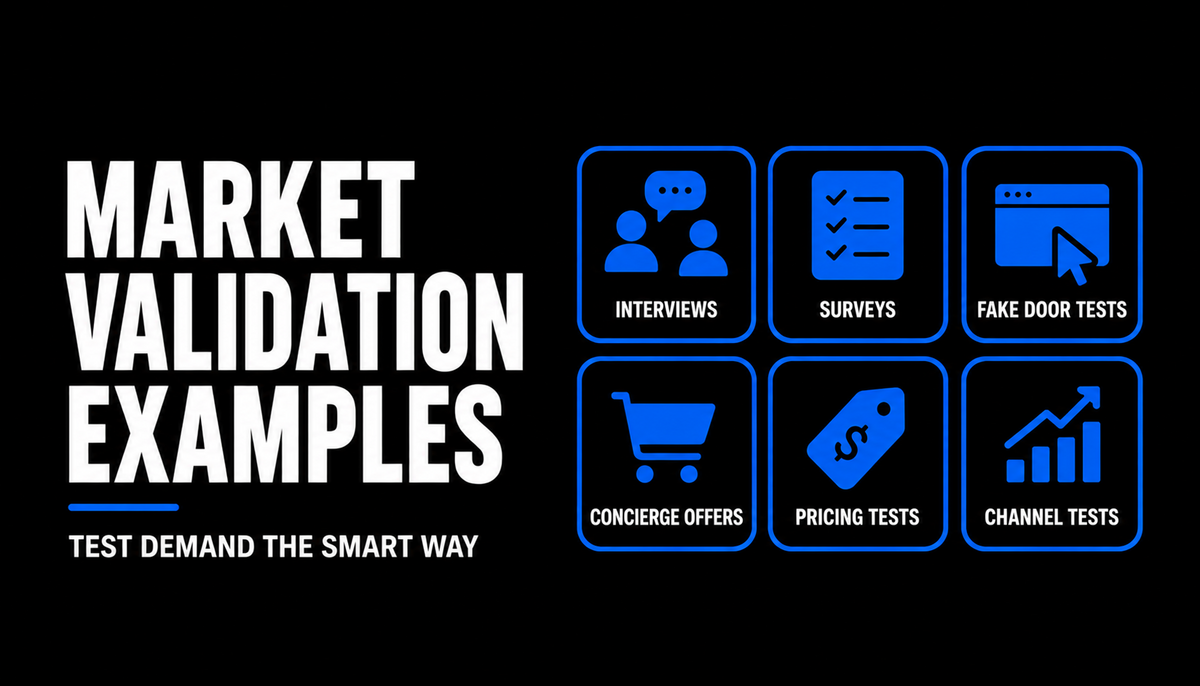
Traction at the MVP stage means proof of demand, not software usage. Signed letters of intent, revenue from a fake door test, or a manual concierge service all count. An MVP should focus on understanding the customer's actual problem; start with user interviews before writing any code.