TL;DR: A product discovery framework is a system that turns raw customer quotes into testable feature ideas. Customer quotes are clues, not requirements. It is better not to ask users what they want. Study their past behavior, map their quotes to a real problem, and validate the demand manually before you write code.
A prospect says, "We need a dashboard." The founder hears roadmap clarity. They build a complex analytics dashboard. Usage stays at zero.
Why? Because the real pain was that a manager spent two hours every Friday building a status report. The prospect did not need a dashboard; they needed an automated weekly email.
Treating a loud customer quote or internal hunch as a feature brief is a fast way to build a product nobody uses. Customer quotes are evidence, not instructions. A product discovery framework stops you from building feature theater. It forces you to map raw quotes to underlying problems, compare them against market reality, and turn them into testable feature hypotheses.
The Trap of Polite Lies
Founders often try to validate ideas by asking, "What do you think of this feature?" or "Would you use this?"
These questions tend to produce polite lies. Customers often say it looks great because they do not want to be rude. Do not rely entirely on their opinion for your roadmap. B2B discovery requires you to dig into reality, not hypotheticals.
Instead, study their past behavior. Ask:
"When did this last happen?"
"What did you do to solve it?"
"What did it cost you in time or money?"
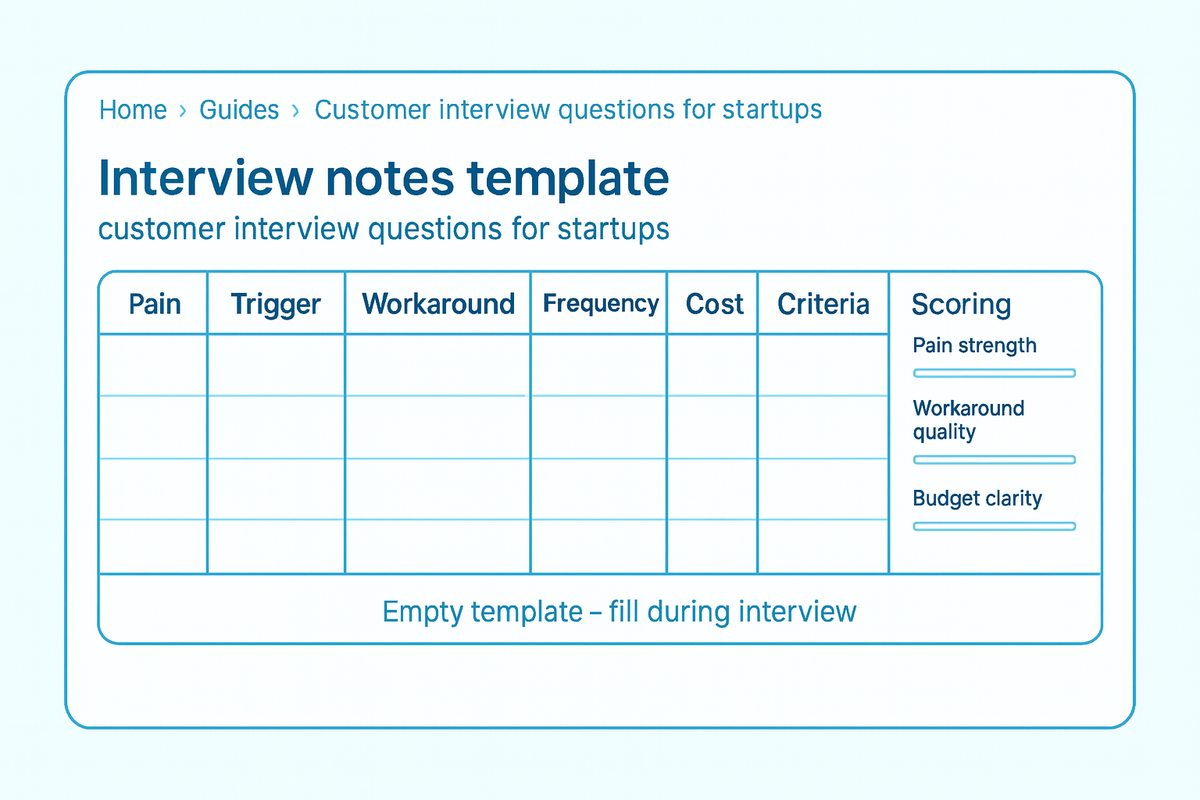
This is how you extract hidden objections. You need to know why they acted a certain way in the past. If you need help structuring these interviews, use a B2B product discovery questions guide.
The Quote-to-Feature Mapping Framework
You have raw interview notes. Now you need to translate them into decisions. Do not just drop quotes into your backlog. Move from raw notes to patterns across your accounts. This requires careful customer discovery notes synthesis.
How to use this framework:
Document the exact raw quote from the user.
Note the situation context and their past behavior.
Define the underlying problem driving the quote.
Create a feature hypothesis that solves the root problem.
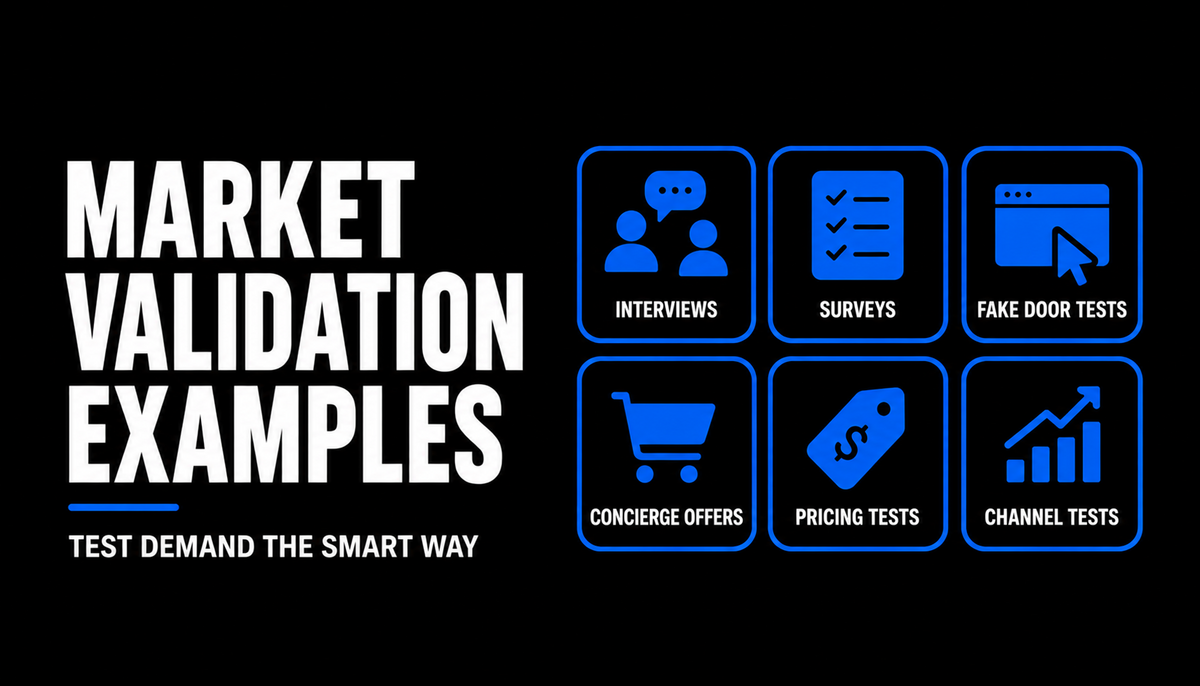
Design a manual test to validate demand before building.
Set a strict metric to decide whether to proceed or kill the idea.
Here are three examples of how to map a raw quote to a validation metric.
Example 1: The "Custom Integration" Request
Raw Quote: "We need a custom integration for our CRM."
Situation Context: Sales reps manually copy data between systems.
Past Behavior: They copy-paste fields every Friday afternoon.
Underlying Problem: Data siloing costs reps two hours a week.
Feature Hypothesis: A simple webhooks workaround.
Validation Test: Offer a Zapier template.
Proceed/Kill Signal: 5 reps set up the webhook.
Example 2: The "AI Assistant" Request
Raw Quote: "I want an AI assistant."
Situation Context: New hires struggle to find documentation.
Past Behavior: They interrupt senior engineers on Slack.
Underlying Problem: Knowledge retrieval is slow and expensive.
Feature Hypothesis: An internal search bot.
Validation Test: Manually answer questions via a dedicated Slack channel.
Proceed/Kill Signal: 10 questions asked per day.
Example 3: The "Dashboard" Request
Raw Quote: "We need a dashboard."
Situation Context: Manager has to report to the CEO on Monday.
Past Behavior: Spends two hours compiling CSVs.
Underlying Problem: Reporting takes too long.
Feature Hypothesis: Automated weekly risk summary email.
Validation Test: Manually send the summary email.
Proceed/Kill Signal: Manager forwards the email to the CEO.
Proof of Demand: The Concierge Pilot
Do not automate a feature until you prove demand. The best first version of a feature is often a human doing the work manually.
Consider an illustrative example of an AI-personalized fitness app. After exploring the market and finding a pivot angle, the hypothetical team resisted the urge to write code. Instead, they sold a short pilot to a small group of real buyers. The "AI personalization" was actually a human sending WhatsApp messages.
They set a strict proceed metric. They would only build the automation if a significant percentage of the testers bought a full subscription after the pilot. They verified the demand with real money before they scaled the solution. Validate demand manually, then automate.
For more on the discovery approach, The Mom Test provides strong frameworks to prove demand before writing code. Product Talk also covers continuous discovery habits. NNGroup details best practices for user interviews.
FAQ
What should go into a product discovery framework?
A strong framework connects a raw customer quote to the underlying problem, and then to a specific feature hypothesis. It should include the situation context, past behavior, a manual validation test, and a clear proceed or kill signal.Why can't I just ask customers what feature they want?
Because people are polite, bad at predicting their future behavior, and often describe a solution before they understand their own pain. If you build what they ask for, you usually build something they will not use.What do I do when customers complain about a missing feature?
Celebrate. In most cases, customers do not care enough to complain. A missing-feature complaint is a strong signal of engagement. It is not proof that the feature belongs in the MVP, but it is a clue worth investigating.Does AI speed mean we can skip discovery and just build?
No. AI makes it faster to build things people do not need. The goal of an MVP is to fix the most painful problem. You still need discovery to find that problem.