TL;DR: Chasing a startup funding headline is a trap. Cash does not equal buying intent for your B2B product. Instead of pitching the raise, look for what the cash makes urgent: new traction, hiring bottlenecks, and market expansion. Use these operational signals to test whether a company needs your help right now.
What is startup funding news for B2B prospecting?
It is the practice of tracking public investment announcements to find companies that recently secured capital. B2B sales teams use these events to build lists of targets. The goal is to filter past the vanity headline and identify the specific, funded operational pressure that matches your product.
An SDR sees a "$12M Series A" headline, assumes the company has budget, and blasts out an email pitching a generic HR tool. They get ignored.
Treating a funding announcement as automatic buying intent is a mistake. A funding round tells you a company has cash. It does not tell you they should spend that cash on you.
Funding only matters when it connects to evidence of traction, real demand, and a new pressure. Your job is to read the news like an operating memo. Ask what changed after they raised, and what will break next. Did they prove demand? Did they hire a go-to-market team? Did they sign LOIs or grow revenue?
Look for the Pressure, Not the Payout
When you set up Crunchbase alerts for new funding or check industry publications like TechCrunch, your goal is to filter out the noise. The real signal is hidden in the operational triggers that follow the cash.
Strong prospects show both budget capacity and problem relevance. If a company raises $12 million, that is a weak signal. If they raise $12 million specifically to expand their enterprise sales team, you have a clue. If they raise money after signing 20 healthcare customers, and you sell a tool that solves healthcare compliance, you have a real opening.
Focus on what the funding enables. The answers will reveal the market or customer problems your product can actually solve. Review why startups fail to understand how your product can de-risk their next steps.
The Headline vs. Signal Reality Check
A repeatable outbound sales workflow turns startup funding news into targeted hypotheses. Use these examples to translate public PR into a clear reason to reach out.
Example 1: The Seed Round
The Headline: "Acme Corp raises $5M Seed"
The Reality Check: Weak. Cash does not mean they have the specific problem you solve.
The Stronger Signal: "Acme Corp raises $5M to launch an enterprise tier."
What to Check Next: Are they hiring enterprise AEs or security compliance roles?
The Pilot Angle: Pitch your enterprise security software, knowing they cannot close those deals without it.
Example 2: The Series B Growth
The Headline: "Beta Inc secures $20M Series B"
The Reality Check: Weak. They have budget, but no proven need for a new tool.
The Stronger Signal: "Beta Inc secures $20M after experiencing 300% MoM user growth."
What to Check Next: Is their infrastructure scaling? Are they hiring backend engineers?
The Pilot Angle: Pitch your load-testing software to solve the pain of servers crashing under new demand.
Example 3: The Series A Expansion
The Headline: "Startup X lands $12M Series A"
The Reality Check: Weak. Spraying generic pitches will fail.
The Stronger Signal: "Startup X lands $12M to expand into the European market."
What to Check Next: Are they hiring localization experts or regional sales directors?
The Pilot Angle: Pitch your localized payroll solution if it helps them de-risk their expansion.
(Note: Company names above are hypothetical examples to illustrate the filtering process.)
Turning the Signal into a Pilot Qualification Call
Once you identify the operational pressure, keep your outreach concise. You need to articulate what changed, why it matters to them, and why your solution fits right now.
Instead of asking for a generic meeting, use a pilot or design partner framing. This works when the prospect has an urgent problem and lacks the internal resources to solve it quickly. Your first call should test whether the problem is painful enough to fund today.
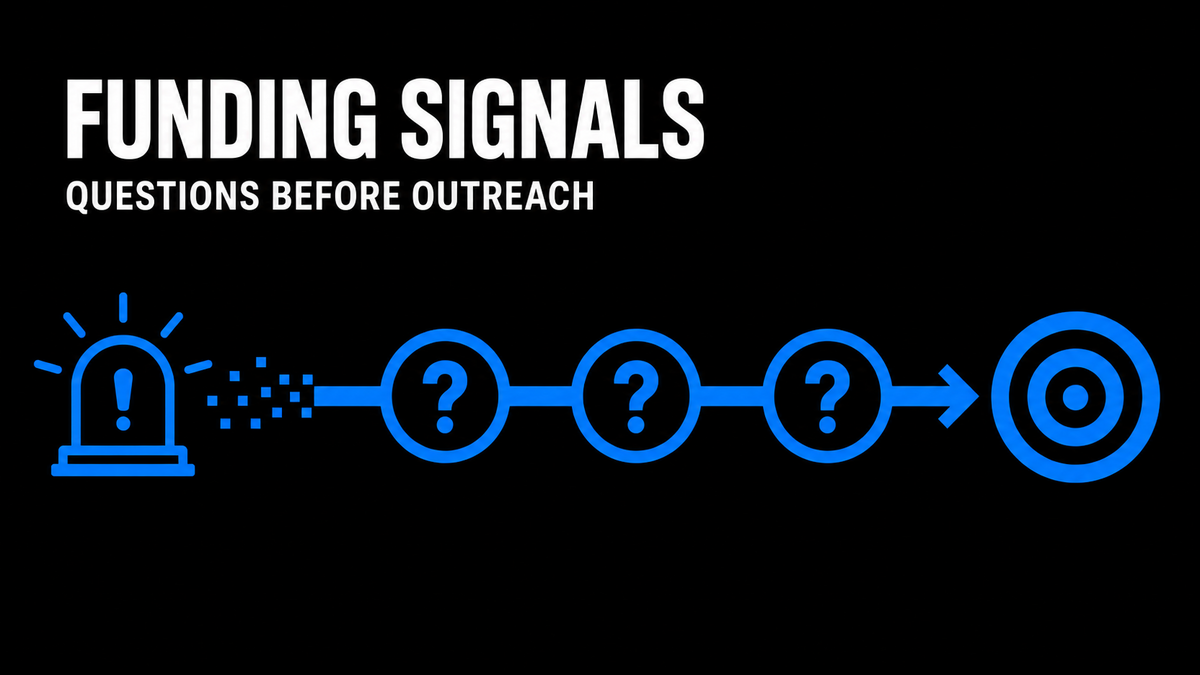
Before you reach out, run through this Funding Signal Qualification Checklist:
What specifically changed after the raise?
Who owns the new problem or bottleneck?
Is there public proof of demand or traction?
Is the company actively hiring to solve this problem?
What pilot would de-risk their next step?
When you research a Crunchbase recently funded companies list or conduct broader market research, use these questions to filter your targets. If you cannot connect the company’s pressure to your product, deprioritize the account.
FAQ
Does a recent funding round mean a startup has budget for my tool?
No. A funding round means they have capital to deploy against specific strategic goals. If your tool does not support their immediate traction, hiring, or expansion plans, they will not buy it.
What funding signals are strongest for sales prospecting?
The best signals show a change in operations. Look for funding tied to sudden user growth, new market expansion, or major leadership changes. You can often spot these shifts by checking LinkedIn jobs or the company's careers page to see what roles they urgently need to fill.
How soon should I reach out after a funding announcement?
Do not send an email the day the PR hits. Let the noise die down. Reach out when you have connected the raise to a specific operational change, like a new key hire or a shift in their product roadmap.
What if the funding news doesn't mention their next steps?
If the announcement is purely vanity PR, look at their careers page or the founder's recent LinkedIn posts. The open roles will tell you what is actually breaking inside the company.
When should I turn a funding signal into a pilot call?
Offer a pilot when you see evidence of a problem they cannot solve internally. If they just raised money to scale but lack the infrastructure or expertise to do it safely, frame your pilot as the fastest way to de-risk their growth.