Use a minimum viable product when you know the problem but need to prove the outcome works. Wait and run a fake door test if you are unsure people will commit money. Only build the full product when manual delivery becomes a proven bottleneck and unit economics are acceptable.
TL;DR: Use a fake door when demand is uncertain; use a concierge or technical MVP when the outcome is unproven; use a full build when delivery is proven and manual work is the constraint. Do not build the machinery before testing whether anyone will pay for the outcome. A fake door test checks if people will commit to a promise. A concierge MVP checks if the outcome works and sells. A full build is justified only when automation removes a proven bottleneck. AI makes coding faster, but it also makes it faster to build things people do not need.
The Trap of Cheap Code
You want to launch a new product. AI makes writing code cheaper and faster than ever. It is tempting to skip validation and just build the thing.
But this is a mistake. AI lets you build something nobody needs faster.
Consider a founder who wanted to rebuild an AI workout app that had zero traction. Because development was cheap, the team was ready to rewrite the software. Instead, we ran a 14-day WhatsApp pilot for 15 real buyers. The "AI personalization" was just a human typing workouts manually. After the pilot, six of those testers wanted to buy a £60 subscription. Only then did the team develop the automation.
They avoided building the machinery before proving people would pay for the outcome. The decision to build an MVP or a full product is not a development choice. It is a choice about which uncertainty deserves your next dollar to protect your runway.
Decision Tree Framework: Fake Door vs. MVP vs. Full Build
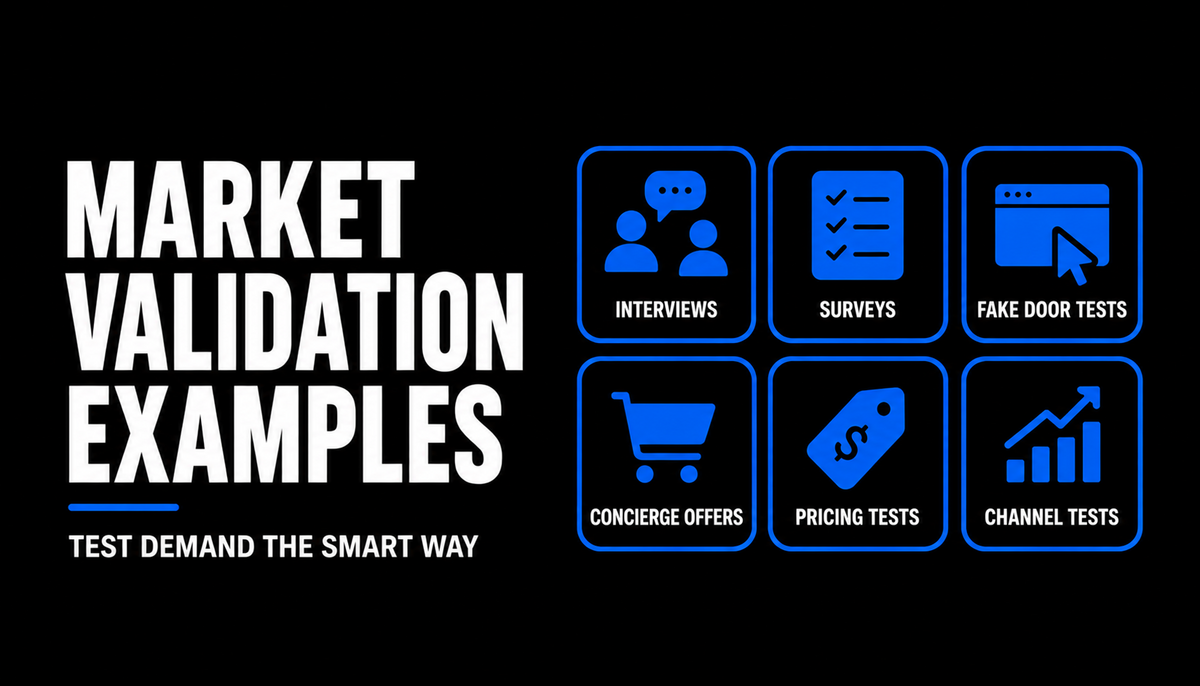
If you are trying to decide whether you need an MVP or more validation first, use this decision tree. It will help you find the cheapest way to get credible evidence.
Question | If No | If Yes |
|---|---|---|
1. Is the painful problem and buyer clear? | Stop and do customer interviews. You cannot build a solution without a target. | Move to step 2. |
2. Will buyers make a meaningful commitment without a working product? | Run a fake door test. Before you build the solution, verify demand. Set up a landing page. See if people will pay or join a waitlist with a deposit. Learn how to run these experiments responsibly in our fake door testing framework. | Move to step 3. |
3. Can the outcome be delivered manually? | Build a narrow technical MVP. Focus only on the core constraint. Read our guide on scoping a minimum viable product to learn how to keep this build small. | Run a concierge MVP. Deliver the value by hand using standard tools like WhatsApp, email, or Zapier. You are testing whether the result works, not whether your code scales. |
4. Are people paying, returning, and creating an obvious delivery bottleneck? | Stay manual, refine the offer, or return to validation. | Consider a full build. Automate the machinery only after manual delivery has exposed something worth scaling. Proven payment, repeat use, a measured manual bottleneck, and acceptable unit economics justify this investment. This aligns with the core principle of customer development: build to learn, not just to ship. |
Stop Asking for Polite Lies
Founders often validate demand by asking, "What do you think about this?" or "Would you use this feature?"
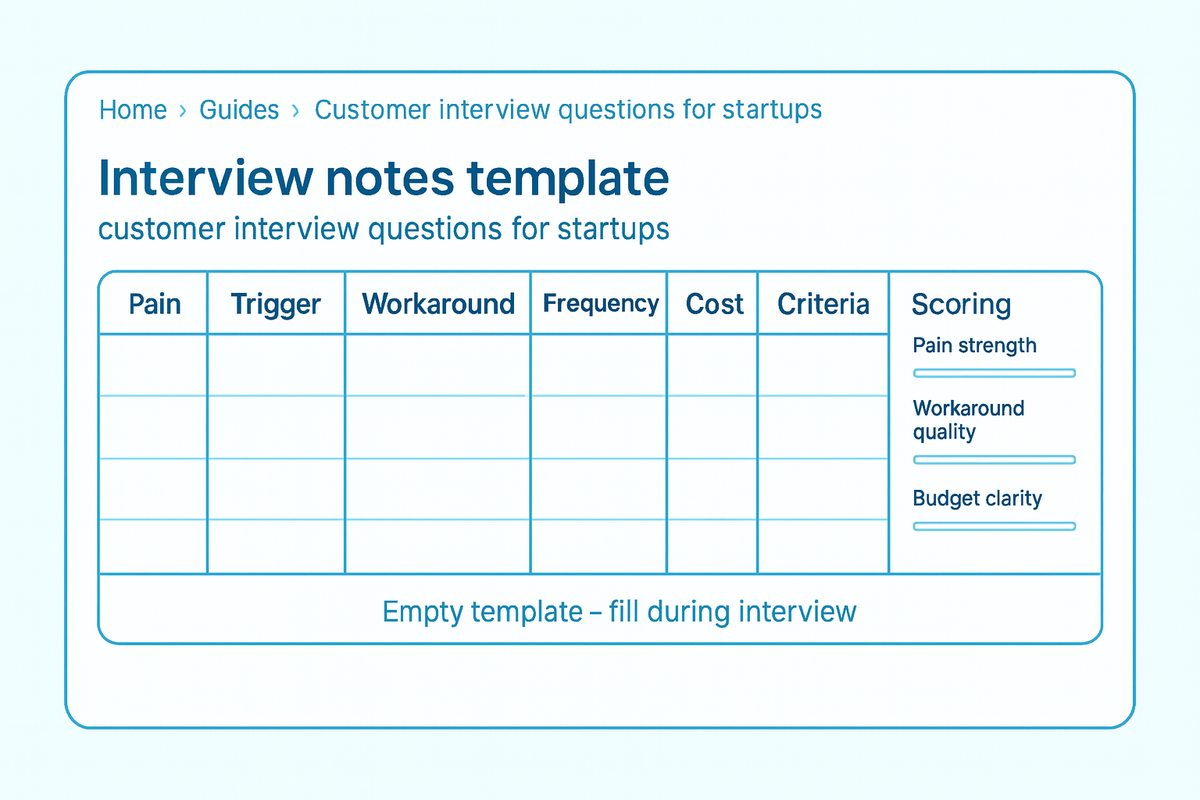
These questions invite polite lies. Hypothetical feedback is not actionable evidence. Instead of asking what people might do, study their past performance and actual payment intent. As noted in standard user interview research, "Would you use this?" requires a guess. A refundable deposit, a paid pilot, or a renewal requires a decision.
If you are running a fake door test to measure demand, you can ask for a real commitment. In extreme cases, some teams take a real payment for an unbuilt product. They immediately refund it, citing capacity issues, and add the buyer to a waitlist. This provides stronger evidence of willingness to pay. However, charging for an unavailable product requires strict legal review. You must adhere to consumer protection and preorder guidelines. A safer approach is to use a clearly disclosed reservation or refundable deposit. The goal is to capture real friction, not just clicks.
Evidence Ladder and Runway Economics
Think of your validation process as buying evidence with the least amount of runway.
Discovery: Answers "What is the pain?" (Cost & Time: Low / Fast; Reversibility: High) → Evidence Produced: Documented customer problems and failed workarounds.
Fake Door Test: Answers "Will they commit to the promise?" (Cost & Time: Low / Fast; Reversibility: High) → Evidence Produced: Waitlist deposits or clear purchase intent.
Concierge MVP: Answers "Does the outcome work and sell?" (Cost & Time: Medium / Weeks; Reversibility: Medium) → Evidence Produced: Active usage and paid renewals.
Full Build: Answers "Can we scale delivery profitably?" (Cost & Time: High / Months; Reversibility: Low) → Evidence Produced: Sustainable unit economics and scale.
Do not treat these steps as a mandatory sequence. If you already have strong behavioral evidence — like a stack of paid reservations — you might skip the fake door and move straight to a concierge MVP. Match the experiment to your specific uncertainty.
FAQ
When should you wait before building an MVP?
Wait and do more discovery if you cannot clearly identify the buyer and their most painful problem. Wait and run a fake door test if you are unsure whether people will actually commit money or time to your proposed solution.
When can you skip an MVP and build the full product?
You can skip the MVP when you already have proven payment, repeat use, a measured manual bottleneck, and acceptable unit economics. If you have overwhelming behavioral evidence — such as paid prepurchases and a process you know how to automate profitably — a full build may be justified.
Why plan an MVP when AI lets us build the product almost instantly?
Because AI also lets you build something nobody needs faster. Use the MVP to isolate the customer’s most painful problem and test real behavior. Do not rely on feature polish or hypothetical feedback. In the workout-app example, the team only built the automation after a manual WhatsApp pilot proved buyers wanted a £60 subscription.
What is the difference between a fake door and a concierge MVP?
A fake door tests whether people will commit to the promise. A concierge MVP tests whether the promised outcome actually works and whether people will keep paying for it.
Is it safe to charge money for a product that does not exist yet?
You must manage trust and compliance. While extreme fake doors sometimes charge and immediately refund users, this carries platform and legal risks. It is usually better to use a clearly disclosed refundable deposit or reservation system to test willingness to pay.