When you have a working demo and a few early users from your network — like a nights-and-weekends founder building VidCove, a curated YouTube alternative for kids — it is tempting to think lead generation will just happen. But early traction hides the fact that finding strangers is still an unsolved problem. If you start testing demos, content, partnerships, and ads all at once, you create so much noise that you cannot tell if the signal is true proof of demand or just founder effort. You should choose one channel to learn from.
TL;DR: Stop testing five channels at once and commit to a single learning channel for a fixed timebox.
Map exactly where your specific buyer already spends their attention before launching a channel.
Assess if you actually have the time and budget to show up consistently on that channel.
Measure success strictly by the actions of qualified strangers, aiming for enough conversions to get reliable data.
The Founder's Trap: When Your Network Dries Up
Take the VidCove example: product feedback from friends, coworkers, and parents at school pickup has been excellent. A handful even converted to paid. But how do you reach parents outside that circle? Every podcast offers competing advice — run Apple Search Ads, post on Reddit, try TikTok, do SEO. The mistake most founders make is running too many of these experiments simultaneously. You launch on Product Hunt, run ads, write SEO articles, and try TikTok all in the same week. This makes it hard to know whether poor results come from the wrong channel, the wrong packaging, or just lack of focus.
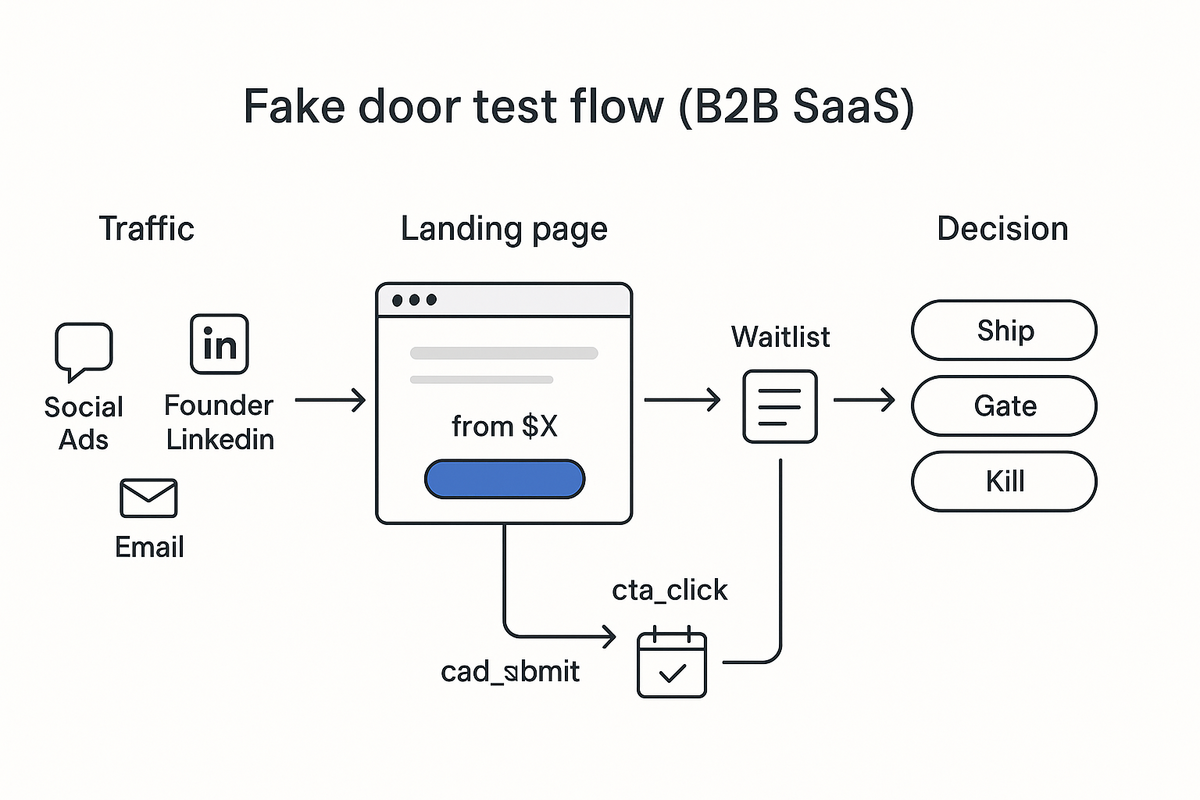
Instead of treating channel choice like a polished strategy exercise, treat it like a focused hypothesis test. Before building heavy campaigns, you might even use a fake door test to see if a channel has any intent at all. To figure out where to focus, a helpful heuristic is to simply find out where your target audience already congregates online and start there.
Practical Framework: Channel Selection Decision Tree
Try not to overcomplicate your channel choice with giant matrices. Use this practical decision tree to pick your first test:
Do you have a very specific ICP and know where to talk to them?
No: Pause on ranking channels. Do customer discovery first. You need a niche to know who to talk to. Try not to let polishing your demo distract you from finding your ICP.
Yes: Move to step 2.
Evaluate the channel options for your ICP:
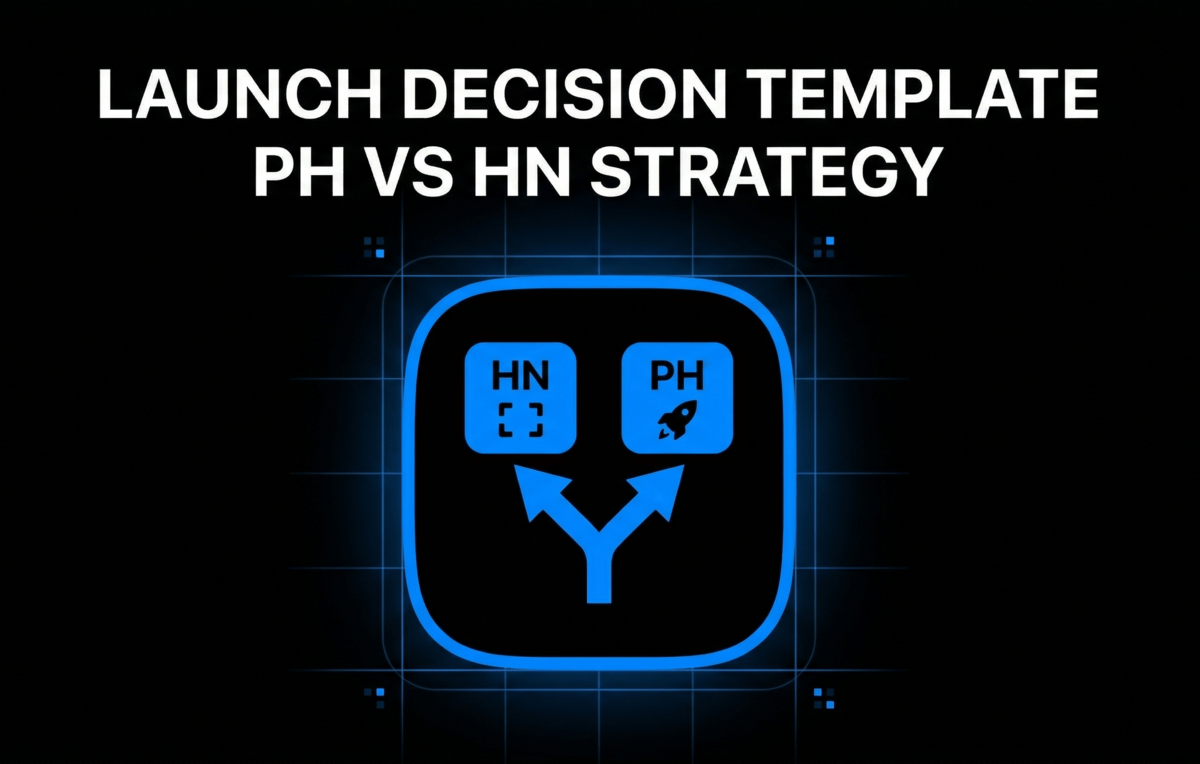
Audience Fit: Is your exact audience here? (e.g., If deciding between tech launches, use a Product Hunt vs Hacker News template).
Cost & Required Effort: Do you have the skills, budget, and time to operate it? Beware of channels that look cheap but are often tricky to convert, like Reddit.
Feedback Speed: Will this produce enough signal within your timebox?
Repeatability: Can this channel become meaningfully better than what competitors can afford, providing reliable distribution?
Commit and set a learning goal:
Pick one channel. Run it exclusively for a set test window, using a process like Reforge's Growth Experimentation Process to keep your learning goal clear.
Avoid Fake Precision and Vanity Metrics
Frame your channel strategy as a short operating decision: choose one promising channel for a fixed test window, define what needs to be learned, measure whether strangers take meaningful action, then decide whether to continue, adjust, or switch. Keep the emphasis on disciplined commitment and learning quality.
Once you pick a channel, judge it by the behavior of qualified strangers. Impressions, upvotes, and clicks are often noise. Look for signups or paid conversions.
However, try not to read weak early channel results as proof that you have no product-market fit. Channels take time to master. A handful of sales is generally too early to judge a channel's viability or its true customer acquisition cost. Getting a critical mass of conversions can start to give you a useful signal about whether it works and what it costs. According to Lenny's Newsletter research on how the biggest consumer apps got their first 1,000 users, many successful companies relied on highly focused, unscalable channels initially rather than spreading thin.
During these early tests, economics can be secondary if the channel produces credible case studies. For your earliest clients, even a heavy discount might be a fair trade if it secures a strong case study. If you test PR as a channel, evaluate if you have a real angle using press release for founders questions.
If you move into paid channels, poor setup can drain your budget before you get any signal. If you try B2B social, use LinkedIn ads B2B questions and a LinkedIn ads targeting founders guide to verify audience fit, and consider using a conversion tracking for LinkedIn ads template. It helps to nail your message continuity by using an ad to landing page message match framework to structure your flow. Ask targeted ad to landing page message match questions when building out the landing page for paid ads.
FAQ
How do I choose one acquisition channel when early signals are noisy and every channel looks plausible?
Start from hypotheses, not tactics. Pick the channel most likely to reach the ICP you are testing, then judge it on a small matrix: audience fit, expected cost, feedback speed, repeatability, and required effort. The decision is often less "which channel is popular?" and more "can we find a distribution channel better than what competitors can afford?"
Should I drop a channel if I don't see immediate results?
Try not to declare failure after a few weak attempts. Channels take time to master. Very small sample sizes are usually too early to judge; aim for a critical mass of conversions to get useful signal on whether the channel works and what it might cost.
Should I delay testing channels to polish my demo?
Avoid getting absorbed in demos or product polishing before resolving your ICP and channel fit. Early traction from your network is great, but building a repeatable lead generation system requires getting in front of strangers.