A competitor analysis example is a documented breakdown of direct rivals, alternative solutions, and the status quo that buyers use to solve a specific problem. Looking at a filled-out, startup competitor analysis example helps you map the market and position your product accurately.
TL;DR
Claiming "we have no competitors" tells investors you do not know your market.
Competitor analysis is not about copying features. It is a way to study how potential customers currently solve their problem.
Substitutes can often matter more than direct rivals. Your real competition might be a spreadsheet or a freelancer.
Build your comparison matrix on specific market traits, not generic labels like price and quality.
Use the resulting evidence to sharpen your positioning and sales arguments.
When a founder tells an investor they have no competitors, they usually mean it as a sign of confidence. The investor hears a red flag.
Saying you have no competitors means you have not studied how your customers solve this problem today. It reveals that you are building from personal belief, not evidence. If you do not know the alternatives, you do not know the market. If you lack market knowledge, you do not know the customer.
Competitor analysis fixes this issue. You do not want to obsess over rivals or copy their pricing pages. Your goal is to map the playing field. You need to know what buyers currently compare, tolerate, and pay for.
This guide walks through a detailed B2B competitor analysis sample for a hypothetical startup. Once you understand the mechanics, you can use a competitor analysis template to run the same step-by-step process for your own market.
Step 1: Find the Real Comparison Set
Look at a fictional B2B SaaS called PostPilot. It is a social media workflow tool built for small marketing teams.
Before doing any market research, the founder describes the product as an "AI social media scheduler." They think their only competition is other scheduling apps.
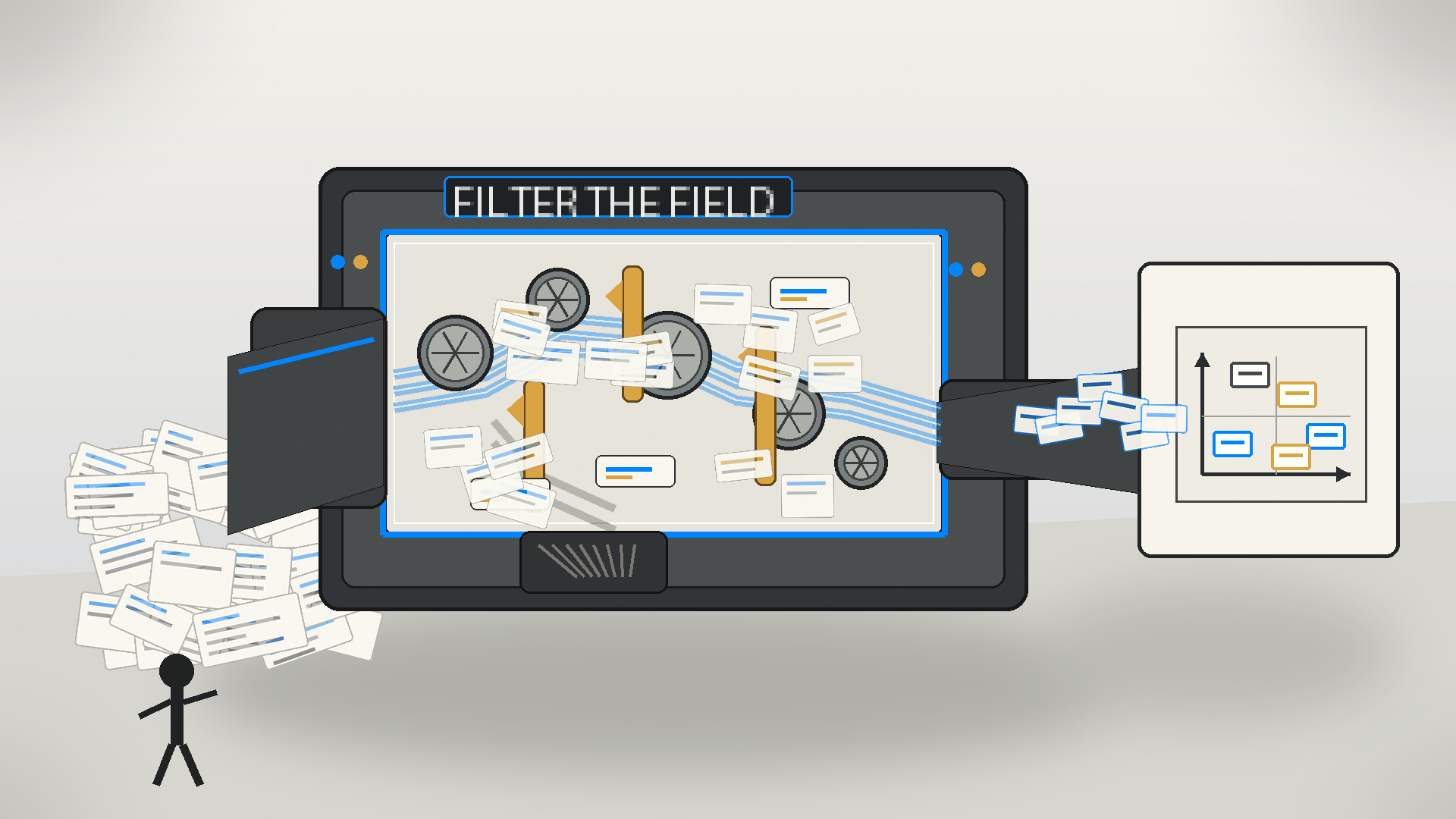
Finding the real comparison set requires looking wider. They must include direct tools, indirect substitutes, the status quo, and adjacent categories. A spreadsheet, a freelance consultant, or the native platform tools can all be competitors if buyers compare them to your software.
PostPilot maps out four types of competitors:
Direct Competitors
These are companies selling a similar tool.
A basic scheduling app (like Buffer)
A mid-market suite (like Hootsuite)
An enterprise platform (like Sprout Social)
Substitutes
These are different ways to solve the same problem.
Freelance social media managers
Marketing agencies
The Status Quo
This is what happens when the customer buys nothing.
An internal marketing coordinator using Google Sheets
Posting natively on each social platform
Adjacent Tools
These solve a related problem and might overlap.
Content workflow tools
Analytics and reporting software
The founder discovers that their biggest threat is not a rival app. It is the status quo. Most small teams just use spreadsheets.
Step 2: Build the Comparison Table
A competitor analysis table provides value only when it captures specific market details. Avoid generic feature lists. Focus entirely on the customer's perception.
Completed B2B SaaS Competitor Analysis Example
Here is what PostPilot's completed table looks like.
Direct: Basic Scheduler
ICP Served: Solo creators
Pricing Anchor: $15/month
Likely Buyer Objection: Not enough team features
Sales Implication: Pitch our collaboration tools.
Direct: Enterprise Suite
ICP Served: Large orgs
Pricing Anchor: $500+/month
Likely Buyer Objection: Too complex to implement
Sales Implication: Pitch our fast setup.
Status Quo: Spreadsheets
ICP Served: Small teams
Pricing Anchor: Free
Likely Buyer Objection: Messy and manual
Sales Implication: Pitch our automated workflows.
Substitute: Freelancer
ICP Served: Fast-growing startups
Pricing Anchor: $2,000/month
Likely Buyer Objection: Too expensive
Sales Implication: Pitch our cost efficiency.
This table shows the founder exactly where PostPilot fits. The market gap lies between the basic scheduler and the expensive freelancer.
Step 3: Choose Market-Specific Matrix Axes
Many founders default to building a 2x2 matrix with "Price" on one axis and "Quality" on the other. That approach fails. Your startup will always end up in the top right corner.
Instead, build your matrix using two parameters that actually separate the options in your specific market. You will only find these axes after researching the space.
For social media software, PostPilot identifies two defining choices:
One-platform vs. Multi-platform: Does the tool focus deeply on one network, or does it handle all of them?
Growth-first vs. Full-management: Is the tool built to drive engagement, or is it built to manage risk and compliance?
When PostPilot plots the market on this grid, the picture gets clearer. The enterprise tools cluster in the multi-platform, full-management quadrant. The basic tools sit in the multi-platform, growth-first quadrant but lack team features.
PostPilot decides to own a specific spot: a multi-platform tool built entirely for growth, with enough structure for a small team. The point of this matrix is not to prove PostPilot is better at everything. It simply shows which tradeoff the company is making.
Step 4: Translate the Analysis into Positioning
The analysis is done. Now it has to do some work. PostPilot uses this evidence to update its positioning and build stronger B2B go-to-market strategies.
Before: "AI social media scheduler."
After: "A growth workflow tool for small B2B teams. Execute across every platform without the overhead of an enterprise suite."
When a customer asks how PostPilot compares to their current setup, the founder has an answer.
Against spreadsheets: PostPilot gives you a repeatable workflow.
Against enterprise suites: PostPilot avoids implementation drag.
They stop asking customers hypothetical questions like, "Would you switch if we added a calendar view?" Instead, they study past behavior. They ask, "Why did you choose your current tool six months ago, and where does it fail today?" This competitor analysis framework turns comparison data into a sharper strategy, leading to a much stronger pricing and positioning approach.
FAQ
What should a competitor analysis example include?
It should include direct competitors, indirect substitutes, the status quo alternative, a breakdown of how customers perceive these options, and clear implications for your own sales positioning.
Why analyze competitors if Jeff Bezos says to ignore them?
Jeff Bezos famously prioritizes customer obsession over competitor obsession. Mature companies have the resources to do that. Early founders do not have that luxury. You do competitor research to learn about your customers, not to copy your rivals.
What is the biggest mistake founders make with this analysis?
Treating it like a feature checklist. Do not build a spreadsheet just to count who has a mobile app or single sign-on. Use the analysis to find out who buyers actually compare you to. This alternative might be a human service or a different software category entirely.
How often should a startup update its competitor research?
Update it when you notice a shift in your sales calls. If prospects start bringing up a new tool, or if they start comparing you to a different category, your current map is outdated.