TL;DR
Saying "we have no competitors" tells investors you do not understand your market.
Do not copy rivals. Use competitor analysis to learn how your customers make decisions.
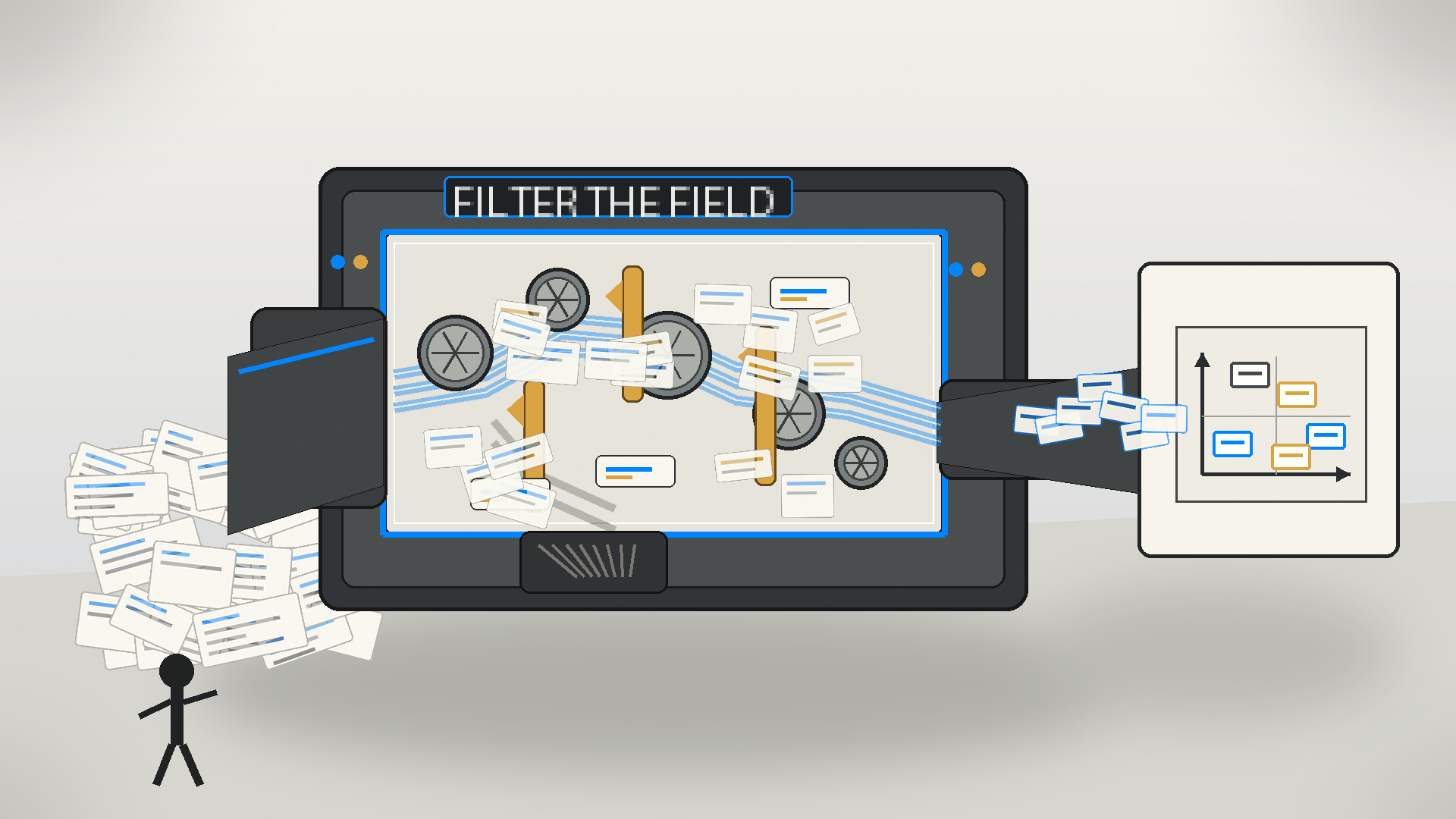
Map your market using axes that actually define the category, rather than using generic templates.
Pay attention to substitutes and alternative workflows, not just direct software rivals.
Use your findings to build a distribution strategy based on evidence, not assumptions.
Competitor analysis in marketing is the process of studying how alternative solutions reach and persuade your potential customers. Startups often claim they have no competitors. Investors treat this as an immediate red flag. When a founder says there are no competitors, it usually means they do not know the market. If you do not know the market, you do not know the customer.
When you ignore competitors, you end up building a product based on your own beliefs. You map direct rivals too late. You ignore the workarounds and substitutes buyers already use. You risk copying the surface-level marketing of other companies instead of learning who your buyers actually compare you against.
A competitor analysis framework solves this. It forces you to look at the market through the eyes of your buyer.
Move Beyond Direct Rivals
Founders often overcomplicate this process. They turn marketing competitor analysis into an exercise in copying direct competitors. They build a spreadsheet of features or track every blog post a rival publishes.
This is a mistake. The goal is to understand the playing field. To do that, you must look at substitutes and perceived alternatives. Who do buyers actually compare you to? Sometimes the alternative is another application. Sometimes it is a human workflow, a spreadsheet, or an agency.
Instead of just listing features, focus on what to analyze in your competitors' go-to-market motions:
Channels (where do they acquire attention?)
Messaging themes (what core promises do they make?)
Target audience (who exactly do they speak to?)
Substitutes (what non-software alternatives exist?)
Proof points (how do they build trust?)
Conversion paths (what happens after a click?)
Understanding these alternatives lets you test your hypotheses with actual evidence. You can validate your ideal customer profile (ICP), your pain-solution fit, and your distribution plan. You stop building a channel map based on assumptions. This creates a clear B2B competitor analysis strategy. It focuses on how to reach buyers, rather than just what features to build.
The Competitor Matrix: A Practical Framework
Do not use universal templates to map your competitors. Instead, build a matrix only after you conduct broader market research. Pick two axes that actually separate the companies in your category.
For example, if you build a social media management tool, you might map competitors based on:
One-platform versus many-platform integration
Growth-first focus versus full management capability
Here is an example matrix showing how those axes reveal positioning choices:
Approach | Growth-First Focus | Full Management Capability |
|---|---|---|
One-Platform | Simple standalone posting tool | Deep single-network analytics |
Many-Platform | Viral scheduling across networks | Enterprise team approval workflows |
Note: This is just an example. Do not use these as fixed, universal axes for every market. The axes you choose should always change depending on your specific category.
The matrix must reveal a positioning choice. Consider a hypothetical B2B sustainability startup in Europe. If early research showed a rapidly changing industry with heavy corporate involvement, mapping the market might lead the team to shift their focus. They could target consultants and green SMBs instead of large corporations. This could allow for simpler growth with less competition by finding a gap in the market based on understanding the heavily regulated landscape.
Mapping your position this way is the foundation of any B2B startup product positioning guide.
Find Underserved Channels
Competitor analysis in marketing connects directly to your gap analysis. When you know where competitors focus their marketing, you can find the underserved channels. This is where you can beat the B2B marketing competition.
If every major player relies heavily on paid search, the cost to acquire a customer there will be high. You might find better returns by focusing on organic search, partner marketing, or community building. If competitors write high-level content, you can win by publishing deep, tactical resources. Look at how competitors write their helpful content, how they structure their SEO strategy, and how they implement the basics from the SEO starter guide.
Your go-to-market strategy must be an exact set of actions you take to get in front of your ICP consistently. Everything else follows later.
FAQ
How do you do competitor analysis in marketing?
You map how alternative solutions reach and persuade your buyers. Instead of comparing product features, analyze where your competitors find their audience, what messaging they use, and how they convert interest into action.
Why do competitor analysis at all if we should be focusing on customers?
While focusing on customers is critical, an early founder cannot ignore the rest of the market. You should use competitor analysis to learn about the customer and the playing field, not to copy your rivals. Understanding what your competitors do helps you see the choices your buyers face every day.
What is the most important part of competitor analysis?
Focus on substitutes. The things your buyers currently use to solve their problem are often more important than direct software competitors. If you only look at other SaaS products, you miss the full picture of customer behavior.
How does this connect to my go-to-market strategy?
It provides the evidence you need to choose your actions wisely. A go-to-market strategy is the exact set of actions you take to get in front of your ICP consistently. You stop guessing based on what other companies are doing.