TL;DR
Saying "we have no competitors" is a red flag for investors. It shows a gap in customer understanding.
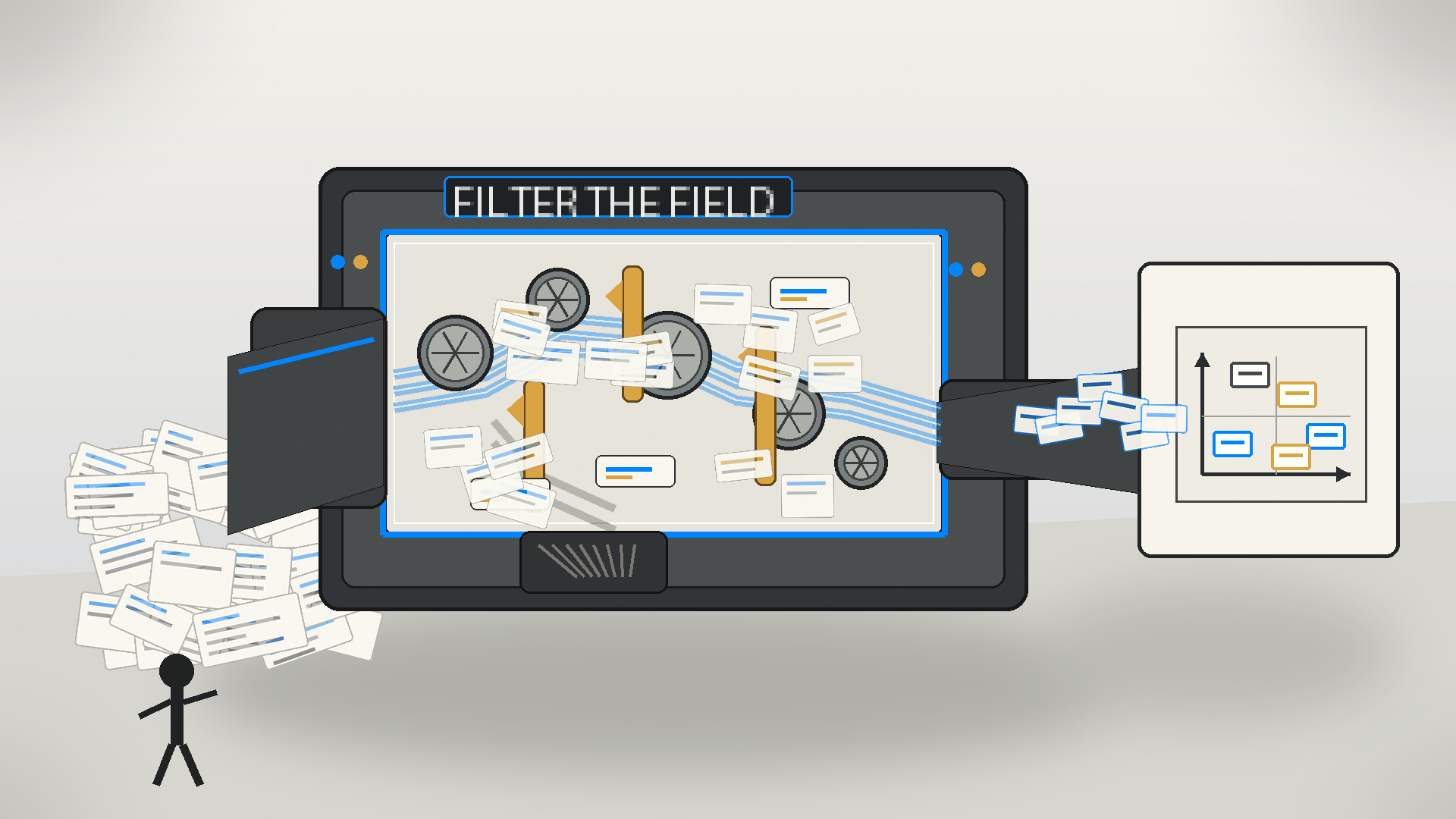
Competitor analysis is a tool for customer discovery, not a prompt to copy features.
Your real competition includes substitutes and the choice to "do nothing."
Build a positioning map using specific variables you discover during market research, not default options like price vs. quality.
Use competitor data to find undefended market segments, unresolved pain points, and weak acquisition channels.
What is competitor analysis?
Competitor analysis is the process of identifying your direct competitors and market substitutes to understand their positioning, customer acquisition channels, and product gaps. For founders, startup competitive analysis is not about copying features, but rather a method of customer discovery used to find undefended market segments and refine go-to-market strategies.
A founder walks into a strategy meeting and waves off market research by quoting Jeff Bezos: "Competitors don't pay us." Or worse, they claim, "We don't have competitors."
That sounds disciplined. But for an early startup, it is a glaring red flag. Claiming you have no competitors usually means you are building on your own assumptions rather than market evidence. Bezos can afford to ignore rivals because Amazon's intense customer focus already owns the relationship. An early startup cannot.
For you, competitor analysis is a cheap way to study reachable customers, market structure, objections, and go-to-market paths before you spend months building the wrong product. Competitors are not companies to copy. They are evidence that a market actually exists.
Redefining Competitor Analysis as Customer Discovery
Founders often overcomplicate this process by treating it as a feature-comparison exercise. They build a 50-row spreadsheet comparing minor tool integrations. Meanwhile, they miss that their rival acquires most of its users through an undefended community channel.
Competitors' customers are not someone else’s property. They are often your most reachable future customers. If you want to know how to analyze competitors for your startup, start by reading their negative reviews, watching their long-running ads, and finding the objections their sales team fails to resolve.
A missing feature is not white space. An underserved customer with a painful workaround is.
Expanding the Competitive Set
If you stop at direct competitors, you will miss the actual threat. You are competing against three things:
Direct competitors: Companies selling a similar product to the same audience.
Substitutes: Different products solving the same underlying problem or competing for the same resource. For Instagram, the biggest competitor for attention is Netflix, not another photo app.
Do nothing: The customer deciding the problem is not painful enough to fix.
The Practical Framework: Mapping the Market
A basic competitor analysis framework follows these practical steps:
Identify direct competitors.
Identify substitute solutions.
Study their customers, reviews, and acquisition channels.
Map their positioning based on what buyers care about.
Convert these findings into your own go-to-market choices.
The lazy way to map positioning is to draw a 2x2 matrix using "cheap vs. expensive" and "simple vs. complex." The useful way is to use axes the market taught you.
Here is a quick check to see if your competitor analysis framework is useful:
Bad Competitor Analysis | Useful Competitor Analysis |
|---|---|
50-row feature comparison checklist | Mapping customer objections and positioning gaps |
Universal axes (Price vs. Quality) | Axes discovered through specific market research |
Only tracking direct software rivals | Tracking substitutes and alternative workflows |
Ignoring how rivals get customers | Analyzing channel evidence and acquisition motion |
Goal: Copying features | Goal: Finding undefended customer segments |
A Worked Example
Consider a SaaS tool for social media management. Instead of default variables, market research reveals two specific dimensions that actually matter to buyers: One platform vs. many platforms and Growth-first vs. full management.
Mapping competitors against these axes forces the team to study positioning choices. If every major player clusters in the "many platforms / full management" quadrant, you might find an undefended niche built for single-platform growth creators. You build your axes after the research, not before.
Translating Findings into Go-To-Market Choices
Once you understand the market, translate those insights into a competitor analysis template that informs your go-to-market strategy.
Look for the segment incumbents ignore. In b2b competitor analysis, this is often how you find your wedge. For example, enterprise companies might fight over mandatory ESG compliance software for massive corporations. But that leaves an undefended market of medium-sized businesses that adopt ESG tools voluntarily for branding benefits. That is a segment you can win.
Extract customer objections. If a rival competes on price but lacks customer support, build your sales motion around reliability. Find their churned users, figure out what broke, and build your messaging directly around fixing that specific pain point. Standard startup advice emphasizes talking to users to understand their problems. Talking to your competitors' frustrated users is just a faster way to find them.
FAQ
How do you do competitor analysis for a startup?
Start by identifying direct competitors and substitute solutions. Then, research their customers, reviews, and acquisition channels. Finally, map their positioning on a 2x2 matrix using variables that actually matter to buyers, rather than generic axes like price and quality.
What should be included in B2B competitor analysis?
A B2B competitor analysis should go beyond feature checklists. It must include an evaluation of customer objections, acquisition channels, substitute workflows, and the specific go-to-market motions competitors use to reach their Ideal Customer Profile (ICP).
How often should competitor analysis be updated?
Update your analysis whenever you adjust your target audience, launch a major product expansion, or notice a shift in how customers discover your category. It is an ongoing tool for customer discovery, not a one-time document.
Shouldn’t startups obsess over customers, not competitors?
Yes. But for an early startup, studying competitors is studying customers. When you research a competitor, you learn where your target audience hangs out, what they are willing to pay, and what problems still frustrate them.
What if we truly are creating a new category with no direct competitors?
Even if no one has your exact software, the customer is currently solving the problem somehow. They are using a spreadsheet, hiring an agency, or hacking together a workaround. That workaround is your competitor.
Why do competitor analysis at all if Jeff Bezos says not to obsess over competitors?
Bezos can afford to ignore competitors; an early founder usually cannot. Use competitor analysis as a customer-learning tool. If you cannot name competitors, investors read it as a market knowledge gap: you may be building from your own beliefs instead of evidence.