TL;DR: Lean product discovery is how you stop mistaking founder confidence for market evidence. Before you write code, you test your assumptions against reality. The fastest way to validate demand is not by asking prospects if they "like" an idea, but by asking for a commitment — a scheduled demo, a letter of intent, or real payment. That commitment is the only signal that protects your engineering time from waste.
What is lean product discovery?
Lean product discovery is a fast validation method that pairs customer interviews with low-fidelity prototypes to test demand before writing code. Unlike continuous product discovery, which happens alongside active development, lean discovery happens first — proving a problem is painful enough that customers will pay to fix it.
It usually starts in a conference room. A founder writes an Ideal Customer Profile (ICP) document. They know the buyer, they know the pain, and they sketch out the perfect MVP.
But they skip talking to anyone who actually pays for alternatives. They do not ask what competitors get compared against. They avoid asking for money because the concept is not built yet. And when real signups come from an unexpected segment, they dismiss it as off-ICP noise.
This is the trap of treating discovery as an internal planning exercise. You build from your own beliefs instead of real market signals. The lean startup methodology relies on the build-measure-learn loop, but if you skip the learning part to build faster, you only optimize for waste.
Lean discovery stops that waste. Validating the solution with prospects before writing code ensures you only invest your limited resources into proven demand.
The AI Objection: "Why Not Just Build?"
Founders often object to discovery because of speed: "If AI lets us build instantly, why spend time on lean discovery instead of just shipping an MVP?"
Because faster building also means faster waste. When building gets faster, bad ideas get cheaper to ship. You end up padding the product with easy-to-build features (like light and dark mode) while failing to validate the single most painful problem the product must solve. AI does not remove the need for a product discovery framework. It raises the cost of skipping it.
The Better Interview: Past Behavior Over Polite Lies
Founders love to put a low-fidelity prototype in front of a prospect and ask, "What do you think of this?" or "How do you like it?"
Do not ask this. It forces polite lies. People want to be helpful, so they will say they love it and might use it. That verbal interest is not validation.
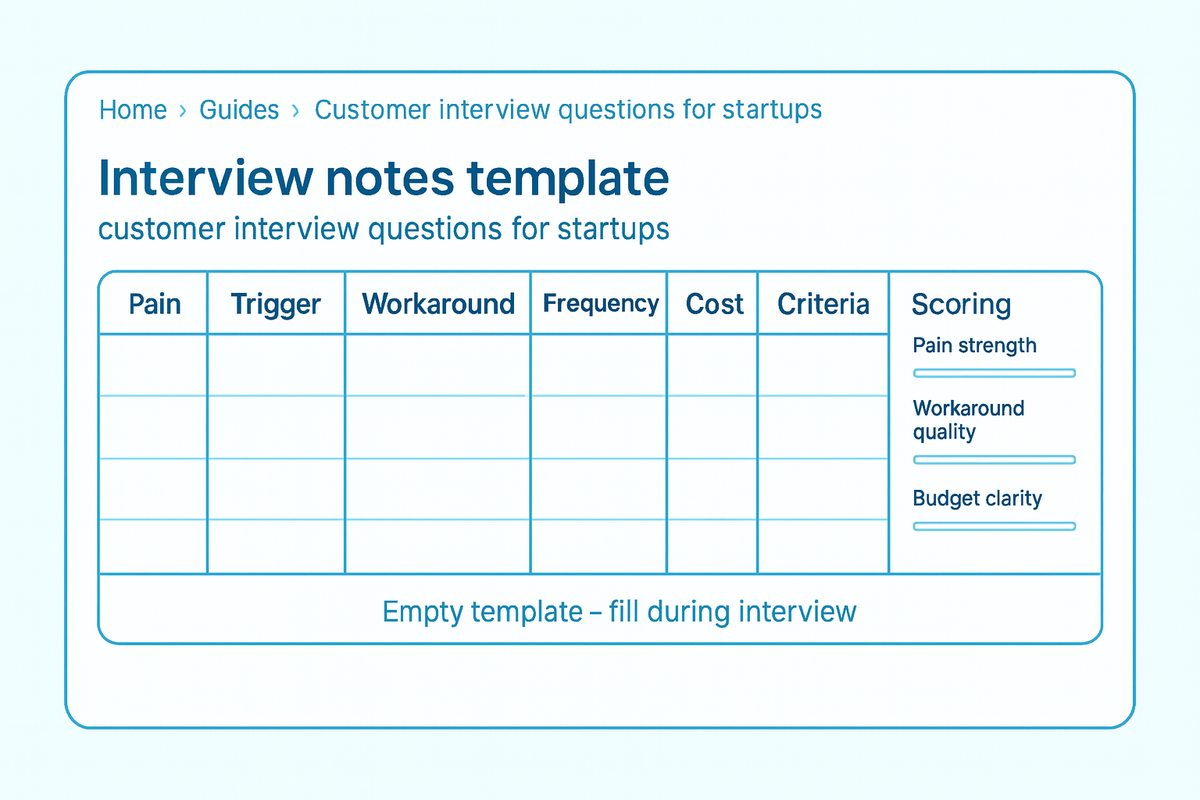
Instead of asking for hypotheticals, study their past behavior. Ask what they did the last time this problem came up. Ask what they already tried, who they compare you to, and why alternatives failed. If they have not even tried a crude workaround for a problem, the perceived effort to fix it is probably larger than the pain itself.
You must actively extract hidden objections. Do not assume customers will volunteer why they will not buy. It is your job to pull those objections out of them. This separates the broader work of product discovery vs customer discovery from specific prototype validation.
Interview Question Swap Table
Bad (Hypothetical & Opinion) | Better (Past Behavior & Evidence) |
|---|---|
"What do you think of this idea?" | "What did you do the last time this problem came up?" |
"Would you pay $50 a month for this?" | "What tools do you currently pay for to solve this?" |
"Does this workflow make sense?" | "Walk me through the exact steps you take to do this today." |
For more on structuring these types of interviews, read The Mom Test.
The Fake-Door Validation Test
If a prototype does not test a risky assumption, it is just a prettier opinion prompt. The fastest useful test is not "Do they like it?" It is "Will they commit?"
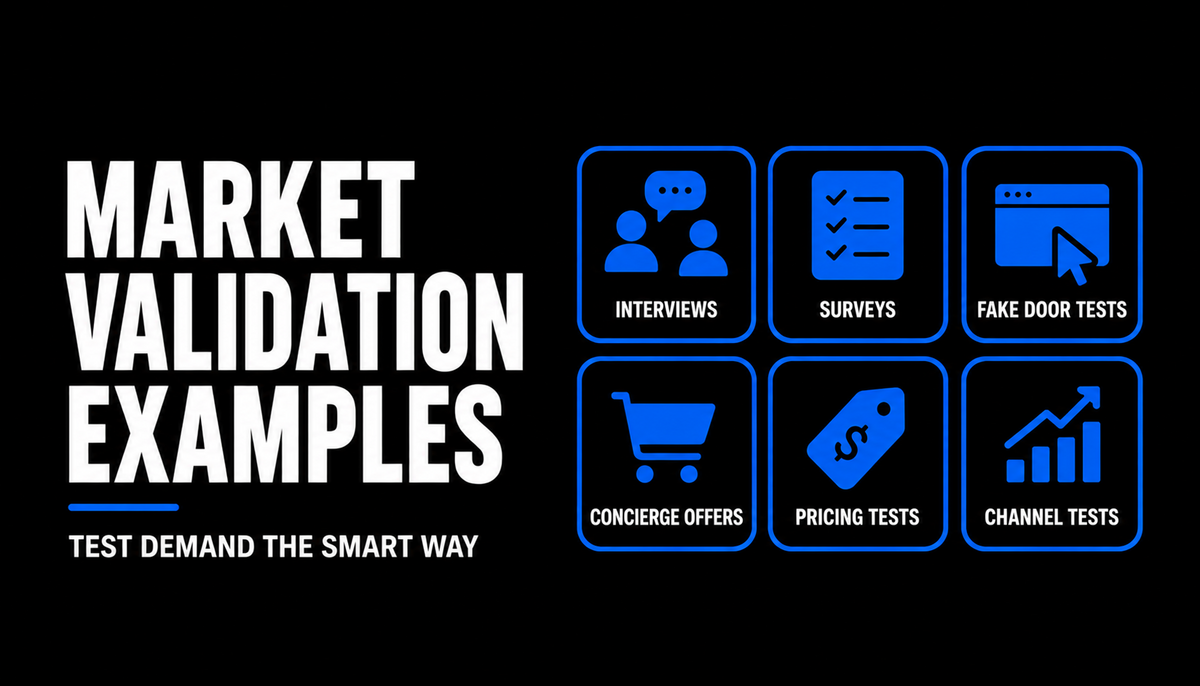
The most extreme version of this is the fake-door test. To prove demand, put a low-build offer in front of users and push the validation as close to real purchase intent as possible.
You can take this as far as charging for a product that does not yet exist. If a user puts in their credit card and commits money, you immediately reverse the bank transaction. You tell them, "Capacity just ended, we refunded you in full, and you are on the waitlist."
Real money changes hands, proving definitive demand without building the product.
Ethical rule: Fake-door testing requires strict customer protection. You must provide a clear expectation, cause no harm, issue an immediate refund, and offer a real next step like a waitlist. Do not keep the money.
The Assumption Test Matrix
To stop building on assumptions, use a signal strength ladder to measure real demand. A compliment is the weakest signal. A signup is better. A booked demo, a Letter of Intent (LOI), and a payment are the strongest. You can see variations of this signal tracking in many successful customer development processes.
Use this matrix to map your core hypotheses to evidence thresholds before you build:
Assumption Type | What You Are Testing | Invalidation Metric (Do Not Build If...) | Validation Signal (Strong enough to prototype next) |
|---|---|---|---|
ICP | Who actually cares about this? | Target segment ignores outreach; unexpected segment responds but cannot be monetized. | Unexpected segment shows high willingness to pay; target segment books demos. |
Pain-Solution | Is the problem acute enough? | Prospects use no workarounds and refuse to sign an LOI. | Prospects complain about a missing feature; prospects pay a deposit. |
Workflow | Can they adopt it? | Requires rewriting their entire company policy to use. | Replaces an existing messy spreadsheet directly. |
If you launch an early version and customers complain about a missing feature, celebrate. Customers almost never complain about features they do not care about. A complaint about missing access is a positive signal that confirms problem validation.
Unexpected demand is also a signal, not noise. If early traction comes from a segment outside your ICP doc, do not reject it. Ask what product or business model changes could make that segment viable.
FAQ
If AI lets us build instantly, why spend time on lean discovery instead of just shipping an MVP?
Because faster building also means faster waste. AI makes it easier to build things people do not need. Lean discovery protects your focus on the core pain. An MVP should solve the most painful problem, not just bundle cheap features like light/dark mode.
How is lean product discovery different from continuous product discovery?
Lean discovery happens before you commit to building a product, focusing on whether a problem is worth solving at all. Continuous product discovery happens constantly alongside active development, where product teams test smaller feature assumptions weekly. Both practices help integrate product discovery in agile environments, but lean discovery is the first, highest-risk filter.
What do I do when early customers complain about a missing feature?
Celebrate. Customer complaints about a missing feature show real interest and reliance on your workflow. People do not complain about products they do not care about.
Should we pivot if we get traction from the "wrong" customer segment?
Do not dismiss unexpected traction as noise. Investigate it as a strategic opportunity. Ask why they booked the call and what business model adjustments could make them a viable primary ICP. Real traction is rare enough that it is worth exploring.
Next Steps: Validating Your Own Product
Validating demand before writing code is the only way to protect your engineering bandwidth. Knowing you need to test assumptions is different from actually running the interviews. Your real next decision is how to structure those conversations so you extract truth instead of polite lies. Focus on past behavior, push for commitment, and begin mapping your hypotheses before you schedule another demo.