TL;DR: Which framework fits depends on whether you are shaping an idea or validating demand. Design thinking helps you figure out what you could build by shaping a plausible concept. Product discovery tests whether that concept survives contact with customer behavior, market reality, and willingness to pay. Mistaking a successful design thinking workshop for market validation is a common startup trap. Stop asking "do you like this?" and start asking "what did you pay for last time?"
The Workshop-to-Build Trap
A team runs a convincing design sprint. They create a beautiful prototype and detailed personas. Everyone leaves the room feeling aligned. The momentum is high, and the next move feels obvious: hand the prototype straight to engineering.
But that momentum is dangerous. The prototype proved the team can describe the idea clearly. It did not prove that customers actually have the pain, or that they would change their behavior to use the solution, or ever pay for it.
Design thinking can make an idea feel real before the market says anything. You achieve internal clarity, but you lack external evidence. The handoff happens when the core question changes. You stop asking "What could we make?" and start asking "What evidence says this should exist?"
Core Definitions
Design thinking is a methodology for empathizing with users, defining problems, and ideating solutions. It relies on exploration and prototyping to clarify a vision and align a team around a plausible product concept before you commit to a single direction.
Product discovery is the process of testing that concept against market reality. It uses behavioral evidence, customer interviews, and willingness-to-pay experiments to prove that a product is commercially viable and solves a real problem before you commit to a costly engineering build.
Product discovery vs design thinking: when should each one be used?
These frameworks share some DNA, but their centers of gravity are different. Use design thinking to empathize, define, and ideate. Use product discovery to prove market reality through hard validation checks.
If you skip product discovery, you risk building something nobody needs. If you try to run product discovery without first clarifying your idea, you won't know what you are testing.
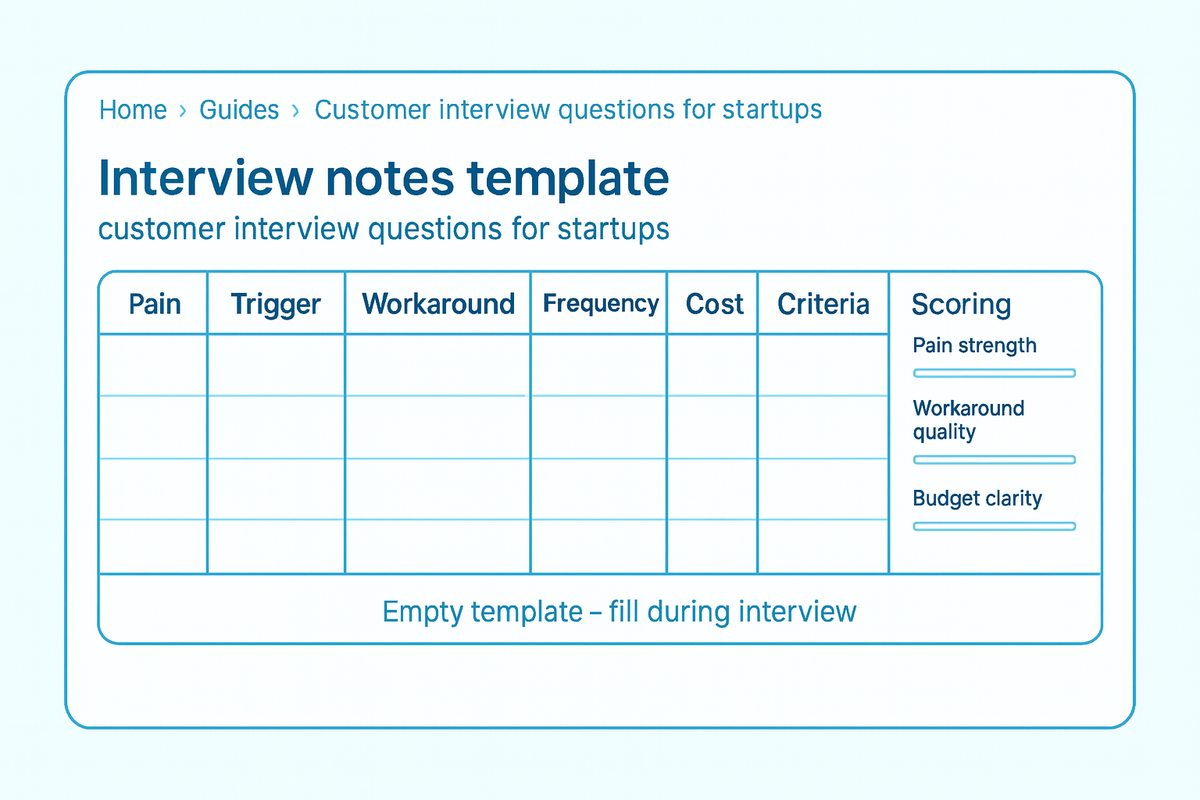
Strong lean product discovery for B2B relies on past behavior, not hypothetical answers. When a team asks a user, "What do you think about this prototype?", the user feels forced to give polite lies. Real discovery avoids polite-answer bias. It asks, "What did you do the last time this problem happened?" It studies actual behavior to find actionable insights.
The Handoff: From Ideation to Validation
To see where design thinking ends and product discovery begins, look at how the questions and outputs change. The table below outlines this broader handoff path, showing how a concept moves from early ideation all the way through to an MVP. Notice how asking hypothetical "bad questions" leads to polite-answer bias, while "useful questions" focus on hard evidence.
Stage | Useful question | Bad question | Output |
|---|---|---|---|
Design thinking / ideation | What could solve this pain? What does a rough prototype teach us about the product? | Do users like our idea? | Clearer product concept |
Product discovery / validation | What did customers already do? Why did they behave that way? | What do you think about it? How do you like it? | Evidence of painful behavior |
Alpha | Where are the first 10 customers we can manually onboard into real value? | Can this acquisition process scale yet? | First users getting actual value |
MVP | What is the most painful pain this fixes? | What cool cheap features can we add now? | Narrow build focused on validated pain |
Handoff Checklist
Before leaving the ideation phase and moving into lean validation, confirm these steps:
Prototype clarified the product vision
Past customer behavior identified
Willingness-to-pay test chosen
Manual validation path defined
Lean Validation in Practice: Proving Demand Before Building
When transitioning from ideation to lean validation, prioritize hard evidence over soft interest. Willingness to pay is much stronger evidence than compliments or survey intent.
Consider an AI-personalized workout app. During the design thinking phase, the team found a promising pivot angle for the product. However, they did not immediately remake the app. They used a manual approach to validate the new direction.
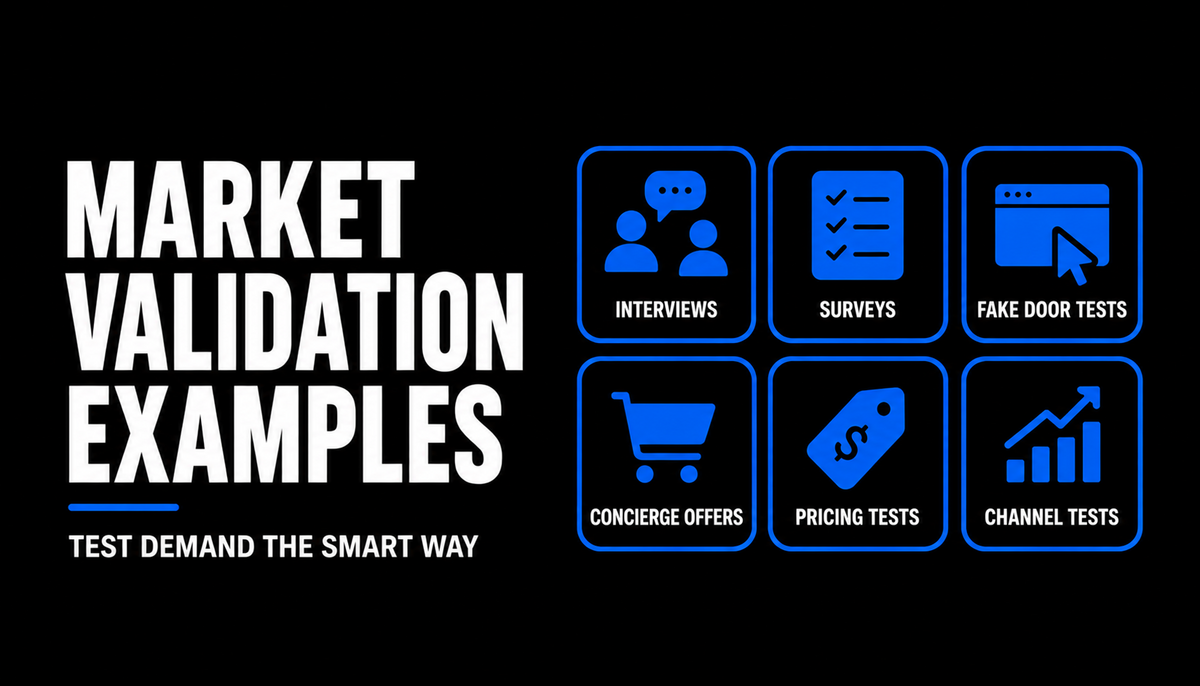
They sold a 14-day Concierge MVP pilot to 15 real B2C buyers. The "AI personalization" was delivered manually by a human through WhatsApp. They only considered building the automation after 40% of the testers proved their demand by wanting the £60 subscription when the pilot ended.
Another extreme but effective validation check is the fake-door test. You can take this as far as charging money for a product that does not yet exist. If a user pays, you immediately refund the money to avoid unfair customer harm. You explain that capacity just ended and move them to a waitlist. This proves with real money that people need the solution. It provides strong evidence for whether the idea is worth building.
When applied correctly, this approach stops endless ideation and forces commercial validation. Effective product discovery reduces the risk of building unwanted features, making it a critical practice for product discovery in agile B2B environments.
FAQ
What is the difference between product discovery and design thinking?
Design thinking focuses on understanding the user, defining the problem, and generating ideas to shape a product concept. Product discovery focuses on testing that concept against market reality to prove people will actually use and pay for it.
Is design thinking part of product discovery?
They overlap, but they have different goals. Design thinking is often used early on to generate and refine ideas. Product discovery takes those ideas and subjects them to rigorous validation before engineering begins.
If design thinking gave us the idea and prototype, why do product discovery instead of just building?
Because ideation can clarify what you think the product is, but it does not prove anyone needs it. Hand off from design thinking to product discovery when the work moves from "what could we make?" to "what painful past behavior proves this matters?"
Should we completely replace design thinking with product discovery?
No. The frameworks are sequential, not competitive. Design thinking helps shape a plausible idea and aligns the team. Product discovery then tests whether that idea survives contact with customer behavior, market reality, workflow fit, and willingness to pay.
How do we validate our ideas without building scalable onboarding?
At the early validation and alpha stages, your goal is deep customer understanding, not scalability. Finding and onboarding your first alpha customers should be done manually. Go where they are, invite them directly, and ensure they receive real value.