TL;DR: Polite pilot users will lie to protect your feelings. Open-ended opinion questions hide zero adoption behind cheerful praise. Real retention leaves operational receipts: recent task completions, deleted spreadsheets, teammate invites, and signed purchase orders. Stop asking users if they like your interface. Reconstruct their past actions, check how often they return, and uncover hidden friction before renewal day arrives.
The polite approval trap: why smiling pilots churn
You finish a product demo or a thirty-day pilot review. You ask the customer how things are going. They smile, nod, and tell you the tool looks great. They say the dashboard is clean and their team finds it interesting.
You hang up the call feeling confident. You update your pipeline notes and expect an easy renewal.
Then the pilot ends. You send the contract or the payment link, and the account goes dark. Your emails go unanswered. Nobody puts down a credit card.
You did not collect retention evidence on that call. You collected social politeness.
When founders ask questions like "What do you think of the product?" or "How do you like the platform?", they invite polite answers. Most business customers avoid awkward friction on live calls. They would rather praise your work than explain why your tool sits forgotten in an open browser tab.
As Rob Fitzpatrick notes in The Mom Test, people often lie to protect your feelings whenever you ask for opinions. Opinions cost nothing to give, and hypothetical praise will never pay your server bills.
If you want to know whether an account will renew, stop studying customer perception. Study past actions instead. What did the user actually do inside your product on Tuesday morning? What broke in their daily workflow when they tried to use it? If you cannot verify daily usage, you cannot prove true B2B product-market fit. The best questions to ask customers about your product focus on what they already did. Your goal is to build an accurate mental model of how the customer works, not to collect a high compliment score.
What questions should you ask customers about your product?
To evaluate real retention, ask questions about past behavior instead of opinions. Ask when the customer last logged in, what triggered that session, and what manual workflow your tool replaced. Also ask who approved the purchase and what complaints teammates have. These behavioral questions uncover actual use, hidden friction, and true buying intent.
Replace opinion prompts with behavioral audits
Good B2B product discovery questions look backward, not forward. They focus on concrete actions rather than general feelings.
When you ask people what they might do tomorrow, they imagine ideal scenarios. When you ask them what they did yesterday, they give you facts. You can build a reliable discovery routine by studying how to structure B2B product interviews around verifiable calendar events.
When you run customer interview sessions for retention, use these diagnostic pairs to replace polite product feedback interview questions:
Weak prompt: "Do you like our analytics dashboard?"
Diagnostic prompt: "When was the last time you opened this dashboard, and what business decision did you make with the numbers you saw?"Weak prompt: "Would you pay two hundred dollars a month for this?"
Diagnostic prompt: "Who at your company approves software spend for this workflow, and what was the last tool you purchased in this category?"Weak prompt: "What features would make this product better for you?"
Diagnostic prompt: "Walk me through the last time you got stuck using this tool. What manual workaround did you use to finish the job?"Weak prompt: "Is your team happy with the rollout?"
Diagnostic prompt: "Who on your team logged in this past Monday without you asking them to do it?"
Notice the shift in each pair. The weak question invites a polite compliment or an empty promise. The diagnostic question asks for a calendar entry, a receipt, or a list of names.
Six diagnostic interview areas to spot real retention
When evaluating an active beta or pilot account, organize your conversation around six operational areas. These areas reveal whether your software is becoming a daily habit or a temporary novelty.
1. Last real use and trigger
Do not ask how often someone uses your product. Ask for the specific moment of their last session.
Ask: "When did you last log in to complete a real task?" Follow that with: "What exact event triggered you to open the app?"
If the user pauses or speaks in general terms, they probably have not logged in for days. Active users remember their last session clearly. They know the exact task, the client name, or the data file they handled. If you need more question scripts for pilots, review these interview questions for customer pilots.
2. The legacy workaround test
Your product never enters an empty room. Before your software arrived, the customer had a way of finishing the job. They used an Excel spreadsheet, a shared Slack channel, or manual copy-pasting.
Ask: "What happened to the spreadsheet you used to run every morning?"
If the team still updates the old spreadsheet as a backup, your product has not replaced anything yet. Your software is currently extra homework for their staff. True retention happens when the customer abandons the old workaround because returning to it feels painful.
3. Usage cadence and business model fit
Not every valuable product is used daily. Some tools solve problems that occur every morning. Other tools solve problems that happen once a quarter or once a year.
Ask: "How often does this exact business problem occur in your normal workflow?"
Listen closely to the answer. A tool used once a year can bring high monetary value to a business, but it cannot support a monthly subscription. If an accounting firm only needs your tool during tax season, forcing a twelve-month SaaS contract will trigger quick cancellations. You must match your pricing model and retention expectations to the natural rhythm of the customer's job.
4. Active extraction of hidden objections
Founders often assume that unhappy customers will complain. In reality, silent drop-off is far more common. When business software feels clumsy or confusing, users simply close the tab and return to their old routines.
You must pull objections out of the room yourself. If a user shares no objections, that does not mean they have none.
Ask: "What is the most annoying part of this workflow right now?" If they claim everything is fine, push deeper: "If you had to delete one screen or step in this process, which one would it be?"
Heavy users almost always have complaints. They run into edge cases, slow load times, and missing export buttons. When a pilot user claims everything is perfect, they are rarely thrilled. They are usually disengaged.
5. Organic team spread
In business software, true retention rarely stays with a single user. When an operations manager finds real value in your tool, they invite colleagues to save time.
Ask: "Who else on your team touched this workspace this week, and what did they say when you introduced it?"
Ask the manager to share their screen. If invited team members have accounts but show zero recent edits, the manager is acting as a polite buffer. Talk directly to the frontline staff. The people doing the daily data entry will tell you the blunt truth about whether the product works.
6. Commercial skin in the game
Praise without budget commitment is not a retention signal. Willingness to pay is what proves real value.
Ask: "What needs to happen internally for your team to sign a paid agreement at the end of this trial?"
Listen for concrete procurement steps. A buyer with real intent mentions budget approvals, security reviews, legal checks, and renewal deadlines. A customer who plans to walk away gives vague timing, such as needing to revisit the decision next quarter.
Diagnostic feedback table: compliments vs. behavioral signals
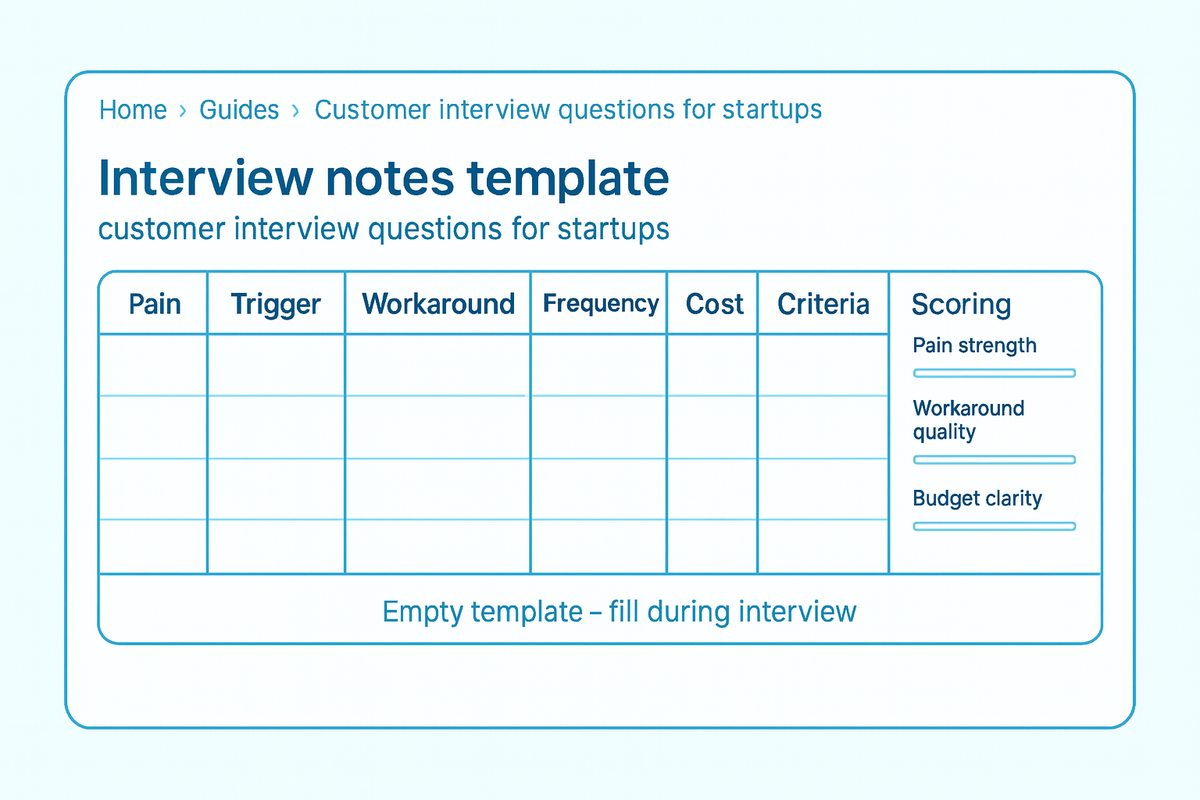
Before logging notes from a user call, filter their responses through behavioral criteria. You can organize these responses using a system for B2B customer feedback collection to separate polite comments from operational facts.
This compact reference table shows how polite encouragement differs from authentic retention signals across five core categories:
Feedback category | Diagnostic question | Behavioral tell | Retention risk signal |
|---|---|---|---|
General satisfaction | What changed in your daily workflow after you started using this tool? | The user points to a specific task they stopped doing manually. | The user praises the interface but describes no change in daily routine. |
Usage frequency | When was the exact last time you logged in, and what triggered the visit? | The user names a specific task completed earlier today or yesterday. | The user pauses, speaks in generalities, or cannot recall the last session. |
Workflow replacement | What happened to the tool or spreadsheet you used before our product? | The user archived the legacy file or canceled the previous software subscription. | The team still runs the old spreadsheet alongside your tool as a safety net. |
Team adoption | Which of your colleagues opened this workspace this week without a reminder? | Multiple team members leave comments, run tasks, or invite new collaborators. | Only the primary contact has logged in, while invited teammates show zero activity. |
Commercial renewal | What specific approval steps remain before your team signs the paid agreement? | The user introduces you to the budget owner or requests security paperwork. | The user promises future consideration but avoids discussing payment terms. |
The 5-step post-interview analysis scorecard
Do not rely on memory after a user call. Review your notes within thirty minutes of hanging up. Score the account across these five sequential steps to decide whether the user is truly retained.
Check the timestamp of the last real action: Review your product database while reading your call notes. Did the customer's stated timeline match their actual activity? If they claimed to use the product every morning but their last login was eight days ago, you have an adoption issue.
Rate the severity of the trigger event: Review why the customer opened the product. Did an urgent business bottleneck force them into the app, or were they casually exploring features during downtime? Software that depends on casual curiosity churns when the customer gets busy.
Verify the death of the old workaround: Confirm whether the customer abandoned their prior process. When a team deletes their old tracking sheet or cancels a legacy vendor, switching costs work in your favor. If the old system remains active, the customer can leave your product without operational pain.
Map the teammate adoption pattern: Track whether usage spreads across the client organization. Check how many distinct team members perform core tasks each week. If only one person logs in while teammates stay silent, the account lacks organizational stickiness.
Document concrete commercial commitments: Check whether the customer provided clear next steps toward payment. Did they give a date for budget review? Did they name the person who signs the agreement? If pricing questions receive vague answers, the account will likely churn at the end of the trial.
Diagnosing low usage: onboarding friction vs. product failure
When an interview reveals weak usage, founders often assume the product lacks features. They rush back to their roadmap and build more buttons.
That reaction is usually a mistake. Low engagement typically traces back to one of three distinct causes.
Cause 1: Unassisted onboarding friction
Sometimes a customer genuinely wants your solution, but early setup friction stops them cold.
Consider this common trap: a founder agrees on a pilot scope with a customer team. Instead of guiding the initial setup personally, the founder emails a user guide or a recorded video walkthrough. Two weeks later, the pilot shows zero logins.
The founder assumes the customer lacks interest. In reality, the customer ran into an authentication error or a confusing file upload step on day one. They did not want to spend time troubleshooting, so they gave up.
In early pilots, you must provide high-touch personal support. As Paul Graham famously wrote, early founders must do things that do not scale. Sit on video calls with your earliest pilot cohorts, watch their screens, and guide them through setup.
Rahul Vohra used this exact approach at Superhuman, using one-on-one manual onboarding to eliminate setup friction before assessing product stickiness. If your users abandon the app during their initial setup sessions, fix your onboarding before changing your core features.
Cause 2: Low-urgency customer profiles
Low retention often traces back to top-of-funnel targeting rather than product flaws.
If your marketing attracts fringe users who feel mild curiosity instead of acute pain, they will never form a daily habit. When evaluating customer acquisition channels, audit how you attract initial B2B accounts to confirm you are targeting companies with urgent operational headaches.
If you sell to companies with loose deadlines and small budgets, even an exceptional tool will fail to retain them.
Cause 3: Core product-market mismatch
If your onboarding is smooth and you are speaking to the right buyer profile, but usage still dies after week two, you are dealing with weak product value.
The core promise of the software is simply not solving the problem cleanly. As product leader Lenny Rachitsky has noted regarding product-market fit signals, true demand feels like being pulled forward by customers rather than pushing an object uphill.
When you have true fit, users pull the product out of your hands. If users consistently walk away after a clean onboarding process, re-examine your core product assumptions before spending months writing new code.
FAQ
What are good questions to ask beta users?
Ask about specific moments rather than opinions. Ask when they last logged in, what exact task triggered that visit, and what step caused friction. If invited teammates stopped using the tool, ask who abandoned it and what workaround they used instead.
How do you know if customer feedback is real?
Real feedback points to concrete changes in daily behavior. A retained user can name the legacy spreadsheet they deleted or the manual task they stopped doing. If the user only offers praise without operational changes, you are collecting polite encouragement.
Should I ask customers if they like my product?
No. Asking customers if they like your product forces polite lies. People avoid awkward tension on calls and will praise your interface to be nice. Interview for past actions to build an accurate mental model of how they work.
What questions reveal retention risk?
Ask what happened to the old process they used before your software arrived. If the team still maintains the old spreadsheet as a backup, your product is at high risk of churn. Also ask what internal approvals remain for a paid contract to test whether budget exists.
Separating product apathy from go-to-market positioning
Customer feedback interviews do more than evaluate software usability; they reveal whether you are talking to the right buyers. When behavioral audits expose low adoption despite glowing praise, the root cause is often positioning that attracted low-urgency trial users rather than an outright product failure. Before you rebuild your software, verify that your acquisition messaging targets urgent operational pain and that your pilot users have a genuine reason to change how they work.