TL;DR: Validation is an evidence problem, not a framework problem. Stop building in isolation. Map your market to pick a specific segment, study past behavior instead of asking for opinions, and manually recruit early alpha users. Your goal is hard demand proof — like revenue or signed contracts — before you scale.
Startup idea validation is the process of testing a business concept against real buyer behavior before building a product. An idea validation process stops you from building a solution nobody wants.
You build an MVP in the dark. You say "we don't have competitors." You delay asking for money because the product is "not proven yet."
Then you launch. People say the tool looks great, but nobody buys it.
You discover the pain was real, but the user has no budget. The actual buyer does not care. Or the problem only happens once a year, so nobody renews. Or it is actually a relationship problem wearing a software costume.
This is a common validation mistake. You treat your own belief, polite interest, or a finished MVP as proof. Validation is proving the business can survive contact with buyers, budgets, and actual behavior.
Here is a step-by-step process to get real evidence.
1. Stop Building in Isolation
Founders overcomplicate validation. They treat it like a framework problem instead of an evidence problem. They obsess over pitch deck structure instead of getting a signed letter of intent.
Building in isolation is the core mistake. You cannot validate your startup idea inside your own head. Do not start with a broad product claim. Start by proving the market and customer are worth choosing.
Before you write code, turn your idea into three specific hypotheses:
Ideal Customer Profile (ICP) hypothesis: Who has this problem and controls the budget to fix it?
Pain-solution hypothesis: What is the exact pain, and why does your specific solution fix it?
Distribution hypothesis: How will you reach them?
Each hypothesis needs a strict metric to proceed or fail. If you cannot define what would prove you wrong, you are not validating. You are just seeking comfort.
Checklist for Step 1:
Define the exact ICP and budget owner.
Define the specific pain and your solution.
Define your distribution channel.
Set strict metrics to prove or disprove each assumption.
2. Map the Market and Narrow the ICP
Saying "I don't have competitors" is a red flag. If you do not know your competitors, you do not know the market. If you do not know the market, you do not know the customer.
Competitors validate a market. Strong competitors mean buyers already spend money to solve the problem.
Map your market and competitors to pick a specific segment. For example, a B2B sustainability startup looked at a crowded market of corporate buyers. Market research shifted their focus to consultants and green small businesses. This segment allowed for simpler growth with less competition.
Checklist for Step 2:
List direct and indirect competitors.
Identify how buyers currently solve the problem.
Pick a specific, narrow segment to target first.
3. Study Past Behavior, Not Opinions
Do not ask people "what do you think?" or "do you like it?" That produces polite lies. Do not study hypotheticals.
Study their past behavior. What have they already tried, paid for, ignored, hacked together, or repeatedly tolerated? Why did they do it? If they have not spent time or money trying to solve the problem already, they probably will not buy your software.
A rigorous problem validation process helps you spot the difference between a minor annoyance and a pain people pay to solve.
For edge-case ideas, validate the statistics. How often do users hit the rare case, and how painful or costly is it?
The "Pain But Not a Business" Diagnostic
Check your idea against these four failure modes. Operational pain can be real and still fail as a recurring software business if it is:
Episodic: The problem happens rarely, so nobody renews a subscription.
Bundled: The feature is already included for free in a tool they own.
Human judgment: The issue is actually a relationship or management problem, not a software problem.
Wrong budget: The person feeling the pain is not the person with the authority to buy.
4. Test Intent With Hard Evidence
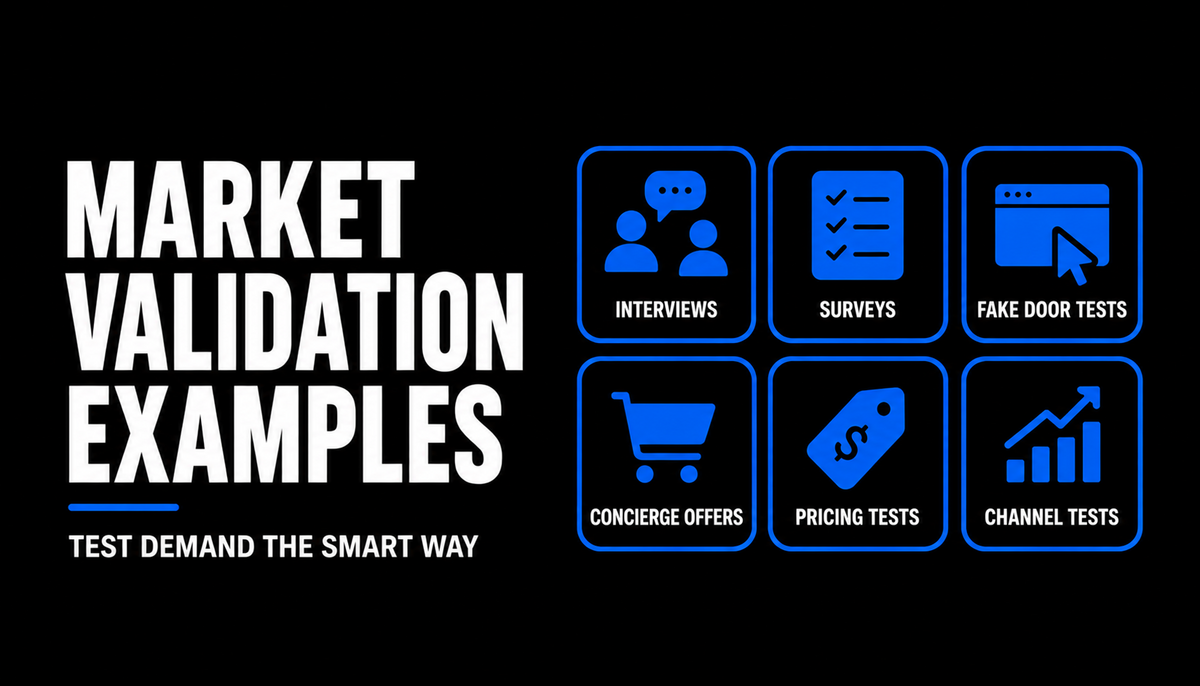
After you identify the problem, you need to prove demand. Do not run massive surveys. Do not rely on waitlists as your only signal. The check is not whether the idea sounds good. The check is whether real buyers commit before scaling.
Go to where your buyers already are. Manually recruit a small group of alpha users. Onboard them one by one. Watch whether they get actual value out of the product.
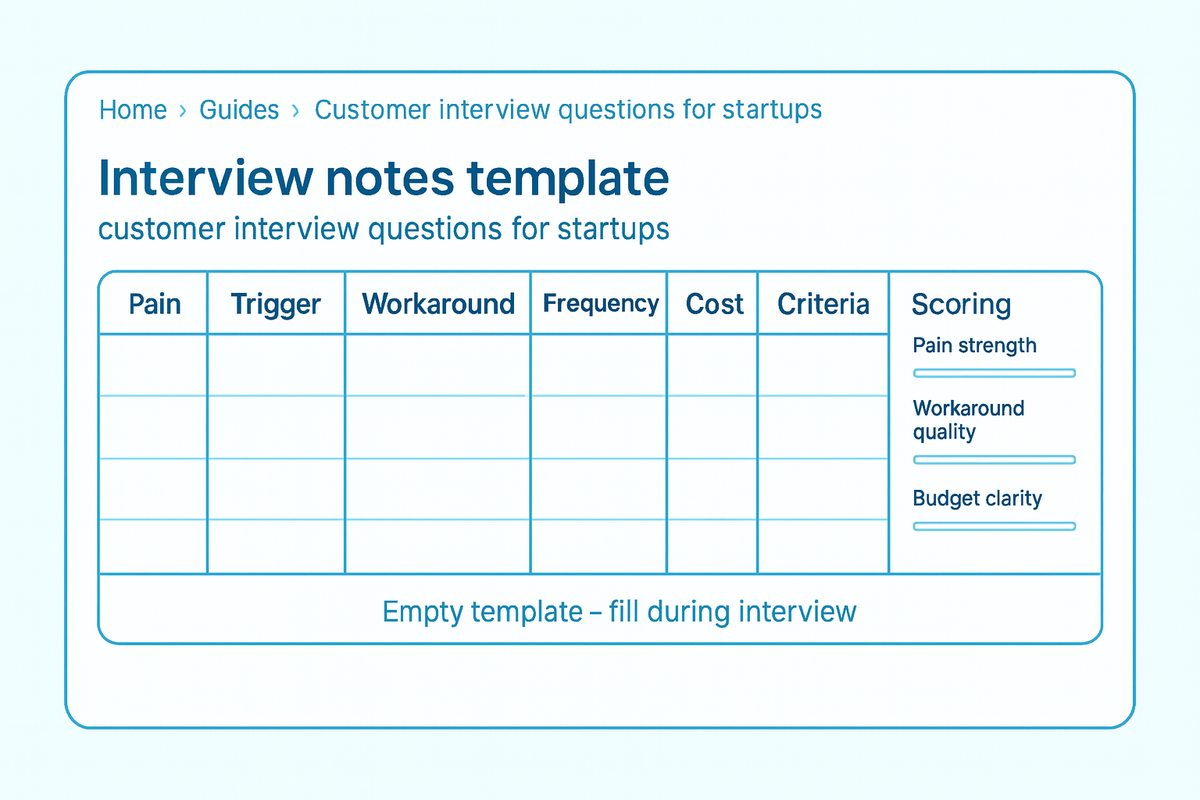
This requires structured interview frameworks focused on action, not just words. For tactical advice on these conversations, read The Mom Test, review the NNGroup user interviews guide, and explore Steve Blank's customer development principles.
Treat early validation as an escalating ladder of evidence. Start at the bottom and work your way up.
Practical Framework: The Evidence Ladder
Evidence Level | What It Looks Like | Signal Strength |
|---|---|---|
Opinion | "I like the idea." | Weak (Polite lie) |
Interest | "Let me know when it launches." | Weak |
Repeated Pain | For example: "We spend 10 hours a week fixing this." | Moderate |
Workaround / Budget | For example: "We pay an agency $2,000 a month to handle this." | Strong |
LOI / Demo | Signed Letter of Intent or a booked demo to buy. | Very Strong |
Paid Pilot | Upfront cash for early access. | Highest Proof |
Revenue is the strongest proof. A signed Letter of Intent is next. Everything else is just vision. Vision without traction is naive storytelling.
5. Move From Alpha to Cold Acquisition
Once your manual alpha users get value, the harder validation question becomes cold acquisition and retention. Can you acquire strangers and keep them? You cannot answer this with friendly pilots.
Test your distribution hypothesis. Be careful. A founder's strategic bottleneck is often channel expertise, not the product itself.
Testing your product in a marketing channel you do not understand mostly teaches you that you do not know the channel. A failed cold outreach test might prove you are bad at cold emails. It does not prove your startup idea is invalid. If you do not have hard-won channel expertise, find someone who does before you rely on a channel for validation.
FAQ
How do I validate this idea without tricking myself?
Do not ask people "what do you think?" or "do you like it?" because that produces polite lies. Start by identifying the problem through past behavior: what they already tried, paid for, ignored, hacked together, or repeatedly tolerated, and why. Then manually find the first alpha customers where they already are, invite them, onboard them one by one, and watch whether they get actual value.
What if I do not have any competitors?
No competitors usually means you have not found the real alternatives yet. If you do not know your competitors, you do not understand the market or the customer. Find out what people are currently using to solve the problem, even if it is just a messy spreadsheet.
When should I start charging money?
Charge as early as possible. Many founders avoid asking for money because the concept is "not proven yet." But willingness to pay is the best validation you can get. If they will not pay for an early version that solves a severe pain, they will not pay for a polished version later.
How many customer interviews do I need to validate a startup idea?
There is no universal number, but manually recruiting early alpha customers is a strong starting point. Focus on whether these early users get actual value from the product, not just on hitting a specific interview count.
Can I validate a startup idea with a landing page?
A landing page or waitlist can measure initial interest, but interest is a weak signal. True validation requires hard evidence like signed letters of intent, booked demos, or paid pilots.