TL;DR:
Building a working MVP is faster than ever. Vision without traction is naive storytelling.
Validation is not tweaking pricing or changing landing page headlines. Validation requires asking a buyer to commit money or time.
Before you choose a validation method, narrow your target market. Horizontal SaaS is a validation trap.
Use concierge tests to learn customer workflows, smoke tests to check offer clarity, and pre-sales to prove budget.
Startup validation methods are the structured tests you run to prove buyers will actually pay for your idea.
Founders love to polish their minimum viable product. They tweak pricing models and change landing page headlines. They ask people what they think and collect polite compliments. They refine pitch decks for a fundraise.
But they avoid the only action that generates real evidence: asking a buyer to commit.
Building code feels safe. Asking for money forces a blunt truth. Today, anyone can build a working product faster than ever. A polished application is not proof of demand. Buyer commitment is.
Calling it validation when you are just avoiding the hard question is anxiety management, not business strategy.
Before You Test: Narrow the Audience
Don't test a horizontal software product. If anyone could theoretically use your tool, your target market is too vague. You will get mixed signals and learn nothing from people who say they might buy.
Before you pick a validation method, you need a precise target. Define exactly what invalidates your idea before you test it. Nail your core messaging and offer copy first. To do this properly, follow a strict startup idea validation process.
Consider a European B2B sustainability startup. The founders wanted to test a new product. They initially looked at the broad corporate market, but that space was heavily consolidated and competitive. Instead of running a generic test, they paused and segmented the market.
They narrowed their focus exclusively to environmental consultants and green small businesses dealing with rapid regulatory changes.
Because they targeted a hyper-specific group, they didn't need a massive waitlist. They needed hard evidence: booked demos and signed letters of intent.
The Evidence Ladder
The method you use matters less than the evidence it produces. Treat validation as a ladder. The closer you get to real money, the stronger the signal.
Compliment: "This sounds like a great idea." Proves nothing; this is a polite lie.
Pain interview: "This problem cost us $4,000 last month." Proves the problem exists, but not that they will buy your solution.
Signup: Joining a waitlist. Proves they are mildly interested, but intent is weak.
Demo booked: Giving up 30 minutes of calendar time. Proves they are actively looking for a solution.
Letter of Intent: Signing a document to purchase. Proves they have the budget and intent to buy if you deliver.
Paid pilot: Paying for early access or custom work. Proves hard demand and willingness to pay before the product is finished.
Revenue: Paying full price for a standard contract. Proves you have a real business.
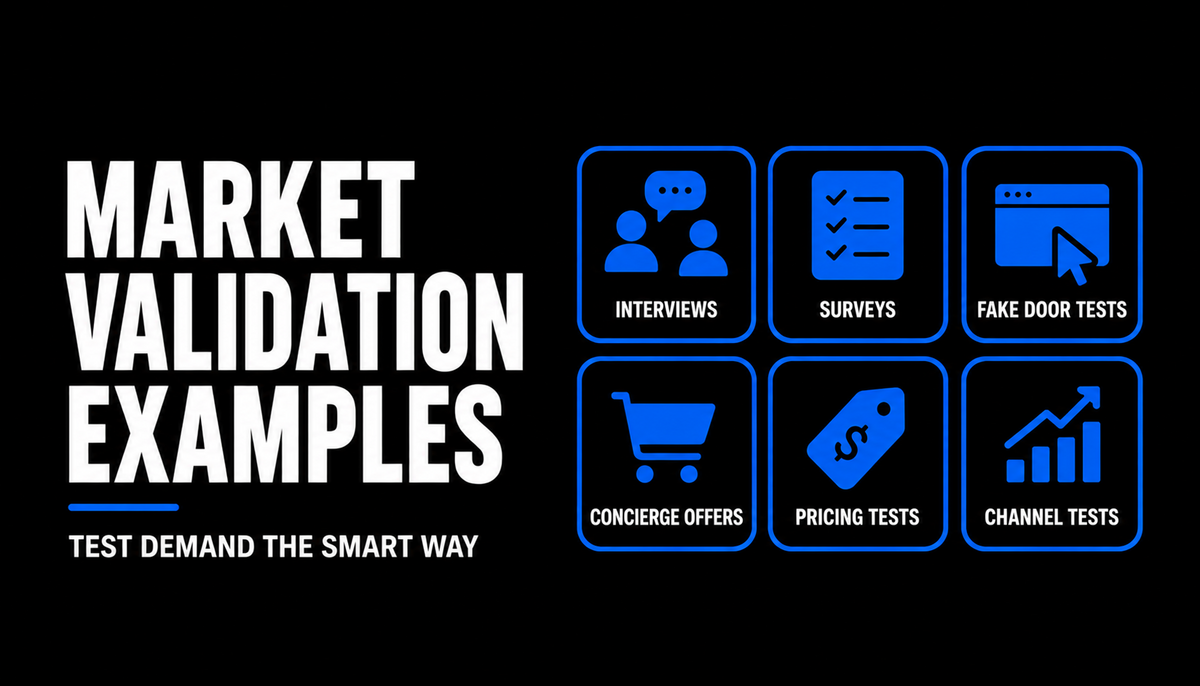
Four Core Startup Validation Methods for B2B
Choose the right method to extract hard proof based on your startup stage.
1. Interviews as Support, Not Proof
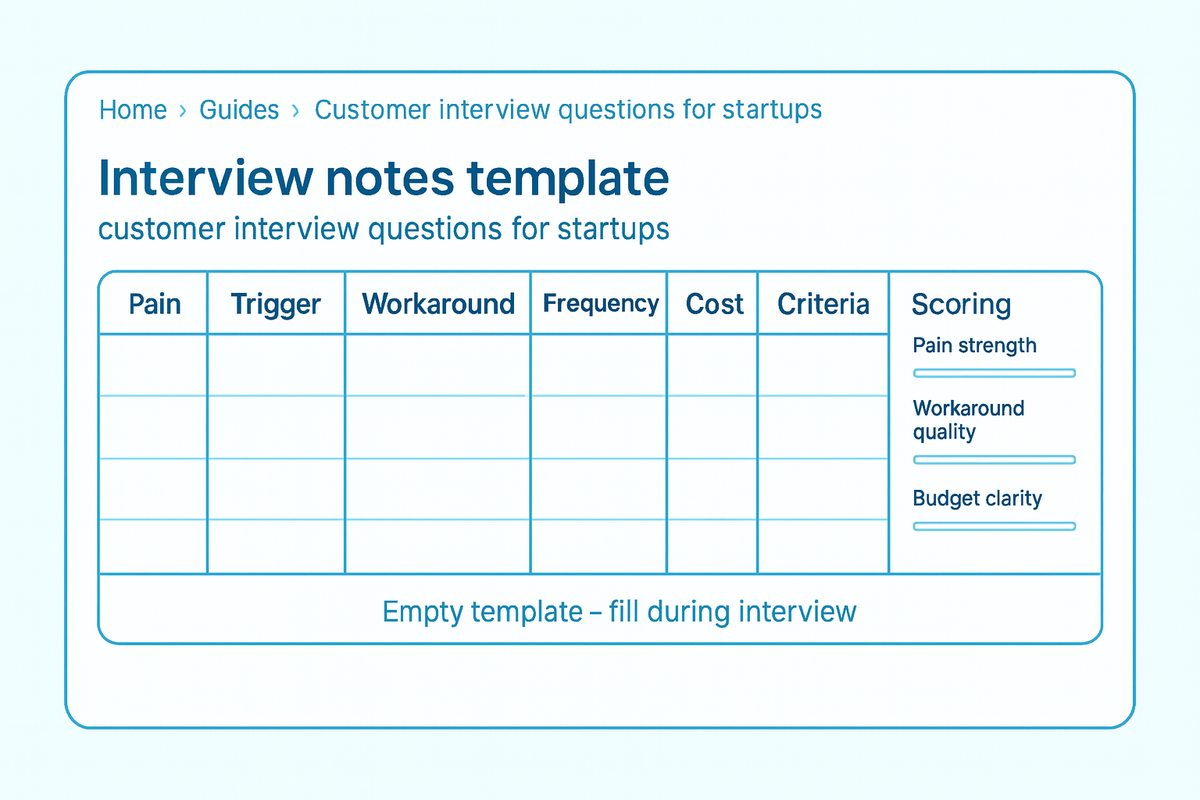
Don't use interviews to ask people if they would use your product. Study their past behavior. Ask how often a painful edge case occurs and how much money it costs them. Use interviews to understand the problem, but don't treat positive answers as proof of demand. Experienced founders know how to talk to customers effectively, avoiding the polite lies outlined in The Mom Test.
2. Concierge for Workflow Learning
If you are building a high-touch B2B service or early software, do the work manually. Don't try to set up scalable marketing channels to find your first ten users. Go to where the buyers are, onboard them by hand, and make sure they get measurable value.
Use concierge testing to learn the messy reality of the customer's workflow. It proves that the problem is solvable and that the customer values the outcome. This approach is a core part of lean validation for B2B startups.
3. Smoke Tests for Offer Clarity
A smoke test validates offer clarity and buyer intent. It does not validate product quality. You build a simple page and track if the value proposition converts visitors into leads. You can read a thorough guide on smoke test landing page creation to get the structure right.
If you build a tool that supports fifty obscure file formats, a smoke test checks if buyers actually care. Drive targeted traffic to the page. If the test fails, you know the message or the channel is wrong. Following core customer development principles, you want to launch something quick to see if anyone actually cares.
4. Pre-sales for Budget Proof
If a problem is truly painful, companies will pay to have it solved before the software is finished. You can ask for a paid pilot or a design partner agreement. You are offering custom development for a fraction of the cost of an internal engineering team. Getting early customers to pay upfront acts as early demand proof. Misjudging this demand is a leading reason startups fail.
Validation Method Chooser
Interviews
Use when: Pre-product discovery: Sourcing problems and understanding past behavior.
Strong signal: Detailed breakdown of past money spent solving the problem.
Weak signal: "I would definitely pay for that."
Avoid when: Trying to prove market demand.
Concierge
Use when: High-touch service / early B2B SaaS: Learning complex workflows.
Strong signal: Customer pays for the manual outcome.
Weak signal: Customer likes the outcome but won't pay.
Avoid when: You need high volume to test pricing.
Smoke tests
Use when: Pre-product B2B SaaS: Testing messaging, channel clarity, and offer.
Strong signal: Booked demos from target ICP.
Weak signal: Waitlist signups.
Avoid when: The audience is too broad or the channel is untested.
Pre-sales
Use when: Enterprise with expensive pain: Proving budget before building.
Strong signal: Paid pilot, signed LOI.
Weak signal: Verbal agreement.
Avoid when: You cannot deliver a manual or custom solution.
FAQ
Is it okay to ask for payment when you have no product yet?
Yes. It is the only way to prove real demand. Frame it as acting like an outsourced engineering team. You provide custom development to solve a specific problem they lack the resources to fix internally. That is a massive favor. Charging a fraction of the standard cost makes it an easy decision for a buyer in pain.
What do founders misunderstand about validation?
They overcomplicate the framework. The method is secondary. The goal is to generate real evidence against your hypothesis with clear metrics for invalidation. You need to know how often a painful case occurs, how costly the failures are, and whether the buyer sees monetary value. Conducting thorough market research and testing hypotheses quickly prevents you from building in isolation.
What is the best startup validation method for B2B?
The best method depends on your stage, but pre-sales and paid pilots provide the strongest signal. Asking an enterprise buyer to sign a Letter of Intent or pay a discounted rate for early access proves they have budget and urgency. If they won't pay before it's built, the problem is likely not painful enough.
How do you validate market demand before building?
You validate market demand by securing buyer commitment. Don't write code. Instead, write your core messaging and run a smoke test to see if target buyers will book a demo. If they book the demo, pitch them on a pre-sale or a concierge service. If they hand over money or sign a contract based on the pitch, you have validated demand.
Are waitlists enough for a concept validation startup?
No. Waitlists are a weak signal. Signing up for a free waitlist costs the user nothing. It proves mild interest, not a willingness to pay. For true concept validation, a startup must move beyond waitlists and ask users to commit time (like a 30-minute discovery call) or money (like a pre-sale deposit).